About the Author
Jasper Brooke is the author of The Kenyalang Series. His first novel begins in Wiltshire 1910 and quickly moves the main characters from Edwardian Britain to the Malay Edwardian world of the early twentieth century where the remainder of his work is set. Jasper spent his working life in educational leadership and now writes full time from his home in Brittany, France where he spends most of his time. Having lived in Borneo for 17 years (in Sarawak and Brunei), he has settled back into European life and is ready to tell readers about the world he has created. His writing draws on his own collection of antiquities, his interest in the forgotten corners of colonial history, and a deep affection for the people and landscapes of Borneo; the only place he has truly called home.
In his own words…
Some people are born into the wrong century. I am one of them, and I have known it all my life.
Not because the modern world holds no appeal to me. Far from it. I am the first to acknowledge the wonders presented to us in this new world. But something was lost when the modern age arrived, and I have never quite stopped noticing the absence. The elegance. The standards. The unhurried quality of a life lived at the pace of ships rather than aeroplanes, of telegrams rather than instant messages. The magic of a world still large enough to contain genuine mystery.
The Edwardian period and onwards towards WW2 has always fascinated me. Not through rose tinted glass, but with clear eyes. It was the last golden age before everything changed. Before two world wars dismantled the certainties of the nineteenth century and replaced them with the relentless pace of the modern world. The clothes were finer. The conversation was slower. People dressed for dinner and meant it. Standards existed not as affectation but as a genuine expression of how life ought to be conducted.
I have lived in Sarawak and Brunei; in the true heart of Borneo, and I understand first hand that some places carry a different relationship with time. That knowledge sits at the centre of everything I write. It also shapes how I approach the question of empire; a subject that demands honesty. The colonial period is rightly under scrutiny, and I have no interest in romanticising its darker chapters. But Borneo was not India, and nor was it Africa. The White Rajahs of Sarawak operated outside the machinery of the British Empire, and the Chartered Company in North Borneo was constantly at odds with Whitehall. The relationship between the colonial administrators and the indigenous peoples of Borneo (the Iban and the Dayak, the communities of the great rivers and the primary rainforest) was something considerably more nuanced than simple domination. It was a world where a European might genuinely learn from those around him, where adaptation mattered more than imposition, and where the jungle had its own authority that no empire could override. That complexity is what drew me to write about it, and what I hope my readers will find there.
,
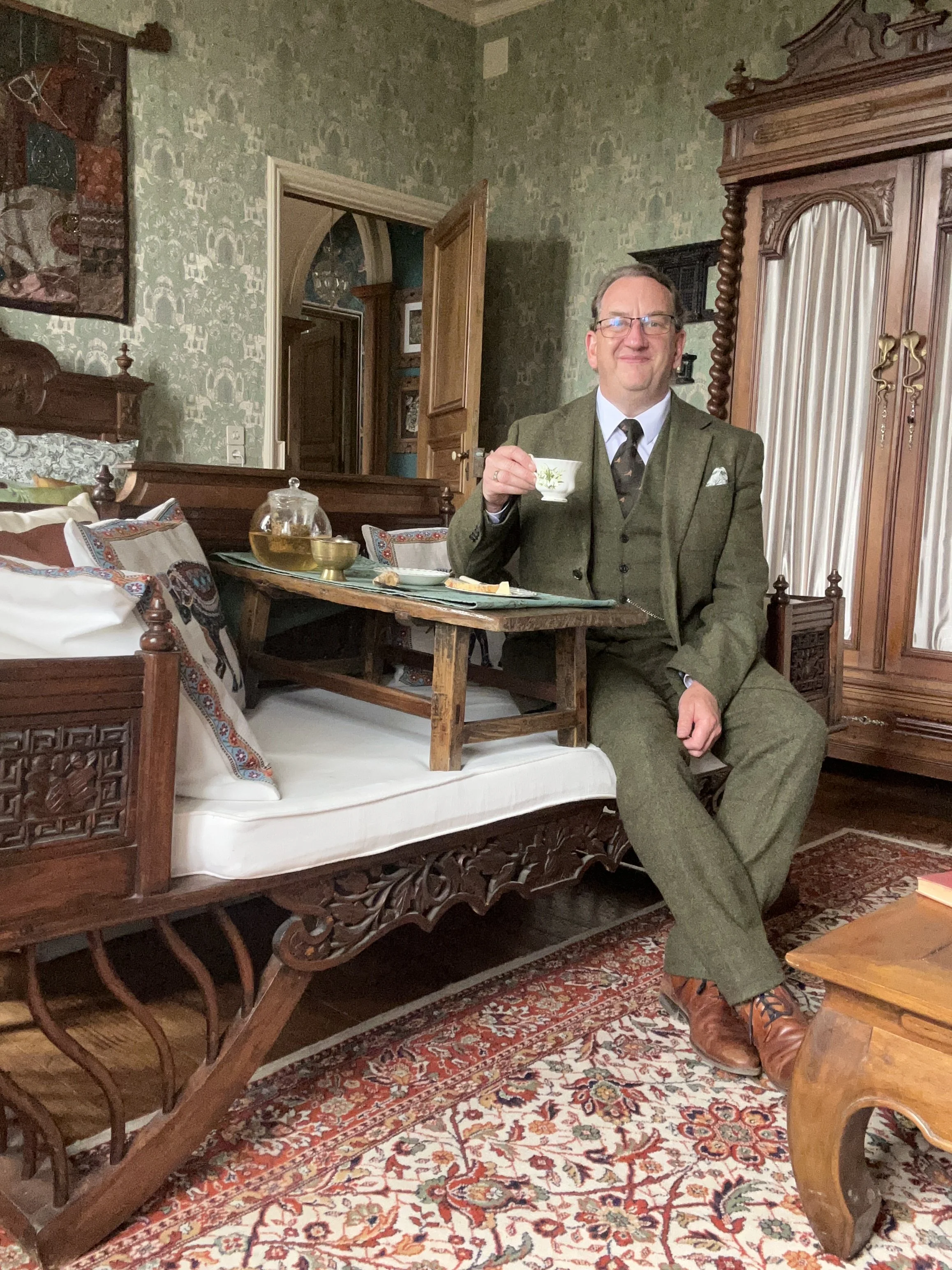
Jasper Brooke, June 2025
This was also the beginning of the end. By the start of World War 1, the great colonial project was already carrying the seeds of its own dissolution, though few could see it yet. World War 1 and 2 would change everything. They accelerated technology, dismantled empire, and stripped away some things that perhaps should not have been removed. I am referring to the spark. That particular quality of a life lived with ceremony and intention and standards.
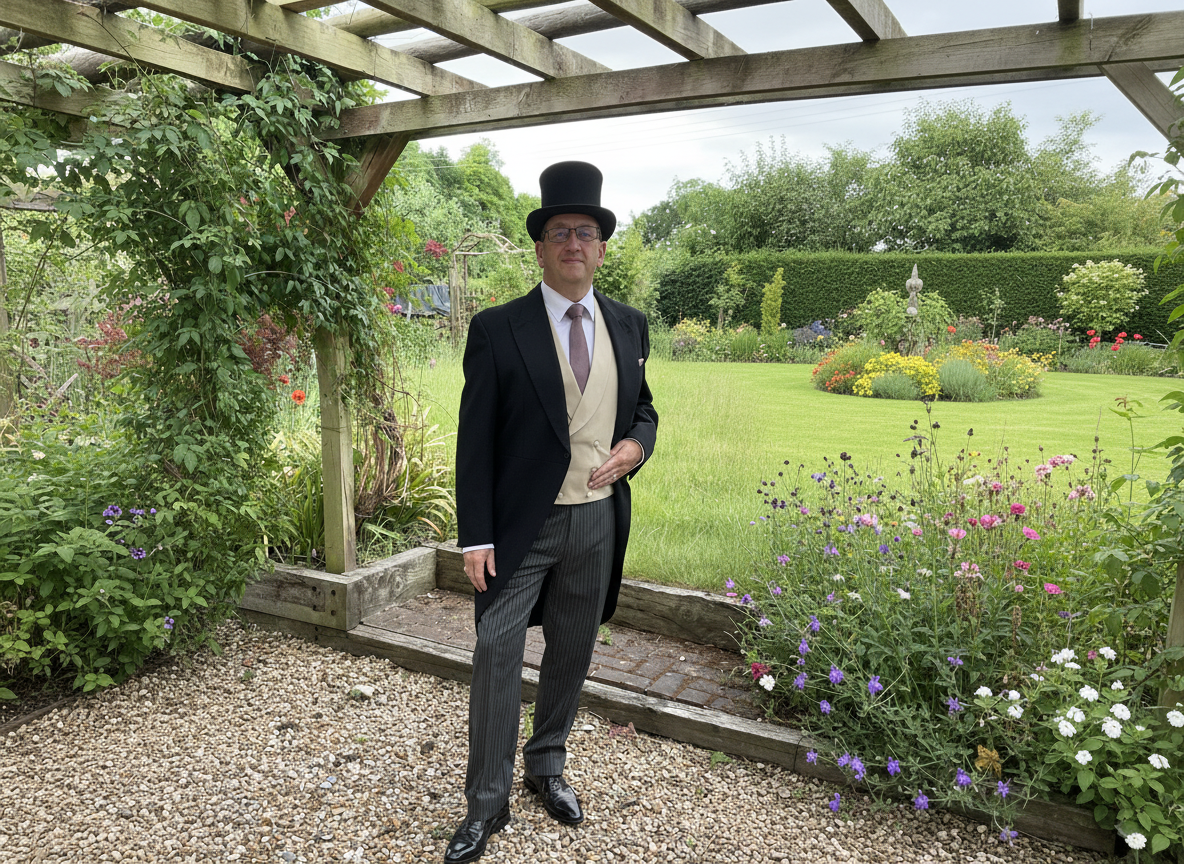
I inhabit this world as naturally off the page as on it. I wear a three piece suit every day. Not for occasion, but simply because it is Tuesday, and Tuesday deserves the same standards as Saturday. At weekends I dress down, which is to say I wear a cravat. I drink tea from a china cup and saucer. I keep an ebony walking cane for perambulating the parks and gardens of London and Paris; cities I move through at a pace the modern world has largely abandoned. These are not affectations. They are the outward expression of an inward conviction that how we present ourselves to the world is a form of respect, both for others and for ourselves.
If I could step back in time to Borneo in the early 1900s, I would do so without hesitation. And if you asked me which of my characters I would choose to be, I would answer without pausing: Samuel. The man who was one thing, became another, found his people against all probability, and made a life of quiet purpose and absolute loyalty in the most unlikely corner of the world.
That, in the end, is what my books are about.
The Kenyalang and The Heart of Borneo are my first two novels, set in 1910 and 1912 respectively; the golden age before the world changed forever. The third book The Chartered Men explores life in Singapore as the war encroached on the Malay archipelago - a topic rarely seen in novels. The books are written with the conviction that what was lost then is still worth finding, and that the people who lived through that vanishing moment were considerably more complicated, and more interesting, than history has generally given them credit for.
In keeping with the historical nature of Jasper’s books, dont forget to enjoy the ritual of reading with drinking a strong cup of tea!
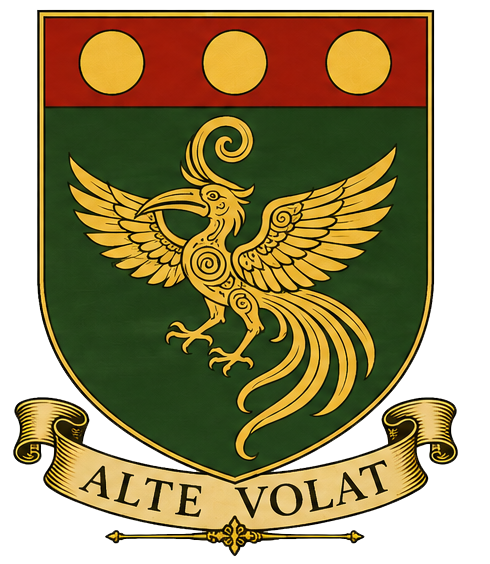
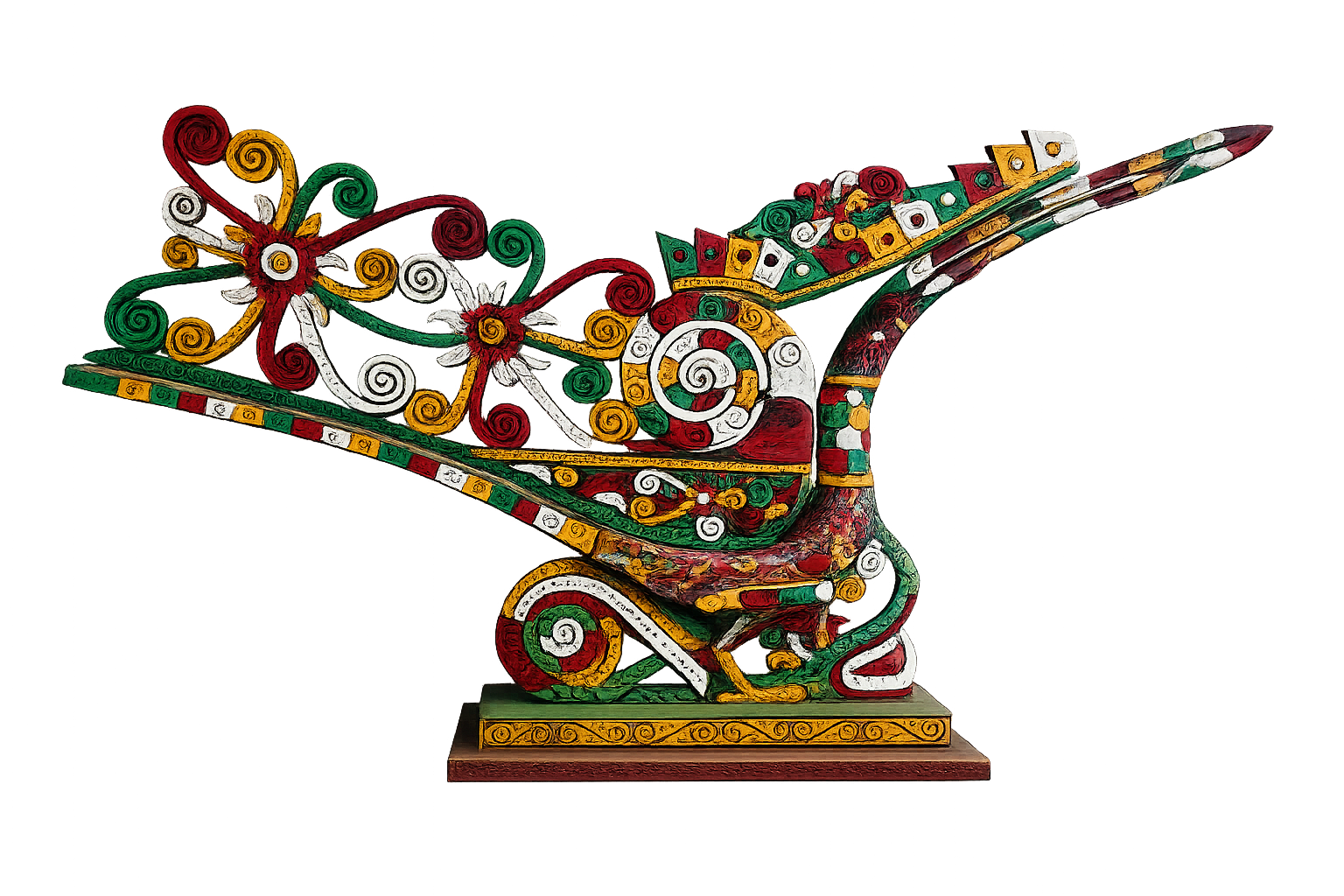
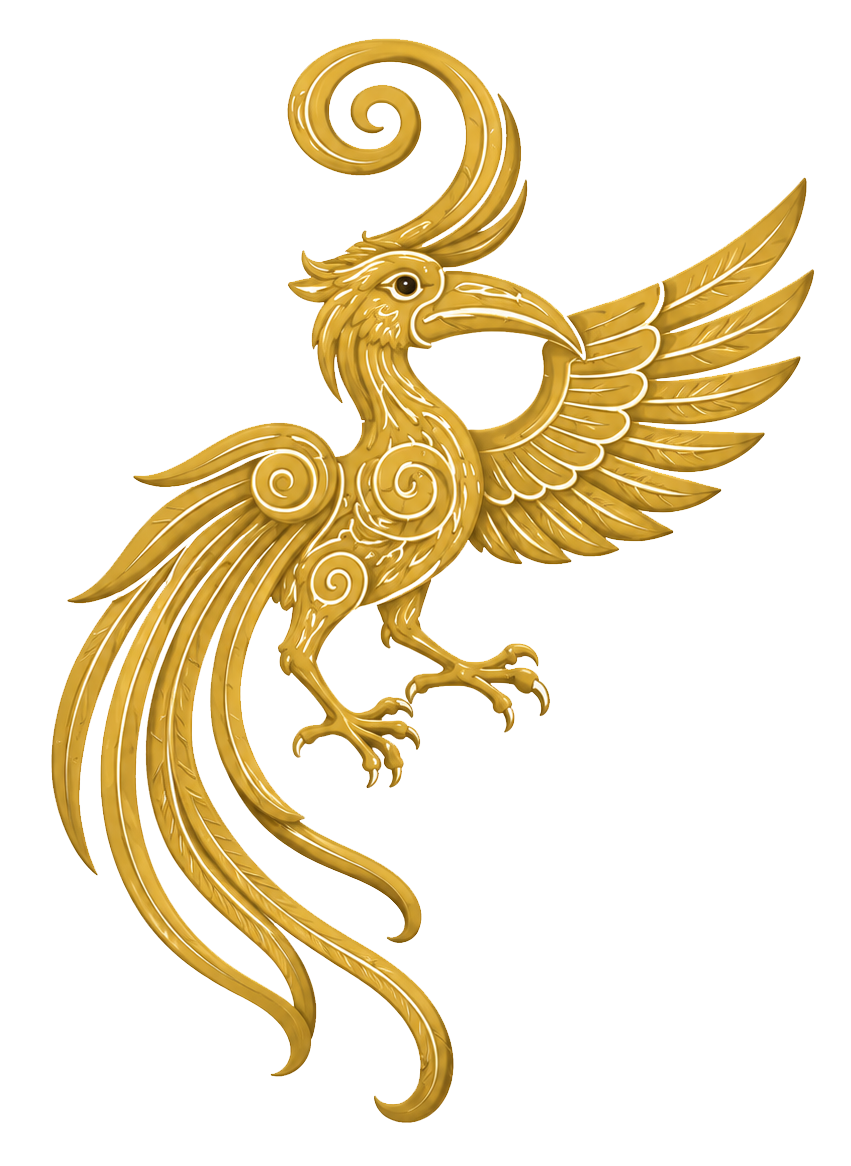
The bird on my coat of arms is a Kenyalang. This is the rhinoceros hornbill of Borneo. I have taken him as my personal sigil, because of all the symbols I might have chosen, none speaks more clearly to the world I write about, or to the part of my own life that has shaped it.
During my time in Borneo, I came to understand the place the Kenyalang holds in the Iban imagination: master of the upper world, messenger of the skies, sovereign over the river and the dark powers of the water and the earth below. He is the bird who carries the prayers of warriors and the spirits of ancestors, the emissary between this world and the next. To wear him as a sigil is to keep faith with a country that taught me how much one can learn by looking up towards the skies.
My motto Alte Volat, (he flies high) is both his promise and mine.
The Rhinoceros Hornbill
The rhinoceros hornbill (Buceros rhinoceros ) is among the most striking birds in the world. Its great casque, the hollow structure that crowns its bill, amplifies its call into something the rainforest carries for miles.
To the Iban people of Borneo, the Kenyalang is far more than a bird. It is the emissary of the god Sengalang Burong, lord of the upper world, and its appearance is read as an omen of significance. Carved wooden hornbills are raised on poles at the great Gawai festivals, their faces turned towards the sky, summoning blessing and marking the threshold between the human world and the world above it.
The hornbill does not merely inhabit the forest. In Iban understanding, it mediates it — carrying the prayers of warriors upward and the will of the gods back down. To see one in flight is, even now, considered a moment worth pausing for.
My Fascination about Researching the Past
I think it started when I was very young. I have always known I was born into the wrong era, but from a young age I had a fascination with 'old things'. Items that were used in everyday life and then forgotten about as the world moves on. I wanted to know about these items and where they came from. I am not talking specifically about antiques, although I do love antique hunting. I am more interested in the everyday items, the things one dismisses as not interesting or not important. But to me, they are.
You pick up an Edwardian cut glass punch bowl at a country auction, turn it over, and there on the base is a small acid-etched mark. It has a thistle, a date, and the letters S & W in a roundel. Suddenly you are holding a small biography in your hand. Stourbridge, 1906, the cutting shops of Stevens & Williams, a master cutter signing the work of his year. Research, for me, is just that instinct extended. I want to know who made this, who held it, what it meant. The same impulse turns up in everything I do; whether that be teaching, foraging, writing, or hallmark hunting. I am never quite content with the surface of a thing. There is always a maker, a moment, a small forgotten context that explains why it ended up here, in my hand, on a wet Sunday in Brittany.
And sometimes the rabbit hole has no bottom. I also find myself obsessed with how easily we (the human race) forget things, often in just a few generations. Take my Regency tea caddy, for instance. It comes with a glass bowl, and no matter how much I search, I cannot find proof of what it was used for. There is a thought it is for mixing dried tea. Other researchers say it is for storing sugar, which I feel is unlikely. But a tea caddy was such an important part of English domestic history, and would have been a prized possession for those who could afford it. Why, then, can we not be certain what the bowl is for? I brought the tea caddy so I could use it… but also so I could work out what the bowl is for and then record it for future generations.
Research is how I stay curious in public. It is the grown up version of lifting up a stone to see what's living underneath!
Why Borneo?
Why the Hidden Lives. Why Colonial Edwardian and not the Rajah?
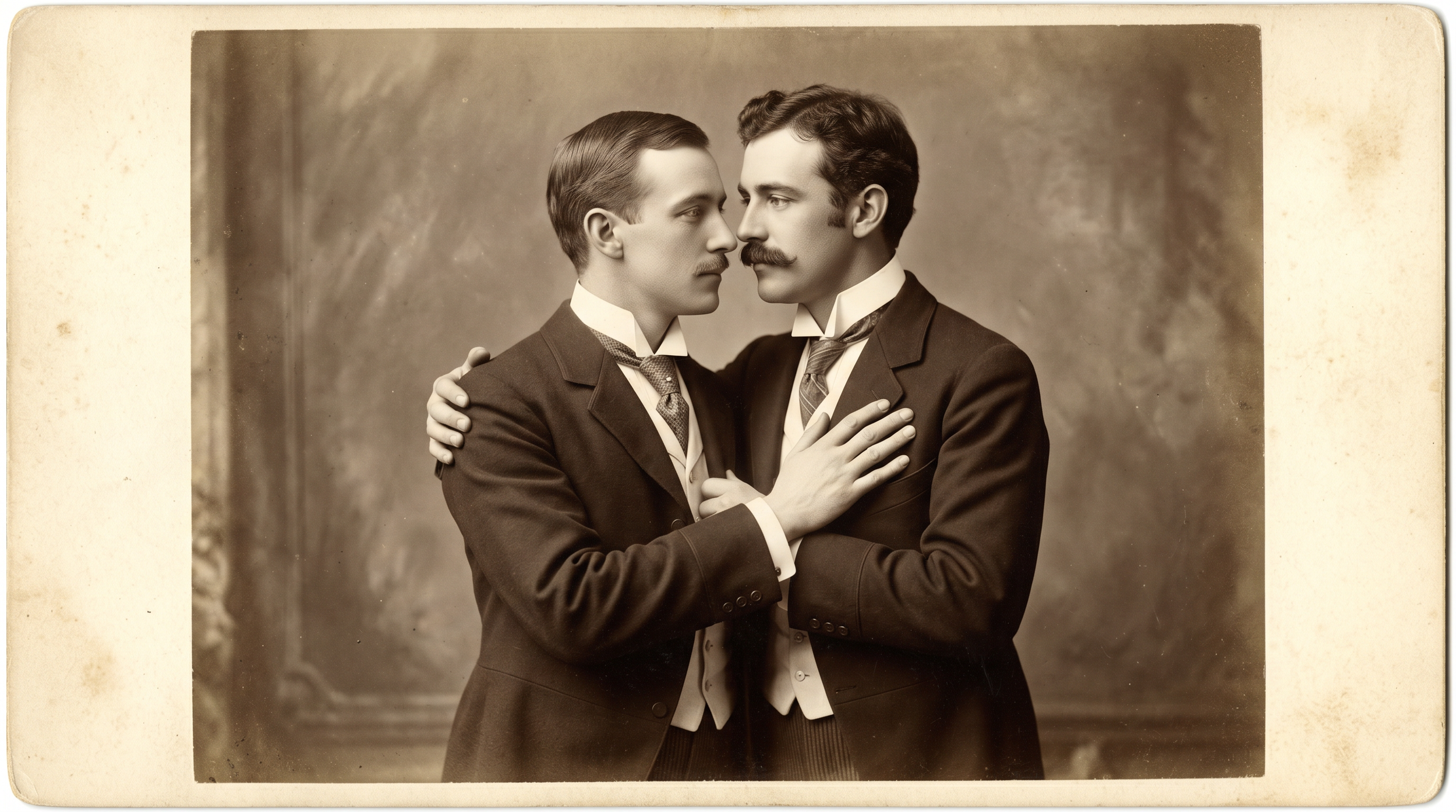
I am drawn to the people that the official record didn't want to record. Gay men, in particular, in colonial postings (district officers, planters, missionaries) living lives that London would have prosecuted but that the jungle, for a while, quietly allowed. The Edwardian colonial fringe is interesting precisely because it's fringe: far enough from home for the rules to loosen, close enough to be haunted by them.
The Brooke Rajah fascinates me, but it is not where my fiction goes. The Rajah is recorded through the archives, novels, and film adaptations. But the smaller outposts of Sandakan, Jesselton, Penang, the Straits Settlements; have almost nothing.
Whole lives lived sideways to history. I find that quietly heartbreaking, and quietly thrilling to write into.
Fiction can do what the archive refused to: give these men a Sunday afternoon, a letter never sent, a glance across a veranda. It is not about rescuing them. It is about noticing they were there.
My micro essays look into this world from an academic eye; trying to unpick what a century has hidden from us. You may find them an interesting read. I wrote the essays to help me understand my characters and the hidden world in which they exist.
I hope you find them useful too. Historical Micro Essays.
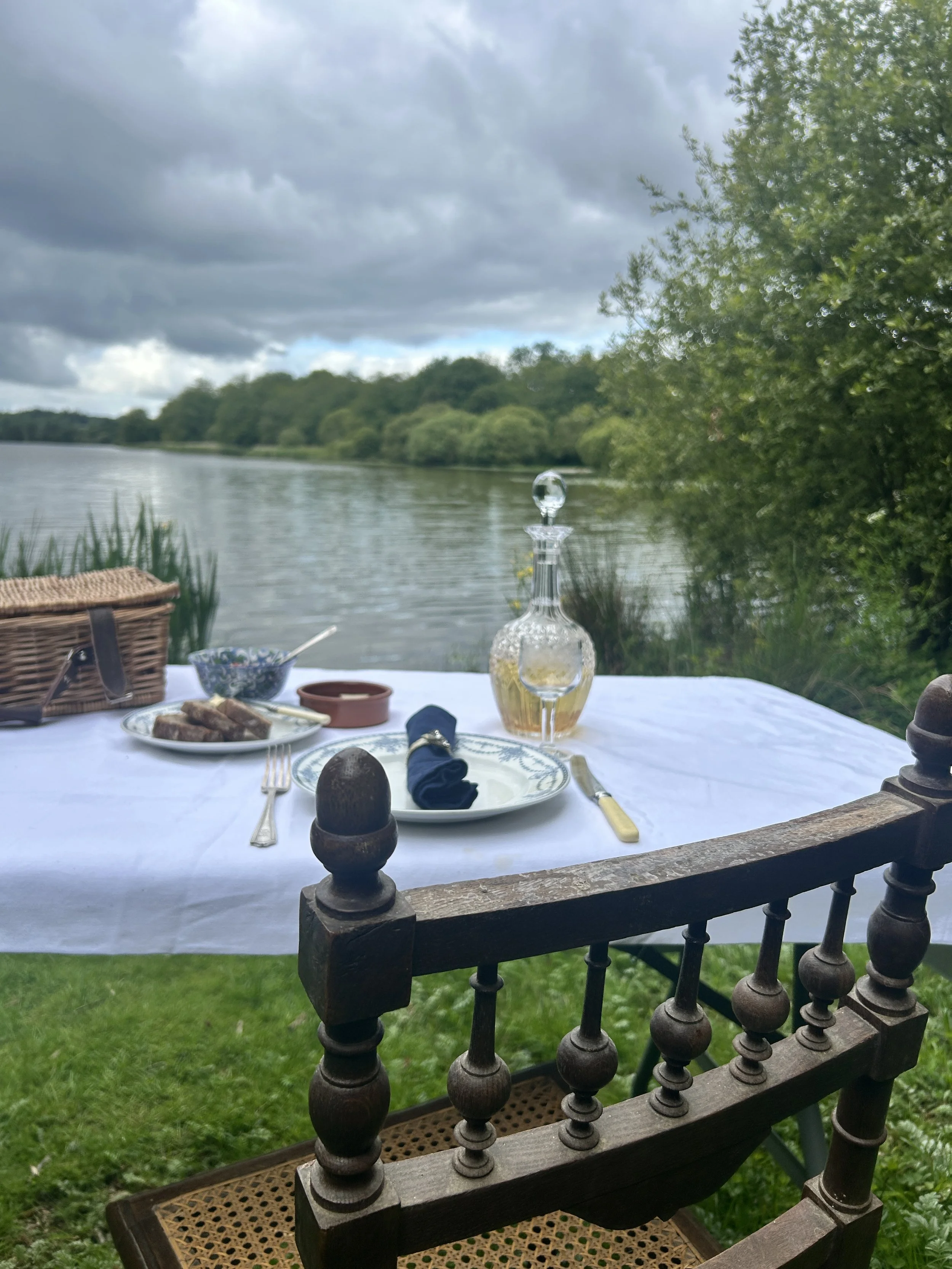
Right: The same fork at a picnic I took recently by the side of a lake. Incidentally, all items (including the chair) have been reclaimed and each has their own story.
Most people, when they think of the British Empire, think of India. The Raj, the railways, the well trodden ground of the British East India Company. Borneo is quieter.
The North Borneo Chartered Company (BNBCC) ran a corner of the world that almost no one writes about: a place of longhouses, river steamers, rubber plantations, hornbills, head hunting myths, and a small cast of administrators trying to impose Edwardian England on a rainforest. It fascinates me because it sits at the edge of everything. The edge of empire, the edge of the map, the edge of memory.
The records are patchier, the lives stranger, the moral picture more uncomfortable. There is room there for a novelist. India has been written about so thoroughly that the air feels used up. Borneo, in the 1900s, still smells of damp leaves and woodsmoke and the faint dread of something the British didn't understand and never would. That is the world I want to walk around in.
Why A Hornbill?
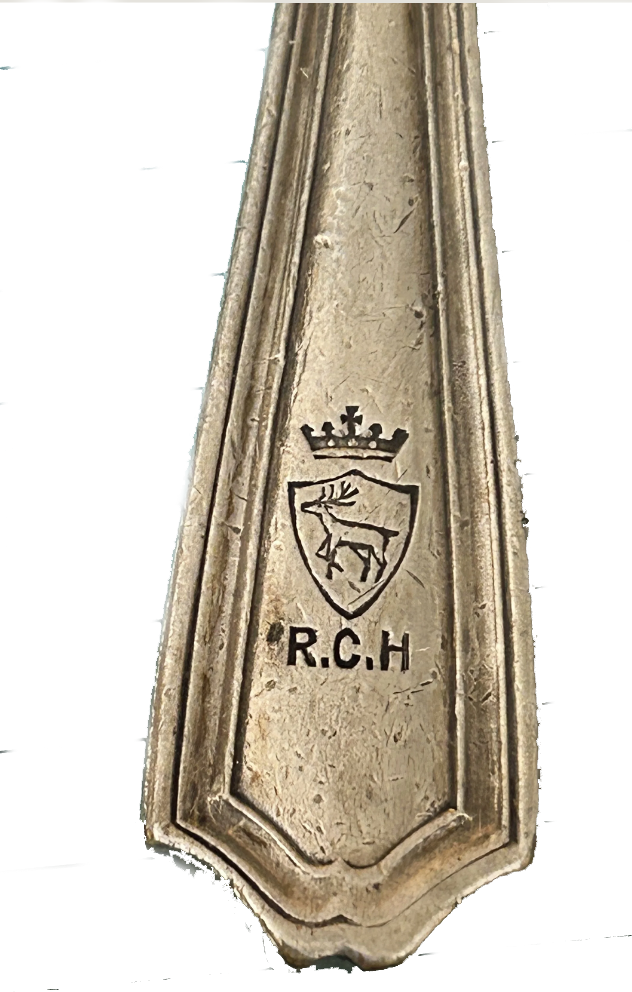
Take this fork, for instance (left).
It is circa 1891, and possibly from the Royal Caledonian Hunt; the sporting society of which Robert Burns was once a member. When I use it I cannot help wondering at the many hands that have used it before me, or at the conversations that took place around the dinners on which it sat.