

Frequently Asked Questions
The questions I am asked the most often are the ones that matter most : “why this world, why these characters, why now.”
The answers are here, as honestly as I can give them. If something is not covered, the contact page is always open. I answer every message personally so long as it is asked professionaly.
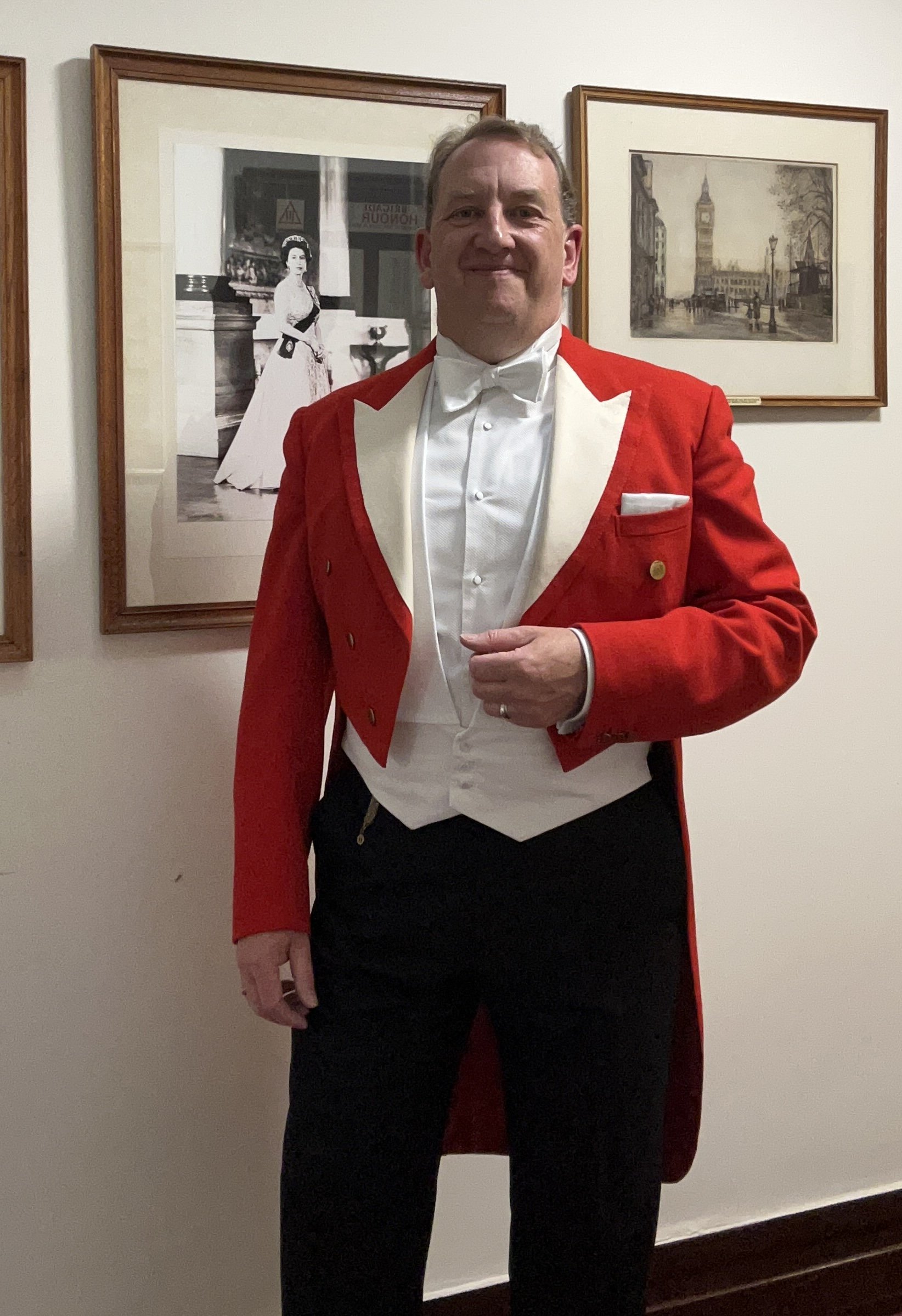
There is a photograph of me on this page in scarlet Hunting Tails. It was taken at a Military Masters Ball; a formal dinner of the kind that the Edwardian world understood instinctively and the modern world has almost entirely forgotten how to do. Different clothes for different occasions was not vanity. It was respect for the event, for the other guests, for the ritual itself.
The dining room was once the most important room in any house. Certainly until well into the twentieth century, dinner was not merely a meal. It was the event around which the entire day was organised. The table was set with intention. The clothes were chosen with care. Conversation followed its own courtesies. After dinner, the men remained at the table with port, politics, the business of the world. While the ladies withdrew.
Whether one approves of that arrangement or not, it produced something we have largely lost: the sense that gathering at a table together was a serious and meaningful act.
The red jacket is not affectation. It is a reminder that some things are worth preserving. That dressing for dinner (truly dressing, with the right clothes and the right intention) is a form of civilisation. And that civilisation, in the end, is what I (Jasper Brooke) writes about.
-
The novels are set across the territories of British North Borneo, Sarawak, and the wider Malay Archipelago in the early years of the twentieth century. The second book is set primarily along the rivers and rainforests of Borneo, in the trading ports of the South China Sea coast, and in the drawing rooms and verandas of the colonial world. Future novels will move through Singapore, Penang, and the Straits Settlements — a world connected by steamship, telegraph, and the vast commercial ambitions of the late British Empire.
-
Firstly, Jasper spent 17 years living on Borneo and grew to love and admire the location and its history.
Secondaly (and more importantly) because it is extraordinary and almost entirely absent from historical fiction. The Malay Archipelago in 1912 was one of the most remarkable places on earth. It was a crossroads of Chinese, Malay, Iban, Dayak, Indian, and European cultures, sitting at the intersection of ancient trade routes and modern colonial ambition.
Jasper lived in Sarawak. He knows this world firsthand and wants to share this with his readers.
-
It was the last golden age before everything changed. By 1914 the world that had produced the Edwardian era; its certainties, its elegance, its particular quality of life was gone. But in 1912 it was still very much present, and in Borneo it existed alongside something far older and far more profound. That collision of worlds is at the heart of everything I write.
-
At the centre of the series are three people who become, against all the expectations of their time, a family. Samuel Whitmore is a former soldier and intelligence agent, a man carrying the weight of a military past and learning what it means to be at peace. Julian Pembroke is a disinherited English gentleman who has chosen a new life far from the society that rejected him. And Ravi is a young Anglo-Indian boy they find alone in Aden, whose journey from abandonment to belonging is one of the emotional cores of the series.
-
In one sense yes and no.
No: In my eyes, this is one long story over many books.
Yes. The Kenyalang and The Heart of Borneo are the first two novels in the series, which follows Samuel, Julian, and Ravi across Southeast Asia as the colonial world around them begins its slow unravelling. A third novel, The Chartered Men, is in development, moving the story into Singapore and Penang.
Each book works as a standalone novel but rewards reading in sequence.
-
longside the main series, Jasper Brooke is writing a series of shorter companion pieces; novellas that explore individual characters in greater depth than the novels alone allow.
The first, Meena's Son, tells Ravi's story: where he came from, what he survived, and why the family that found him changed everything.
The second tells the story of Dr Evelyn Blackwood and the third shows how Julian and Samuel met.
Jasper will add more novella’s in the future.
-
Rigorously so, within the conventions of fiction. The political landscape, the colonial administrative structures, the cultural practices of the Iban and Dayak peoples, the economics of the rubber boom, the role of the Brooke dynasty in Sarawak; all of these are grounded in genuine historical research.
The characters are fictional but the world they inhabit is real, rendered with the care it deserves.
-
Not at all.
Part of the pleasure of the books is discovering this world alongside the characters. Everything the reader needs is in the story. Prior knowledge enriches the experience but is never required.
-
Through the contact page at jasperbrooke.com or directly at jasper@jasperbrooke.com.
All correspondance is welcome and answered personally.
-
To be completed once publication details are confirmed.
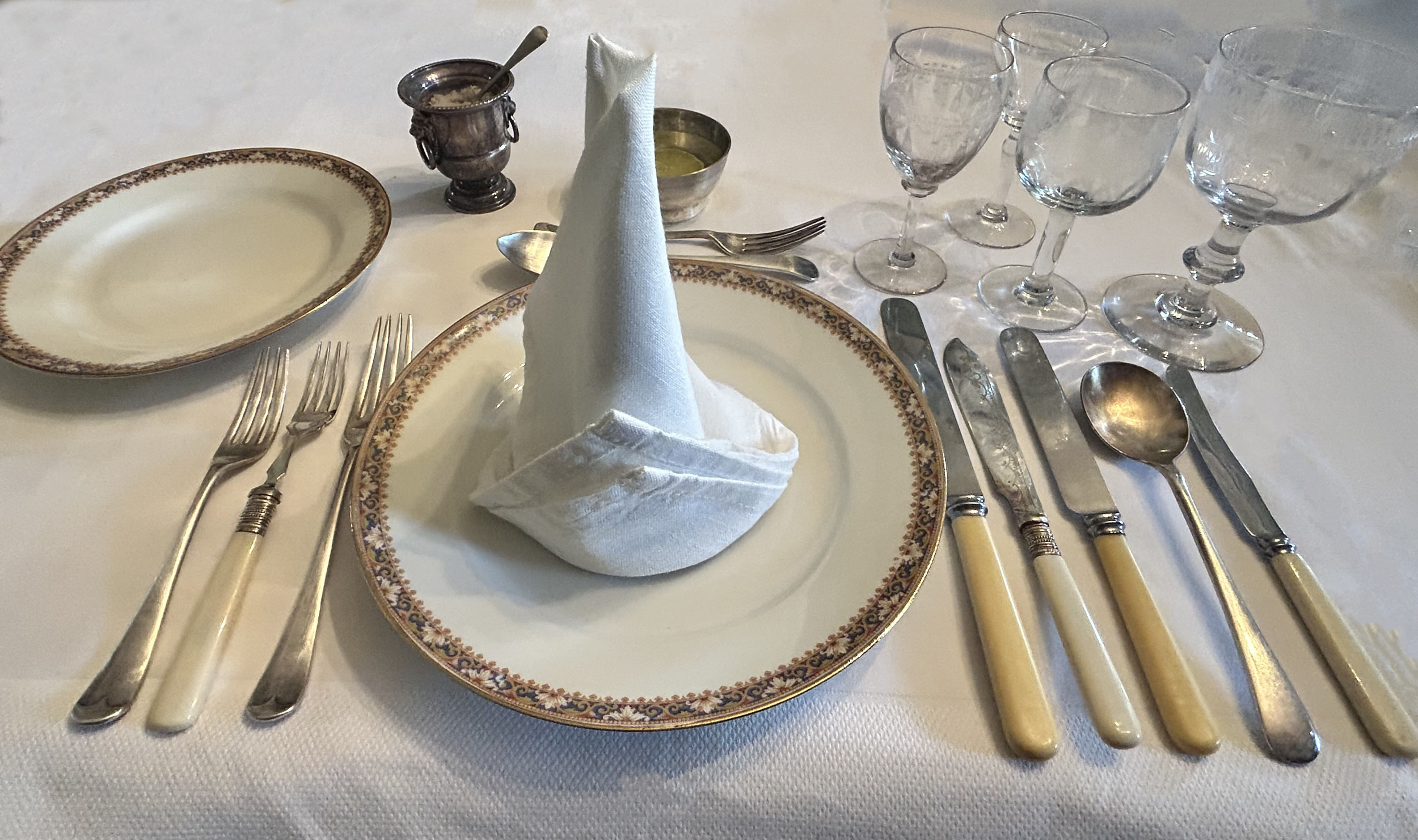
Above: Table setting at Brooke Manor
Note: The dining table is not merely furniture in Jasper’s novels: it is a stage.
From the very first chapter of The Kenyalang, where a Hunt Breakfast is held in the Gothic splendour of Bartholomew's Folly at Thornfield Hall, a piper leading the hunting party to table, champagne toasts to the Master and the Hunt, the Pembroke coat of arms presiding over the fireplaces etc. The meal is where the story moves forward, where alliances are tested, where things unsaid become as important as things spoken.
This was intentional. Every dinner in these novels carries weight. The food, the wine, the seating, the conversation. Nothing is accidental. If two characters are placed next to each other at table, there is a reason. If a toast is raised, it matters.
Something was lost when we stopped treating the dining table as a place of ceremony and intention. These books are, in part, an attempt to remember what that felt like.