


Meet the Characters
The People of the Kenyalang Series
Every story is only as real as the people who inhabit it.
The characters of the Kenyalang series were not invented so much as discovered; emerging from the history, the landscape, and the particular moral world of British Borneo at the start of the 20th Century with a completeness that surprised even their author.
They are flawed, complicated, and entirely human. They love imperfectly and loyally. They carry secrets with varying degrees of grace. They make choices that the world around them would not sanction and live with those choices without apology.
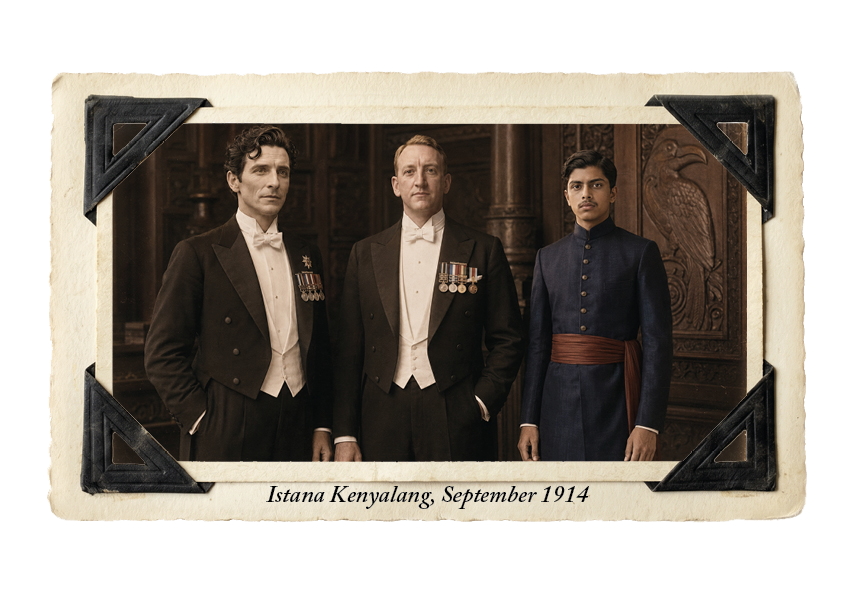
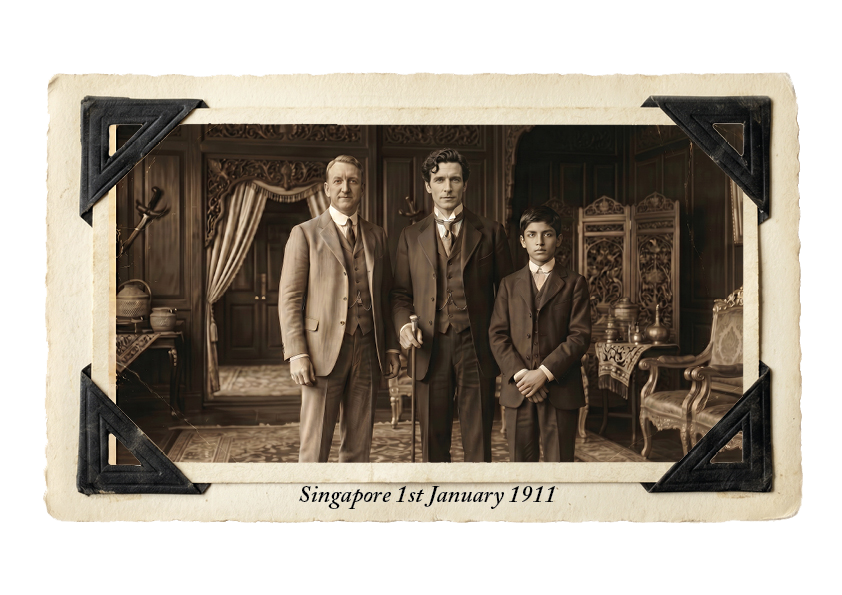
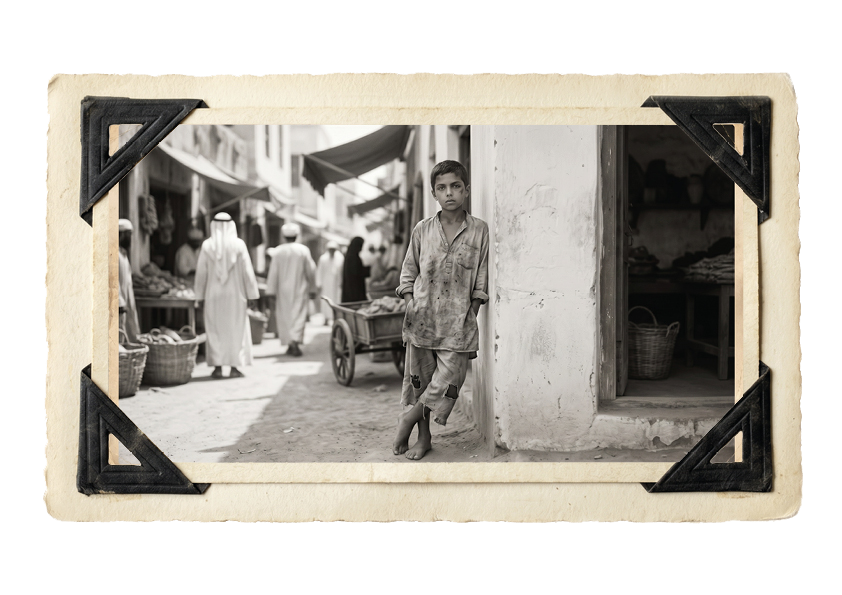
At the centre are three people who became, against every expectation of their time, a family. Samuel Whitmore, a former soldier and intelligence officer. Julian Pembroke, a disinherited English gentleman who sailed east toward a life that England could not offer and found, in the most unlikely corner of the world, everything he had been looking for. And Ravi who was found barefoot and alone on the streets of Aden, belonging to no world and therefore free to belong entirely to this one.
Around them a circle of people who keep their secrets, share their dangers, and constitute in their own way a second family.
Pembroke Family Tree
Character Family Web
Images on this page developed through Artlist to help bring the characters of my stories to life..
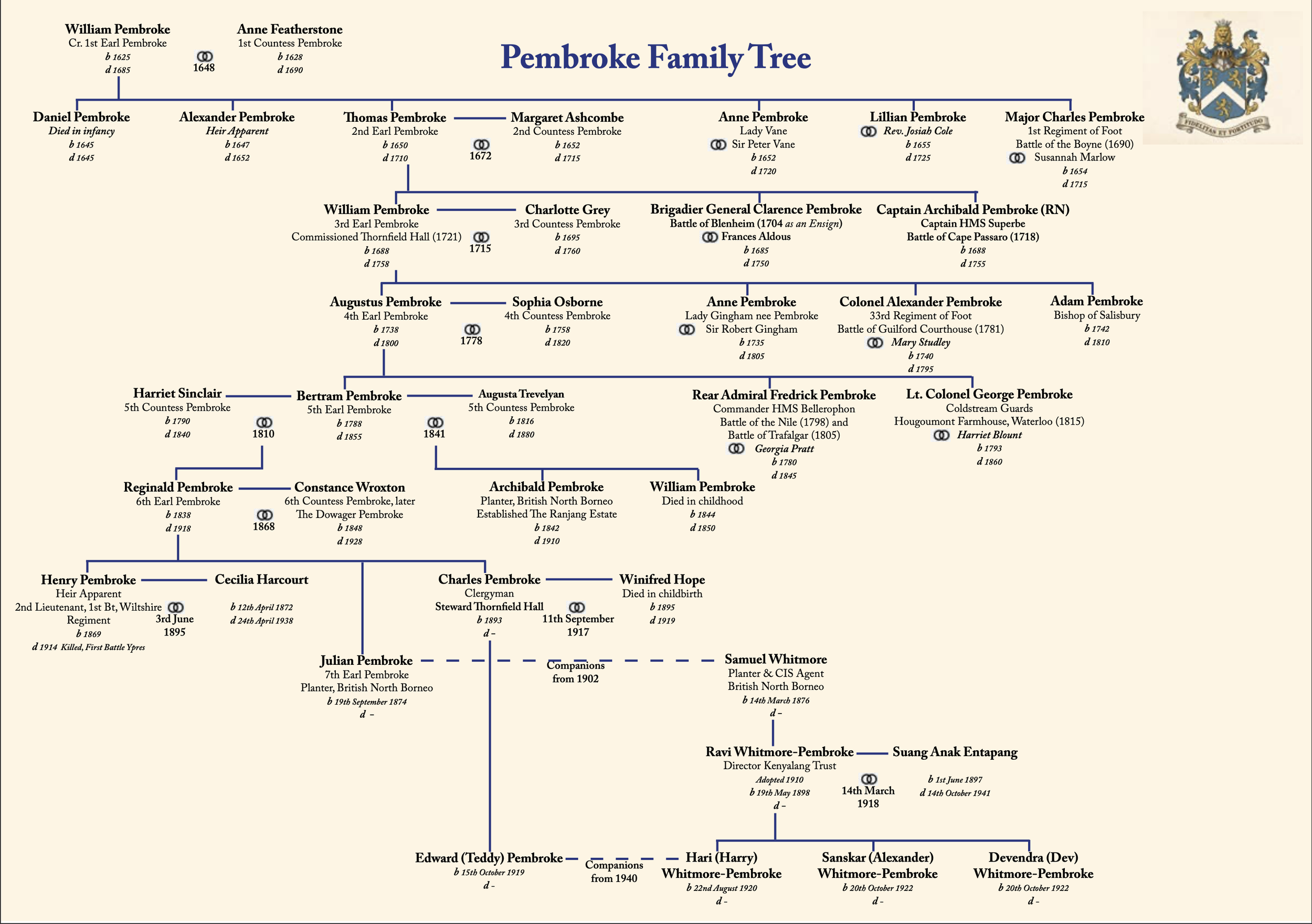
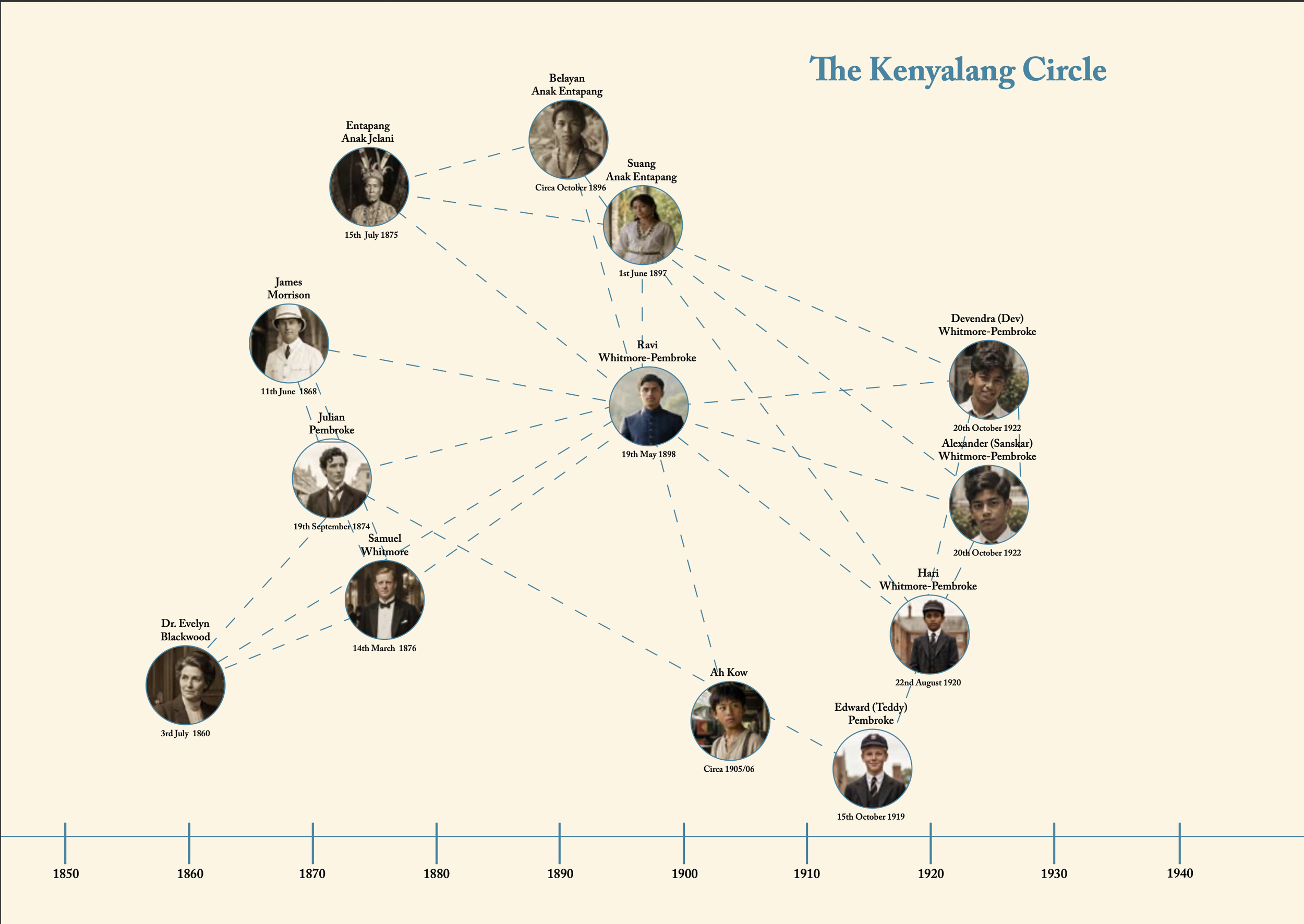
Click images
to enlarge

Julian Pembroke
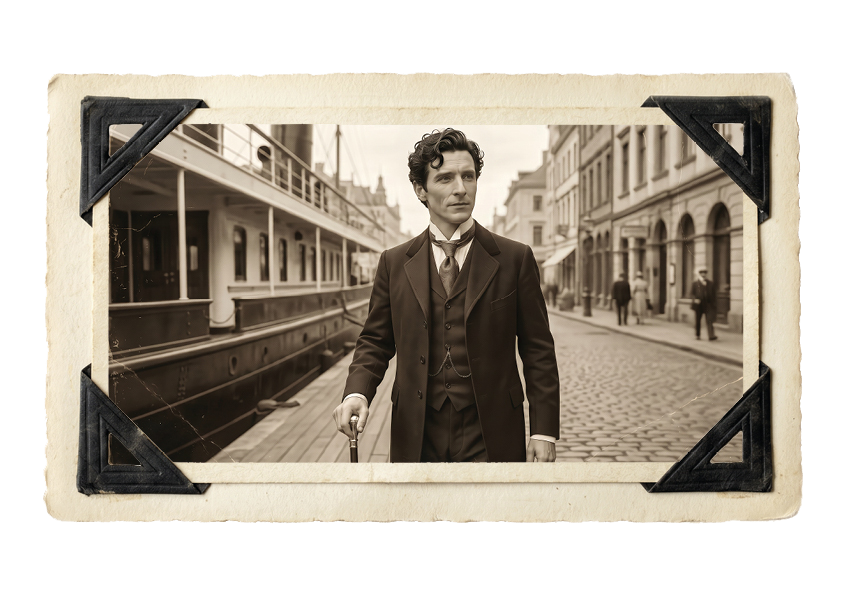
Disinherited Second Son to the Earl Pembroke and Plantation Owner
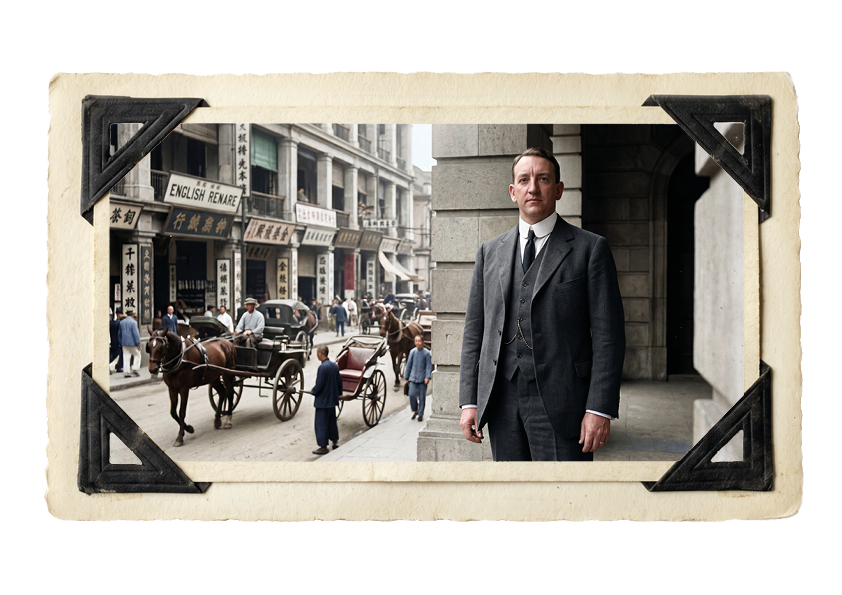
Samuel Whitmore
Private Secretary and Aide de Camp to Julian Pembroke
Samuel Whitmore is not a man who announces himself. He is the kind of man you notice on second glance. Not because he is unremarkable, but because he has spent years cultivating the particular skill of being present without demanding attention. In a room full of people, he is the one watching the door. Observing.
Samuel has the bearing of a man shaped by military service rather than born to ease. The Boer War left its mark on him as it did on all who went: a wariness behind the eyes, a habit of assessing a room before entering it. His hands are capable hands. His voice is quiet and carries more authority for it. His blonde hair is neatly kept. His blue eyes miss nothing.
He dresses with the precision of a man who understands that appearance is a form of communication. A charcoal grey suits chosen with care as are his brown boots and coloured ties. His half-hunter pocket watch hangs on a half-albert from his waistcoat and is consulted with the same deliberateness he brings to everything he does. He carries a walking cane with a Toledo steel blade concealed inside it. He would prefer people did not know about that.
What is less visible is the interior life. Samuel Whitmore is a man of profound loyalty and carefully contained feeling. He came up through the ranks, served as batman to an officer who became something far more than his master, and has spent twelve years being indispensable to a man he loves with a steadiness that never wavers and rarely speaks its own name aloud.
He is the person Julian reaches for in the dark. He is the person Ravi calls Pappa. He is, in the end, the still centre around which everything else turns.
Julian Pembroke gives the impression of a man who was born into one world, chose another, and has never once regretted it.
He is lean and upright, with the natural poise of someone born to privilege. His dark hair, his sharp cheekbones, and the aristocratic set of his bearing mark him immediately as a gentleman. But the eyes tell a different story. They are contemplative, slightly sardonic, the eyes of a man who finds the world quietly amusing and occasionally absurd, and who feels things deeply beneath the surface but rarely tells it out aloud.
Julian Pembroke gives the impression of a man who was bornHe was an officer once, and carries the straight back and economy of movement that the army instils permanently. He is also a painter; a man who notices light and shadow, who sees the world in composition rather than in simple fact. These two things sit in him in a productive tension that shapes everything he does.
Disinherited by a father who never understood him and never tried to. He has sailed east toward a life that England could not offer.
What Julian finds in Borneo (a home, a family, a purpose) is everything his Wiltshire upbringing withheld.
But beneath the wariness there is pride. His chin lifts even through tears and beneath the pride there is a quick, irrepressible wit that surfaces almost immediately. When Samuel offers him a job, Ravi's first question is how much he will be paid. He is, in short, impossible to leave on a street in Aden.
Ravi Whitmore
Former Street Urchin. Ward to Samuel Whitmore
Ravi is the future of these books. He just does not know it yet.
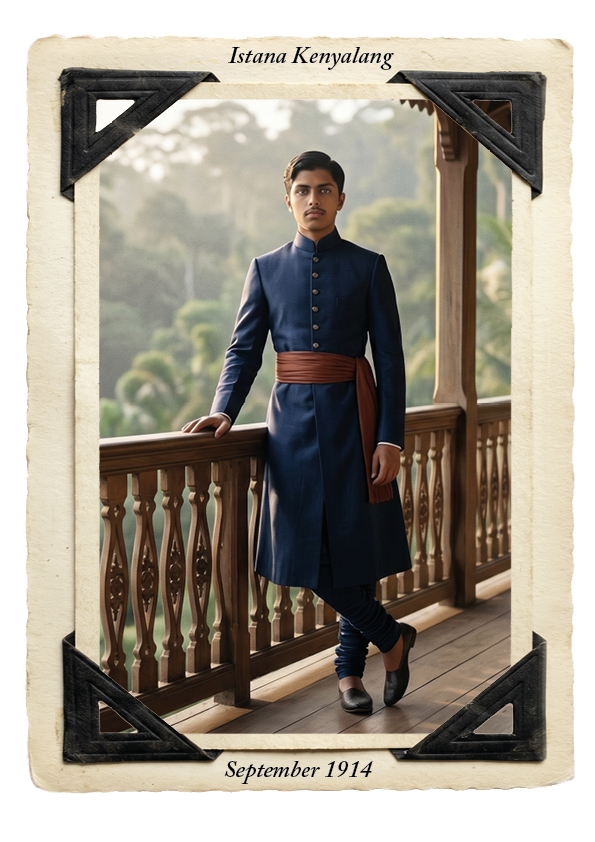
Ravi grows into something that defies every category his world has for him. Not servant, not ward, not quite son although that is closest to the truth of it. He moves through the colonial world of Borneo with a confidence that belongs entirely to himself, speaks four languages, manages luggage with the authority of a seasoned traveller, and calls Samuel Pappa without embarrassment.
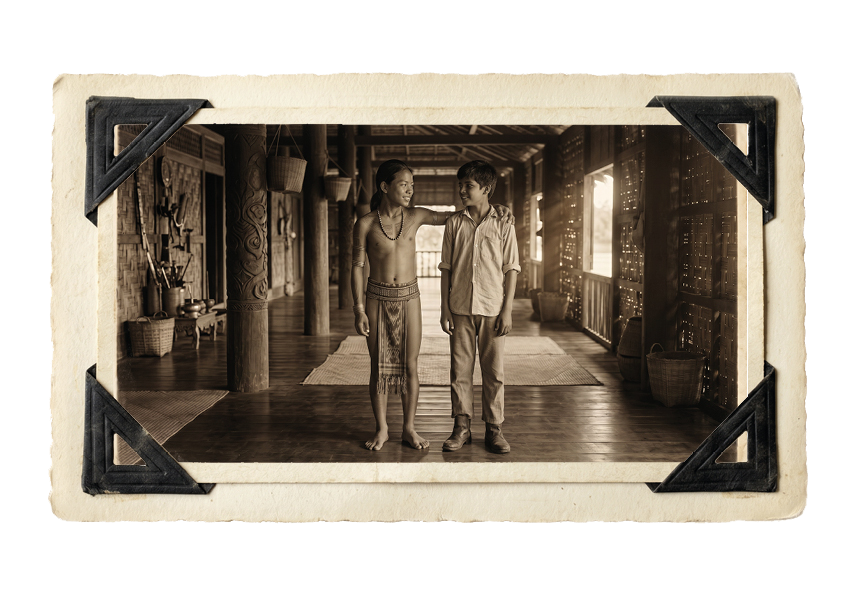
He becomes best friends with Belayan, (who is two years his senior) son of the plantation foreman. They call each other bhai (brother) and become inseparable.
Ravi is twelve years old when Samuel and Julian find him on the streets of Aden in 1910. His first appearance shows him barefoot, in clothes long outgrown, a fresh cut on his face and the fading remains of a bruise around his left eye. He is small and wiry, with the lighter brown skin of an Anglo-Indian child. Too light for the Arab quarter, too dark for the colonial drawing room, belonging fully to neither world.
His mother was an Indian Ayah. His father was a British officer who fled home to his wife when he discovered he had left a servant ‘in the family way’. Ravi’s mother (Meena) taught him English before she died because she said it would help him survive. She was right.
What strikes Samuel immediately are Ravi’s eyes. Dark, intelligent, wary; the wariness of a child who has learned that European men are not to be trusted, and who is therefore watching everything very carefully indeed.
Dr. Evelyn Blackwood
Anthropologist and family friend
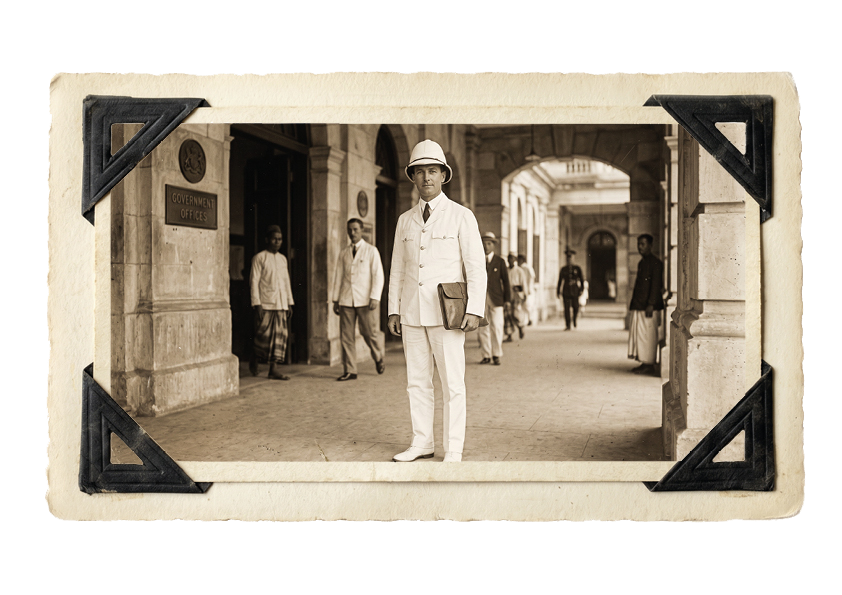
James Morrison is an Intelligence Officer with the Colonial Intelligence Service. His cover as a P&O steward or a boat man or a clerk in the office of an import / export company is not merely convenient; it is a masterpiece of professional positioning. The aristocracy and upper classes have spent generations learning not to see the people who serve them.
James is methodical, precise, and possessed of an analytical mind that works through problems which he does systematically, quietly and missing nothing.
When Mr. Chen delivers his warning with a cracked nose and a threat, James gets back up, straightens his uniform, and adds it to his list of evidence against him! James becomes one of the most important people in Julian and Samuel's lives. They simply did not know when he first brought them their morning tea.
James Morrison
Colonial Intelligence Service Officer
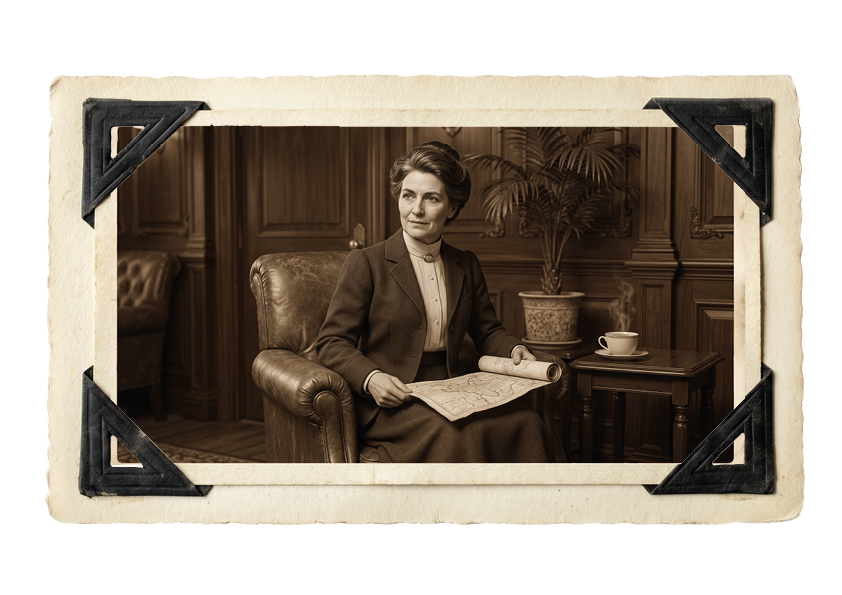
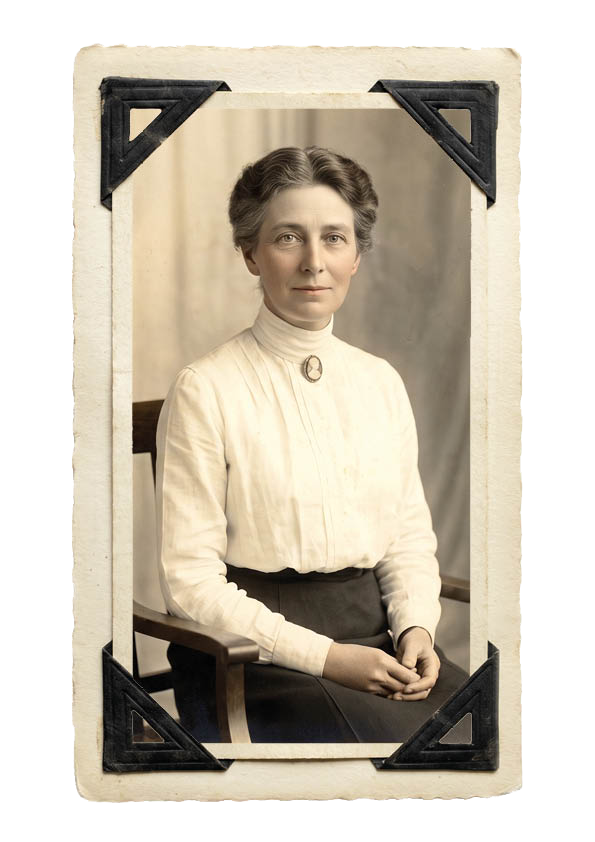
Dr. Evelyn Blackwood does not wait to be underestimated. She simply proceeds, at her own pace, in her own direction, and allows the world to catch up if it can manage it.
She is an anthropologist of considerable reputation. Cambridge educated and widely published. Evelyn is a woman who has spent decades doing fieldwork in places that most of her male colleagues considered too dangerous for a lady and most ladies considered too academic for a woman. She has heard both objections many times and found neither persuasive.
She boards the SS Maloja with an old hand drawn map of British North Borneo, a formidable knowledge of Iban culture and Bornean folklore, and a grief she has carried for thirteen years with the particular dignity of someone who was never permitted to grieve publicly.
Warm when warmth is required, absolutely formidable when it is not, and possessed of a laugh that fills whatever room she is in, Evelyn Blackwood is in practice the fourth member of a family she helped to build. She becomes the founding trustee of the Kenyalang Trust (of which Ravi is Director) and her funding helps secure a life for street children, like Ravi once was.
New from Book 2: The Heart of Borneo
Belayan anak Entapang
Entapang’s son and brother to Ravi
Belayan is sixteen years old which makes him two years older than Ravi, and in those two years lies a world of difference. He has already undergone his rites of passage. He is already, in the eyes of his people, a man.
He is the son of Entapang, plantation foreman and tribal leader which means he was born to lead before he understood what leadership meant, and has spent his life growing into that inheritance with a quiet dignity that most men twice his age have not managed. One day he will be both plantation foreman and longhouse chief. Today he is simply Ravi's closest friend, and brother which in its own way is equally important.
Belayan carries himself with the calm authority of someone raised on the great rivers of Borneo. He is a young man who knows the name of every crocodile king, who can walk a rope bridge above a raging flood without looking down, and who understands instinctively that the old ways and the new are not enemies but partners. When the saltwater and freshwater crocodiles are confused by the flood and converging on the Lady Estella, it is Belayan who steps onto the submerged jetty first, calls out to the Raja Baya in the old language, and walks calmly toward the shore. He is not performing bravery. He simply does not see the alternative.
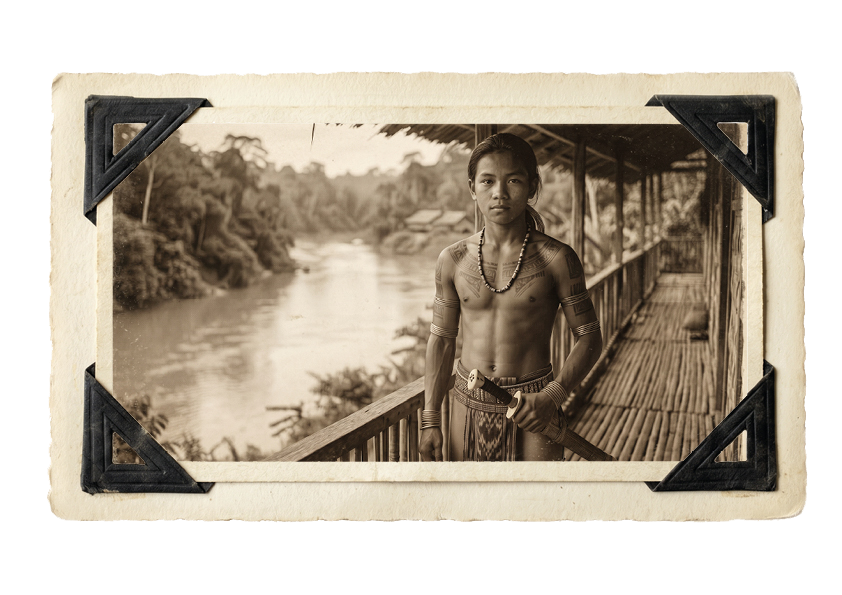

What makes Belayan remarkable in the world of these novels is the completeness of his identity. He sits at Julian and Samuel's dinner table in his traditional attire while colonial officials shift uncomfortably in their stiff collars. He receives a gift perang with the ceremony it deserves, carves the roast beef with the reverence of someone who understands that the knife is always significant, and meets Julian's eyes afterward with the smallest nod. He needs no validation from the colonial world and does not seek it. He is already exactly who he is.
His friendship with Ravi is the emotional heart of much of Book 2. They speak in Iban dialects at the dinner table when the conversation dies. They sleep side by side after the Tuak has done its work. They tie knots in each other's ropes and make promises across floodwater. Belayan is the older brother Ravi never had and the bridge, in every sense, between the world of Istana Kenyalang and the world of the longhouse at Tuaran.
Li Mei
Good Friend and Pen Pal to Ravi
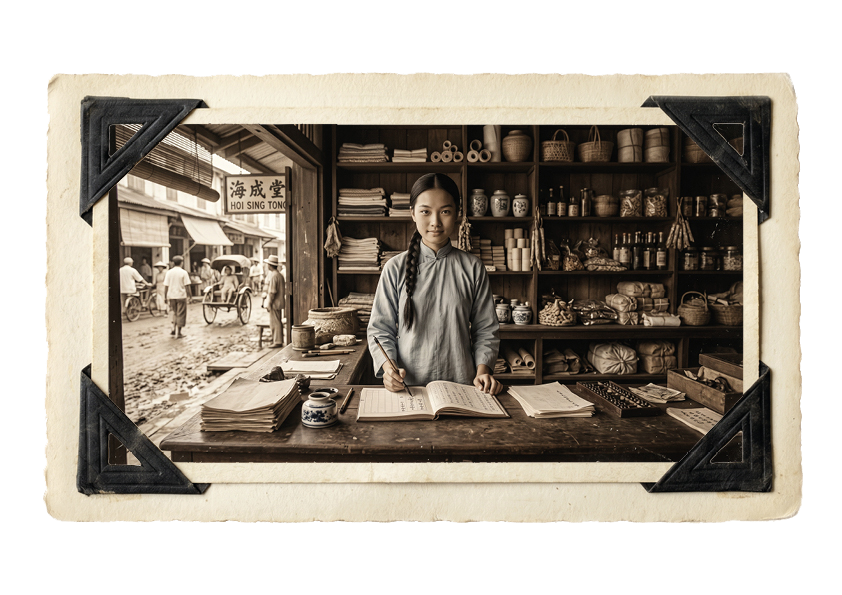
Li Mei is sixteen years old when we first meet her. She is the daughter of Towkay Lim, a Chinese merchant of Kuching whose stationery and dry goods shop occupies a corner of the five foot way. She is tall for her age, with her hair pulled back in a neat braid. When she appears from behind the curtain of hanging fabrics or at the counter with a ledger open, she looks older than sixteen in the way of young women who have been given serious responsibilities and have risen to meet them.
She introduced herself to Ravi when he was struggling to count change in Hokkien. She is, by any measure, his intellectual equal. Li Mei is already better at practical calculations than Ravi was when they first meet, applying compound interest formulas to her father's warehouse storage costs before Ravi has thought to try. She wants someone to talk to who does not discuss marriage prospects and proper behaviour for merchant daughters. She wants to work on logarithms.
What makes Li Mei extraordinary in the world of these novels is the completeness of her own ambition. She is not waiting to be noticed. She notices. She is not waiting to be taught. She teaches, and learns in return, and keeps a ledger of everything she has figured out on her own.
Ravi changes his bow tie four times before visiting her. He borrows Samuel's cologne. He rises at six to shave the sparse hairs on his upper lip. He leaves the shop with his heart beating fast and a smile that spreads across his face so far he thinks it will never leave.
Entapang anak Jelani
Plantation Foreman & Pengurus Besar (Estate Superintendent), Ranjang Estate. Tribal Elder and Longhouse Chief, Tuaran District
There are men who carry authority quietly and men who wear it loudly. Entapang has never needed to raise his voice.
He is the plantation foreman at Ranjang Estate and a respected elder and tribal leader of the longhouse community at Tuaran. In anyone else's hands these two roles might seem contradictory, but not Entapang. He holds them with the characteristic wisdom of a man who has always understood that the practical and the sacred are not enemies. He is the reason Julian and Samuel's estate works. He is the reason their workers are content, their boundaries respect the sacred stones, and their dead are properly guided to the ancestors.
He arrives at Istana Kenyalang after four hours of travel, dust coating his sarong and weariness around his eyes, and is dignified despite it. He settles into the chair at the table's head, the traditional position of honour, and if he notices the symbolism, he gives no sign.
But it is at the memorial ceremony that Entapang becomes fully himself. Standing near the fire pit in his full ceremonial dress in his baju burung, (the sacred bird shirt passed down through generations of his family), hornbill feathers adorning his tanggui headdress, the traditional tattoos on his arms moving in the dancing lamplight. He is no longer the plantation foreman. He is the spiritual guardian of traditions that predate any European arrival in Borneo by centuries.
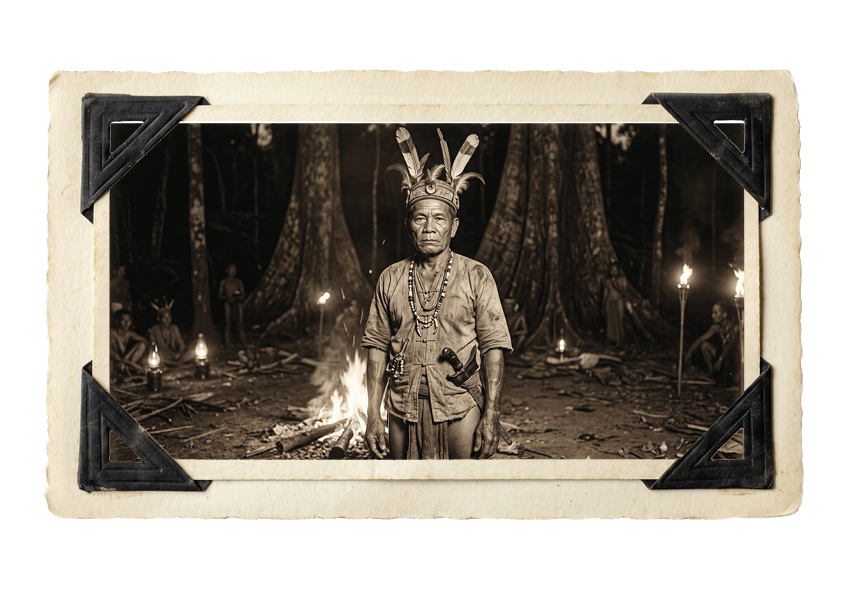
When he places his hand on Ravi's shoulder at the ceremony's close and tells him that tonight he becomes one of us, it is not performance. It is the most significant thing anyone has said to the boy since Samuel offered him a job on a street in Aden.
He is Belayan's father. He is the man Julian trusts to manage everything. He is, in the quiet way of the most important people, the reason Istana Kenyalang survives
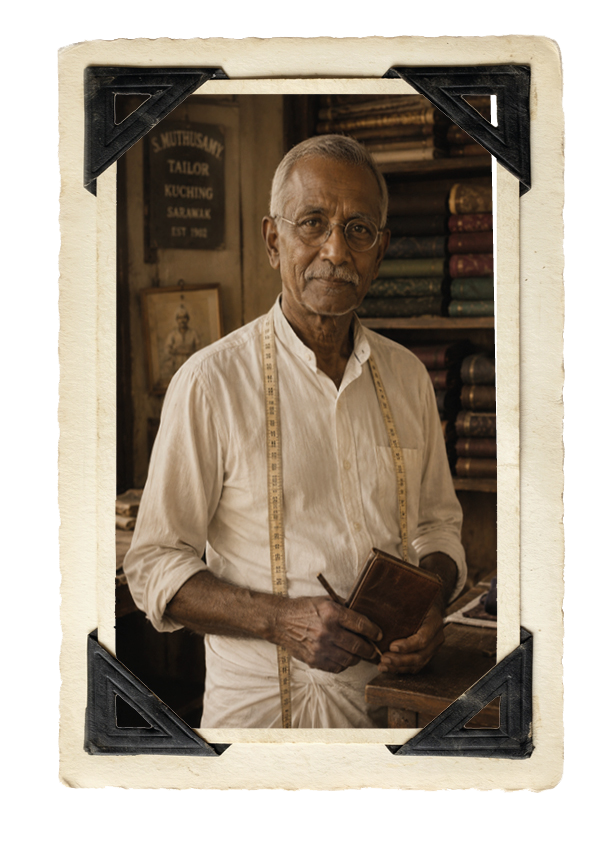
Encik Rama Iyer
A master tailor of Kuching and CIS Sleeper Agent
Outwardly the very picture of a respectable craftsman; courteous, formal, exacting. Encik’s English is precise and educated, his manner heavy with the unspoken weight of duty rather than warmth. But Encik Rama is also a CIS sleeper agent, one of James Morrison's carefully positioned pieces in Kuching, and beneath the measuring and the cloth he carries messages, watches, and prepares men for the perils of the Rajah's court. He understands what is required (of a tailor and of an agent alike) and reveals only as much of either trade as the moment demands.
Encik Rama Iyer is the family's first point of contact in Kuching and a thread in the wider web of the Service. To Ravi, left alone in the hotel, he is a reminder of the difference between duty and affection: a man who will dutifully look after him, but who is not his friend, not his uncle and not his father.
The Household at Istana Kenyalang
The people who keep the Istana, and in keeping it, make it a home.
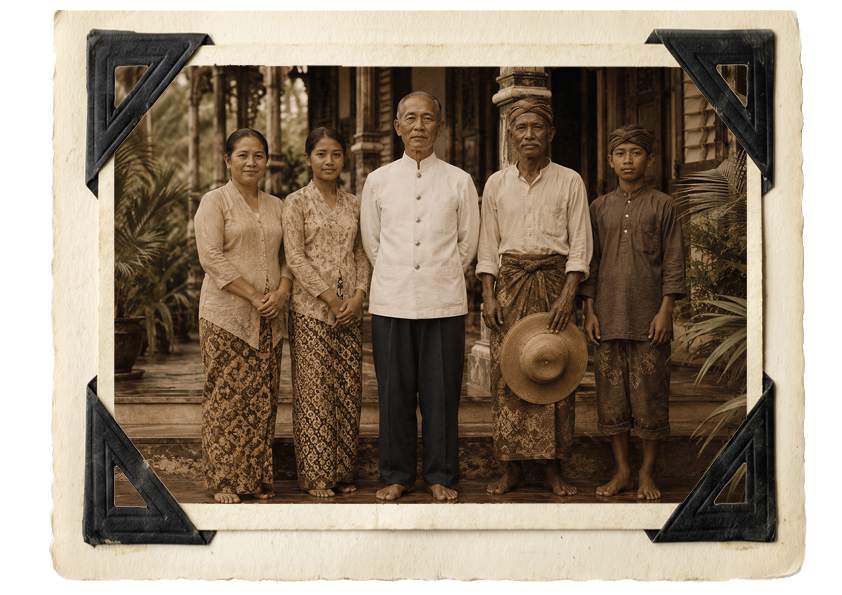
A grand house does not run itself. Behind every quiet morning on the verandah, every meal that wins over a sceptical colonial guest, every garden path swept before dawn, is a household of people who have made Istana Kenyalang their charge and, in time, their family.
From Left to Right:
Minah rules the kitchen. Their cook blends English expectations with Bornean flavours in a way that has disarmed even the most disapproving visitor, and her loyalty to the family extends well beyond the stove; it is Minah who quietly prepares food for every difficult journey.
Salmah is Minah's niece and her assistant in the kitchen, learning her aunt's particular alchemy of two cuisines and stepping out to help wherever the household needs another capable pair of hands.
Ah Seng is the house manager, inherited from Uncle Archibald's service and long since indispensable. He orchestrates a household of ten with such quiet efficiency that nobody notices it running at all. Composed, observant, and barefoot on his own polished floors, he greets official threats and unexpected danger with the same unhurried calm and very little happens at the Istana that Ah Seng does not already know about.
Karim is the head gardener, a man whose knowledge of English roses and indigenous fruit trees alike has turned the grounds into a quiet marvel — rambutan beside English cabbages, bamboo for Dayak kitchens, tarap trees for honoured guests.
Hassan is the young under gardener, learning his trade under Karim's patient and watchful instruction.
Pak Yusof
Boatman of the Lady Estella
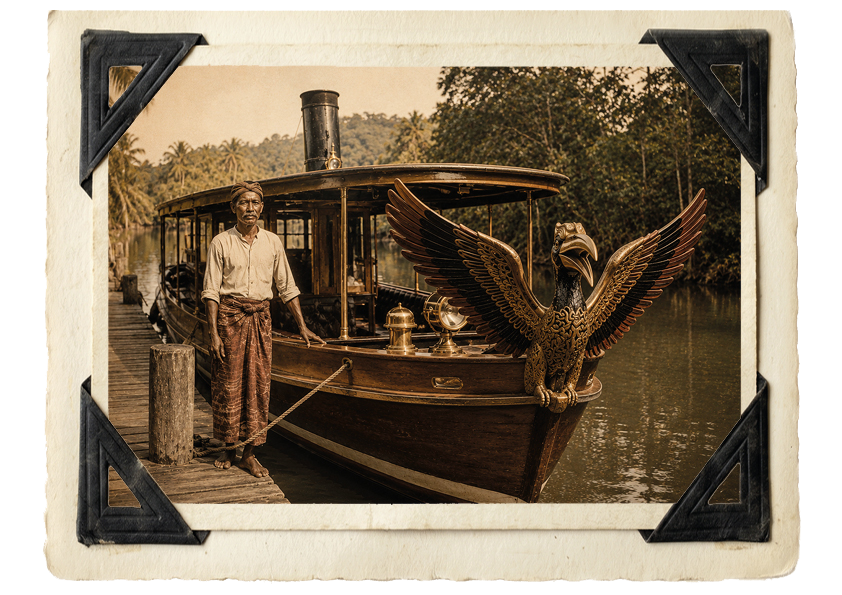
Pak keeps the Lady Estella, the family's steam launch ready for any adventure.
A boatman of long experience and weathered hands, he reads coral heads and treacherous shallows by eye, keeps the boiler primed and the woodpile stocked, and can raise a head of steam in under half an hour. Patient and steady, he is the man who teaches Ravi to take the wheel and the one entrusted to carry the family safely on every difficult crossing.
Ibrahim (Not photographed) is Pak Yusof's apprentice, learning the craft of the river and the open sea, handling mooring lines, tending the engine, and absorbing the seamanship of the man he serves.
New from Book 3: The Chartered Men
Isabella Ferreire Da Costa
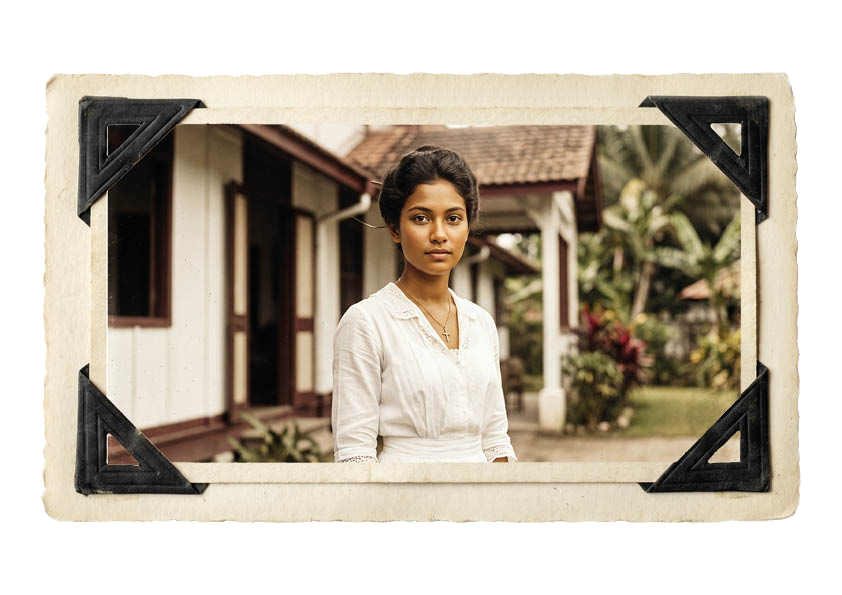
Ravi's first love interest.
Isabella is seventeen, the eldest daughter of a Portuguese-Dutch trading family established in Jesselton for two generations. She was educated at the Convent of the Holy Infant Jesus, speaks English, Malay and Portuguese with equal fluency, and has opinions about most things that she has been told, repeatedly and without effect, to keep to herself in mixed company.
She meets Ravi when delivering a charitable donation to the Gaya Street orphanage and asks him a question about the roof drainage so precisely correct that he is briefly silenced. She is the first person he has ever met who consistently says things he doesn't expect. He is not remotely prepared for her.
Dorothy Peel
Evelyn's Companion
Dorothy Peel is a widow of the Indian Civil Service who came east with a husband and stayed when he died, because she found she preferred it.
She is in her late forties, composed in the way of someone for whom composure is simply a natural register rather than an effort, and possessed of a dry precision of speech that catches people off guard. She asks questions with the focused intelligence of someone who has already read the relevant documents.
She identifies Samuel, in her private assessment to Evelyn, as the most careful man she has ever sat at a table with and means it as a compliment. She is not easily impressed, which is precisely why it matters when she is.
Ah Kow
Evelyn's Houseboy
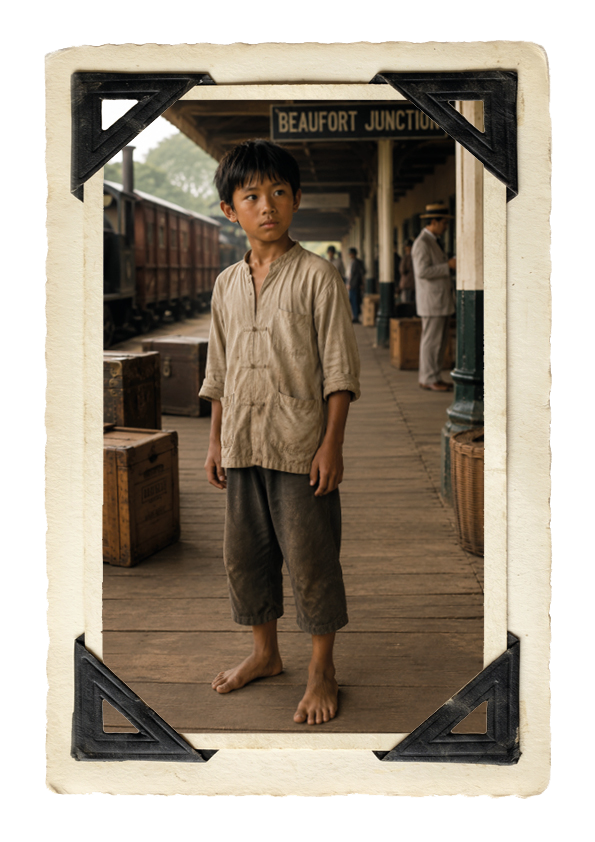
Ah Kow is a Chinese orphan of about 8 years old from the railway settlements of North Borneo, he first appears as a watchful, half starved child who has learned that survival depends upon silence, speed, and never taking up too much space in the world. Ravi sees in him an echo of the frightened Aden street boy he once was, and slowly draws him into the growing family at Istana Kenyalang.
Reserved, observant, and sharper than most adults realise, Ah Kow possesses the rare ability to notice everything while appearing to notice nothing at all. Under the guidance of Ravi, Dr. Evelyn Blackwood, and the wider Kenyalang household, he begins the long journey from orphaned outsider to trusted companion, student, and eventually one of the quiet connective threads holding the family together.
Like so many within the Kenyalang world, Ah Kow’s story is not one of blood inheritance, but of chosen belonging
New from Book 6: World War Two in Borneo
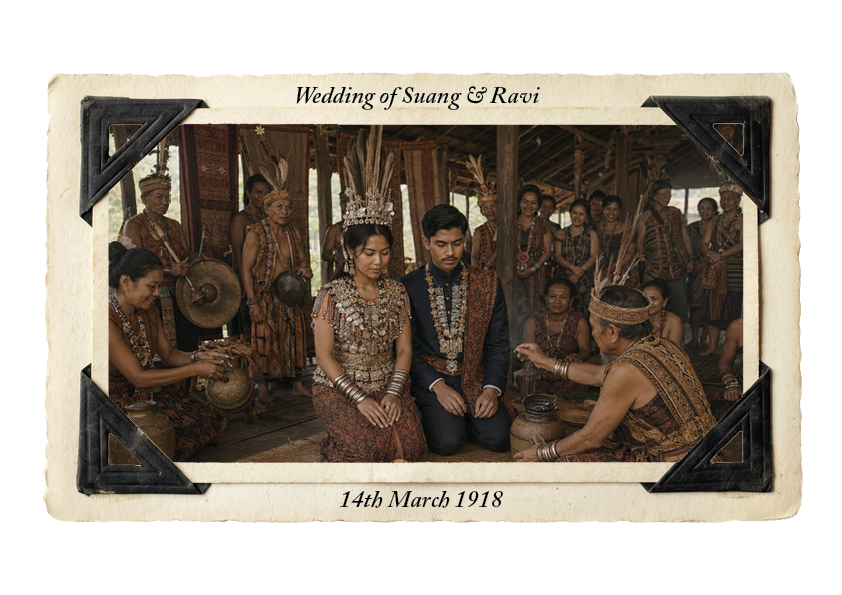
Ravi’s Wife
Ravi's wife, and sister to Belayan. She is the quiet centre the whole household at the Beaufort Bungalow turns around.
Her love for Ravi is steady and unshowy, built over years at the Beaufort bungalow. Having already lost Harri to England at thirteen, she holds the twins close and hopes, fiercely, that Sanskar and Dev stay near home rather than follow their brother across the world. Harri's letters are her treasure; she keeps every one, reads them until the creases wear through, and writes back with news of the estate, the river, and the two brothers he left behind.
Ravi and Suang married at Suang's longhouse in the interior with Entapang giving his blessing as father and headman both; a match that bound the estate to the community that had sheltered and trusted the family for thirty years.
The ceremony followed Iban custom: gong music, rice wine, the whole longhouse turned out for the feasting. Belayan stood at his sister's side throughout, already the closest thing Ravi had to a brother. Julian and Samuel made the journey upriver for it, out of place and delighted to be so, and Ravi carried Suang home to the new bungalow at Beaufort to start the life — and the family — that would carry them both into the years ahead.
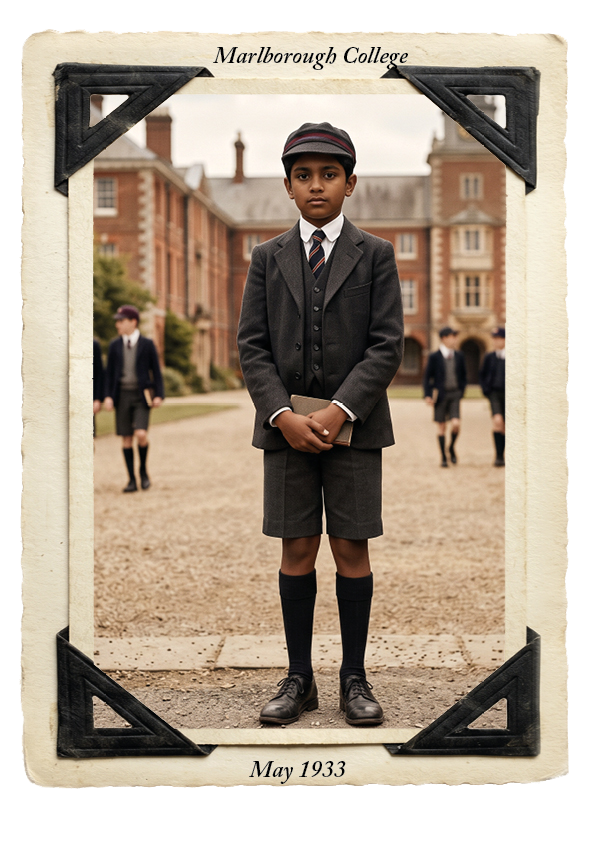
Harry Whitmore-Pembroke
Ravi and Suang’s Eldest Son
Harri (Henry Whitmore-Pembroke)
Ravi and Suang's eldest son, was sent from Borneo to boarding school in England (Marlborough College in Wiltshire) at just thirteen.
Harri joins the RAF as war approaches, trains at No. 10 Elementary Flying Training School, Lulsgate Bottom, then wins his wings at No. 9 Service Flying Training School, Hullavington where he is commissioned Pilot Officer. He goes on to fly with Transport Command from Upavon, ferrying aircraft and supplies through the war and beyond.
Three worlds shape him: 1) The Beaufort bungalow he left behind in Borneo. 2) The RAF cockpit he grows into as war closes in and 3) The comradeship of his Cousin when they are both convalescing in Wiltshire.
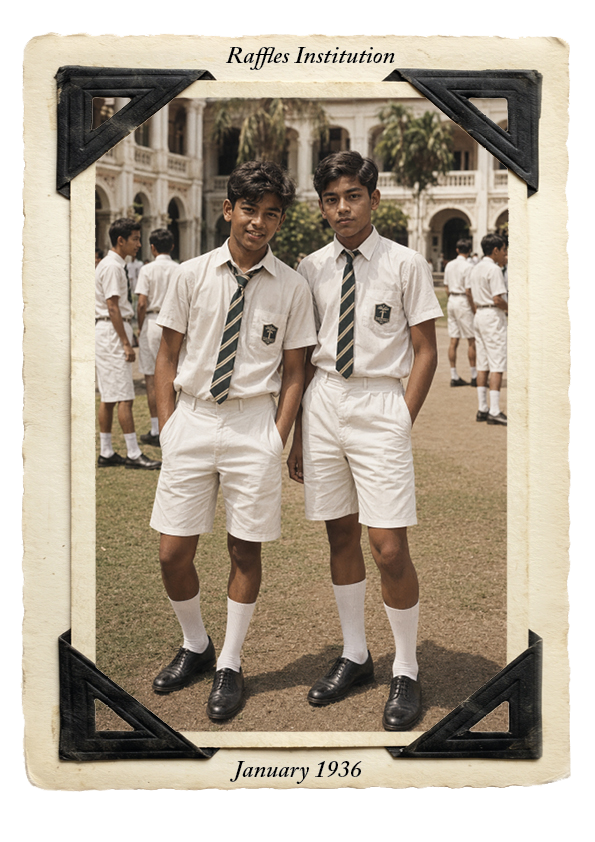
Sandskar and Devandra Whitmore-Pembroke
Alexander is his English name but in truth it is Sanskar to his family and friends.
One of Ravi and Suang's twin sons. Where his brother runs toward the fight, Sanskar works closer to home; inside his father's own network, in a war fought with information rather than arms.
Devandra (Dev to his friends)
Sanskar's twin, and the one who won't stay out of it. Dev's decision to join the resistance in Borneo sets him on the harder road of the two brothers' wars.
Both boys were sent to Raffles Institution - a secondary school in Singapore. It is here that their differences grew. The only area they are both completely agreed upon is their love of each other and their family. While seperate in outlooks to life, the twins are inseparable. Only the war will pull them apart.
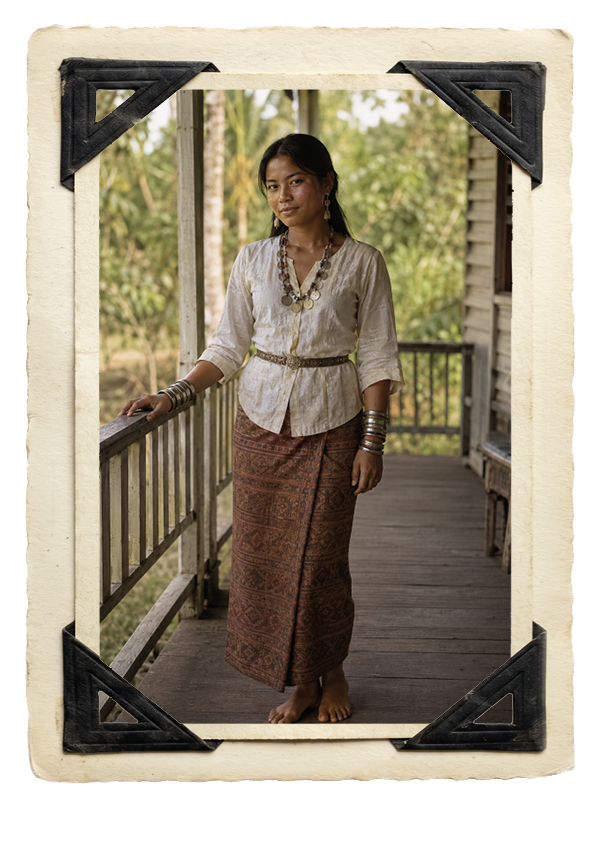
Suang Anak Entapang
Twin Boys, younger brothers to Harri
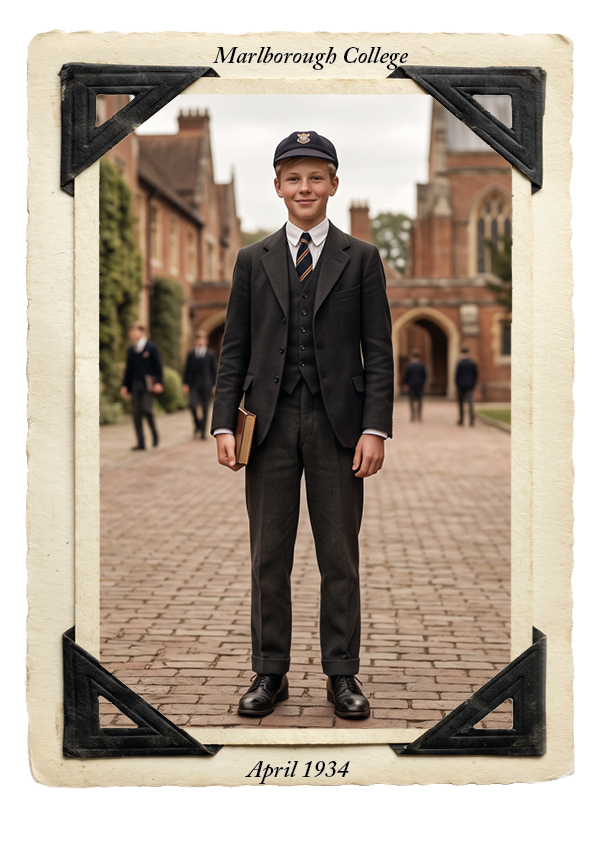
Edward Pembroke
Only son of Charles Pembroke, Julian’s Younger Brother
Julian's younger brother, a clergyman and steward of the family's English estate, Thornfield. Quieter and more open-minded than his wife, Charles holds the family together at home while the war reaches into every corner of it. His only son was born on route back from Borneo after visiting Julian. Charles’ wife (Winifred) died following complications of the birth.
Edward (Teddy to his friends) is something of a solitary figure despite the crowd he can charm when he bothers to. Sharp-tongued and a little cheeky, Teddy's real home is the stage; an avid amateur dramatist who would rather be scribbling a play than making conversation. The war interrupts him mid-scene, in more ways than one.
Teddy and Harri meet by complete accident at Marlborough College when they are 13 and introduces Harri to the UK life he did not know existed.
In World War Two Teddy joins the 2nd Battalion, Wiltshire Regiment, and fights in the retreat to Arras before being evacuated from Dunkirk as a Second Lieutenant, wounded and sent to convalesce at Thornfield — where the war brings him back into Harri's life.