

Meet the Characters
Images on this page developed through Use.ai
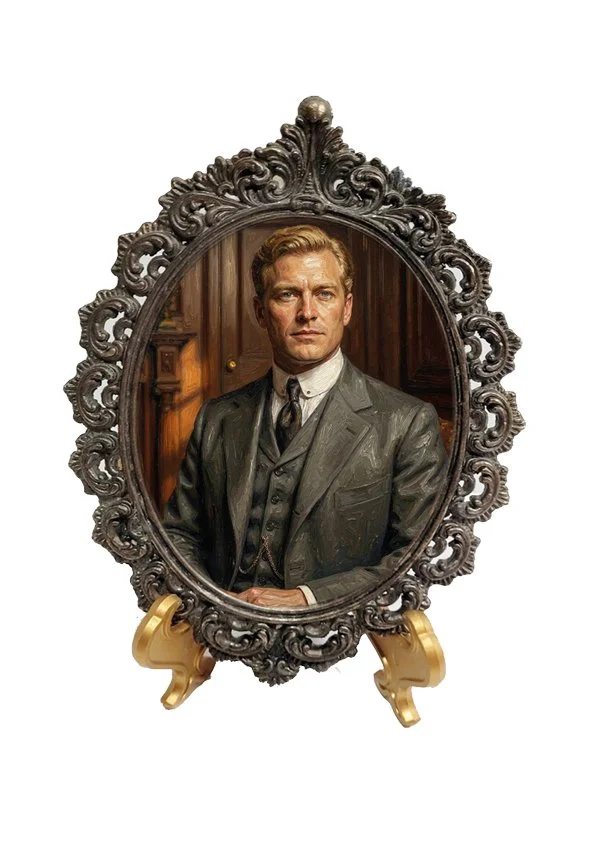
Born 14th March 1876
Julian Pembroke
Disinherited Second Son to the Earl Pembroke and Plantation Owner
Samuel Whitmore
Private Secretary and Aide de Camp to Julian
Samuel Whitmore is not a man who announces himself. He is the kind of man you notice on second glance. Not because he is unremarkable, but because he has spent years cultivating the particular skill of being present without demanding attention. In a room full of people, he is the one watching the door. Observing.
He is thirty-four years old. Solidly built, with the bearing of a man shaped by military service rather than born to ease. The Boer War left its mark on him as it did on all who went: a wariness behind the eyes, a habit of assessing a room before entering it. His hands are capable hands. His voice is quiet and carries more authority for it. His blonde hair is neatly kept. His blue eyes miss nothing.
He dresses with the precision of a man who understands that appearance is a form of communication. A charcoal grey suits chosen with care as are his brown boots and coloured ties. His half-hunter pocket watch hangs on a half-albert from his waistcoat and is consulted with the same deliberateness he brings to everything he does. He carries a walking cane with a Toledo steel blade concealed inside it. He would prefer people did not know about that.
What is less visible is the interior life. Samuel Whitmore is a man of profound loyalty and carefully contained feeling. He came up through the ranks, served as batman to an officer who became something far more than his master, and has spent twelve years being indispensable to a man he loves with a steadiness that never wavers and rarely speaks its own name aloud.
He is the person Julian reaches for in the dark. He is the person Ravi calls Pappa. He is, in the end, the still centre around which everything else turns.
Appears in Books 1 to 4
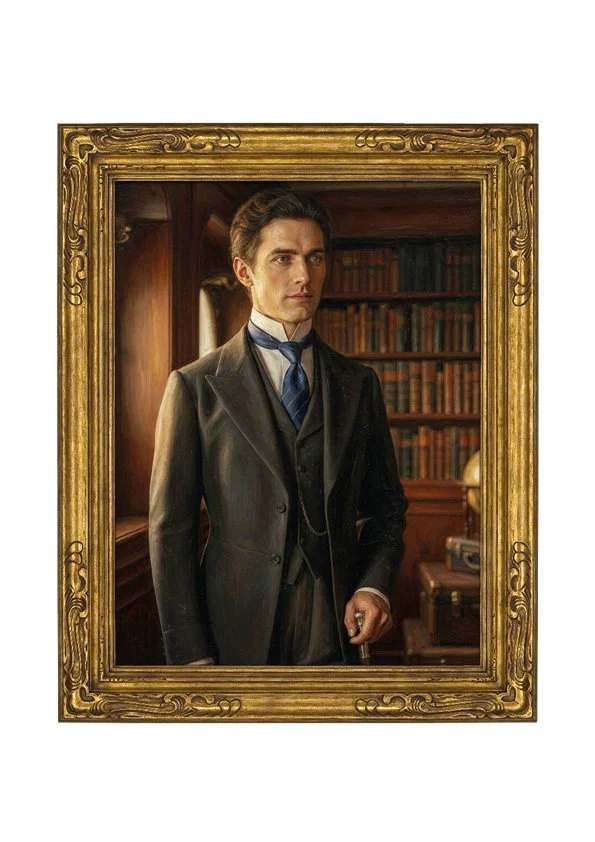
Born 19th September 1874
Julian Pembroke gives the impression of a man who was born into one world, chose another, and has never once regretted it.
He is thirty-two years old. Lean and upright, with the natural poise of someone born to privilege. His dark hair, his sharp cheekbones, and the aristocratic set of his bearing mark him immediately as a gentleman. But the eyes tell a different story. They are contemplative, slightly sardonic, the eyes of a man who finds the world quietly amusing and occasionally absurd, and who feels things deeply beneath the surface but rarely tells it out aloud.
He was an officer once, and carries the straight back and economy of movement that the army instils permanently. He is also a painter — a man who notices light and shadow, who sees the world in composition rather than in simple fact. These two things sit in him in a productive tension that shapes everything he does.
Disinherited by a father who never understood him and never tried to. He has sailed east toward a life that England could not offer. What he finds in Borneo (a home, a family, a purpose) is everything his Wiltshire upbringing withheld.
Appears in Books 1 to 4
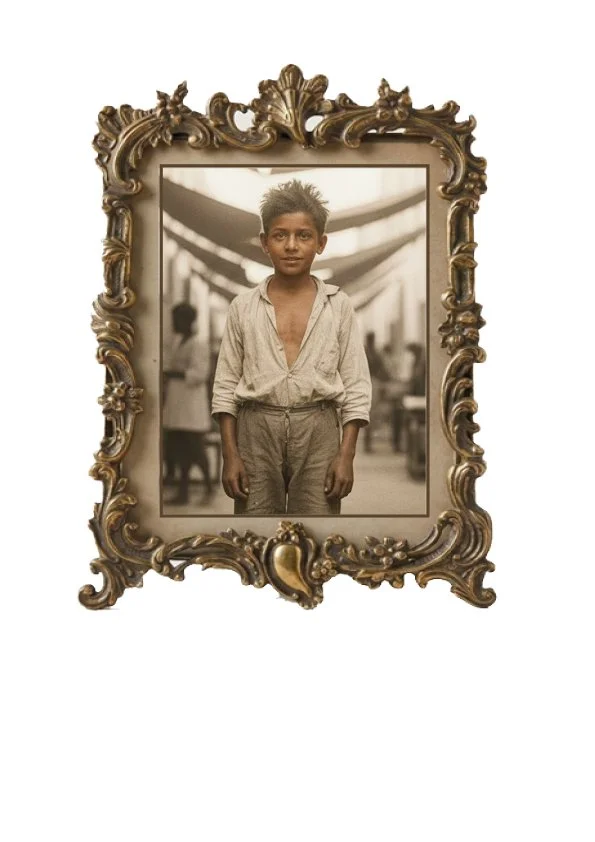
Born 19th May 1898
Ravi Whitmore
Former Street Urchin. Ward to Samuel Whitmore
Ravi is twelve years old when Samuel and Julian find him on the streets of Aden. His first appearance shows him barefoot, in clothes long outgrown, a fresh cut on his face and the fading remains of a bruise around his left eye. He is small and wiry, with the lighter brown skin of an Anglo-Indian child. Too light for the Arab quarter, too dark for the colonial drawing room, belonging fully to neither world.
His mother was an Indian Ayah. His father was a British officer who fled home to his wife when he discovered he had left a servat ‘in the family way’. Ravi’s mother (Meena) taught him English before she died because she said it would help him survive. She was right.
What strikes Samuel immediately are Ravi’s eyes. Dark, intelligent, wary; the wariness of a child who has learned that European men are not to be trusted, and who is therefore watching everything very carefully indeed. But beneath the wariness there is pride. His chin lifts even through tears and beneath the pride there is a quick, irrepressible wit that surfaces almost immediately. When Samuel offers him a job, Ravi's first question is how much he will be paid. He is, in short, impossible to leave on a street in Aden.
By 1912, at fifteen, Ravi has grown into something that defies every category his world has for him. Not servant, not ward, not quite son alhough that is closest to the truth of it. He moves through the colonial world of Borneo with a confidence that belongs entirely to himself, speaks four languages, manages luggage with the authority of a seasoned traveller, and calls Samuel Pappa without embarrassment.
He is the future of these books. He simply does not know it yet.
Appears in Books 1 to 4
Dr. Evelyn Blackwood
Anthropologist and family friend
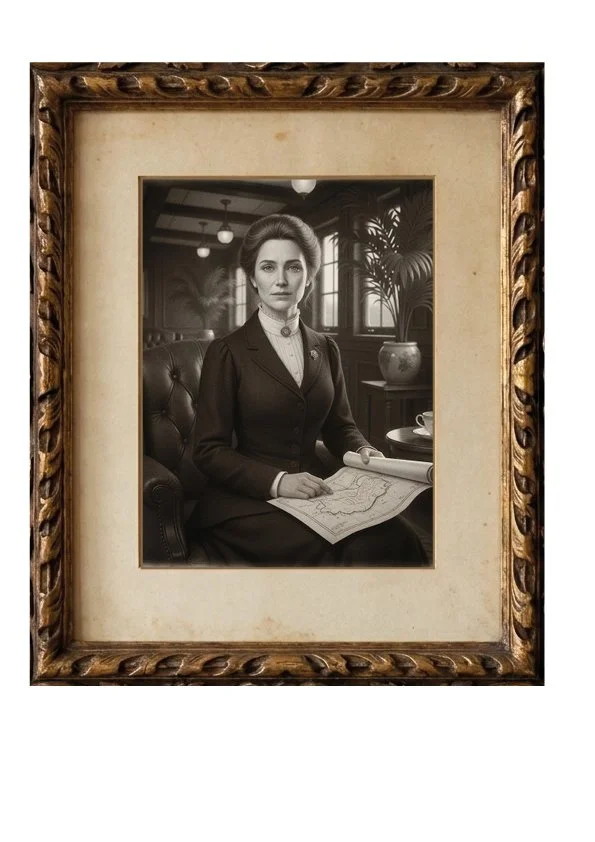
Born 3rd March 1865
James Morrison is, on the surface, exactly what he appears to be when we first meet him. A first class steward aboard the SS Maloja, impeccably turned out in pristine white service attire, attentive to his passengers' every need. He is the kind of man that first class passengers notice only when they require something and ignore entirely the rest of the time. This is precisely what makes him so good at his actual job.
James Morrison is an Intelligence Officer with the Colonial Intelligence Service. His cover as a P&O steward or a boat man or a clerk in the office of an import / export company s not merely convenient; it is a masterpiece of professional positioning. The aristocracy and upper classes have spent generations learning not to see the people who serve them.
James is methodical, precise, and possessed of an analytical mind that works through problems which he does systematically, quietly and missing nothing.
When Mr. Chen delivers his warning with a cracked nose and a threat, James gets back up, straightens his uniform, and adds it to his list of evidence against him! James becomes one of the most important people in Julian and Samuel's lives. They simply did not know when he first brought them their morning tea.
Appears in Books 1 to 3
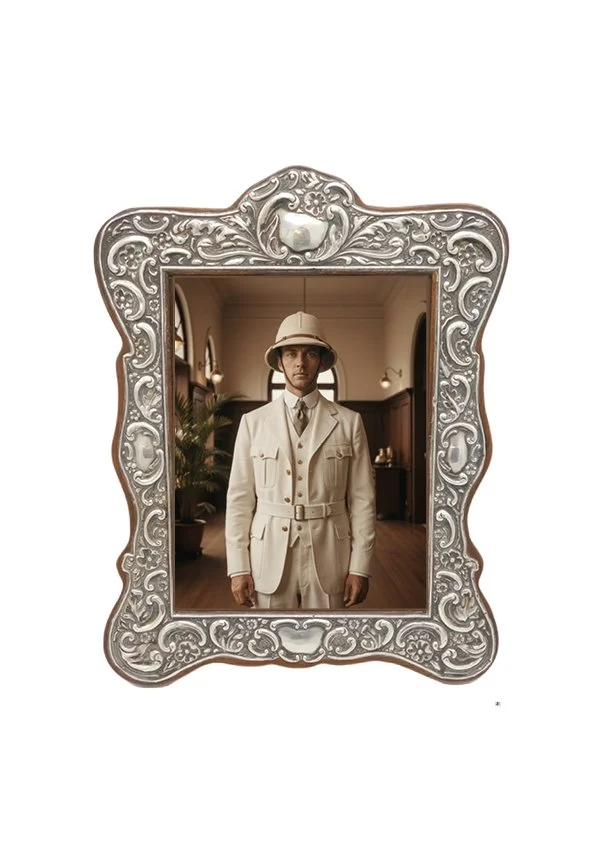
Born 11th June 1872
James Morrison
Colonial Intelligence Service Officer
Dr. Evelyn Blackwood does not wait to be underestimated. She simply proceeds, at her own pace, in her own direction, and allows the world to catch up if it can manage it.
She is an anthropologist of considerable reputation. Cambridge educated and widely published. Evelyn is a woman who has spent decades doing fieldwork in places that most of her male colleagues considered too dangerous for a lady and most ladies considered too academic for a woman. She has heard both objections many times and found neither persuasive.
She boards the SS Maloja with an old hand drawn map of British North Borneo, a formidable knowledge of Iban culture and Bornean folklore, and a grief she has carried for thirteen years with the particular dignity of someone who was never permitted to grieve publicly. Her companion of fifteen years, Dr. Margaret Sinclair, died of cholera in Cairo in 1897. The world assumed they were spinster colleagues sharing expenses for convenience. Evelyn has never corrected this assumption. She has never needed to. She understood, long before she met Julian Pembroke, exactly what it means to love someone the world says you cannot love.
She is the person who tells Julian, when he most needs to hear it: I know what it means to fight for them while you still can.
Warm when warmth is required, absolutely formidable when it is not, and possessed of a laugh that fills whatever room she is in, Evelyn Blackwood is in practice the fourth member of a family she helped to build. She becomes the founding trustee of the Kenyalang Trust (of which Ravi is Director) and her funding helps secure a life for street children, like Ravi once was.
Appears in Books 1 to 4
Belyan
Entapang’s son and brother to Ravi
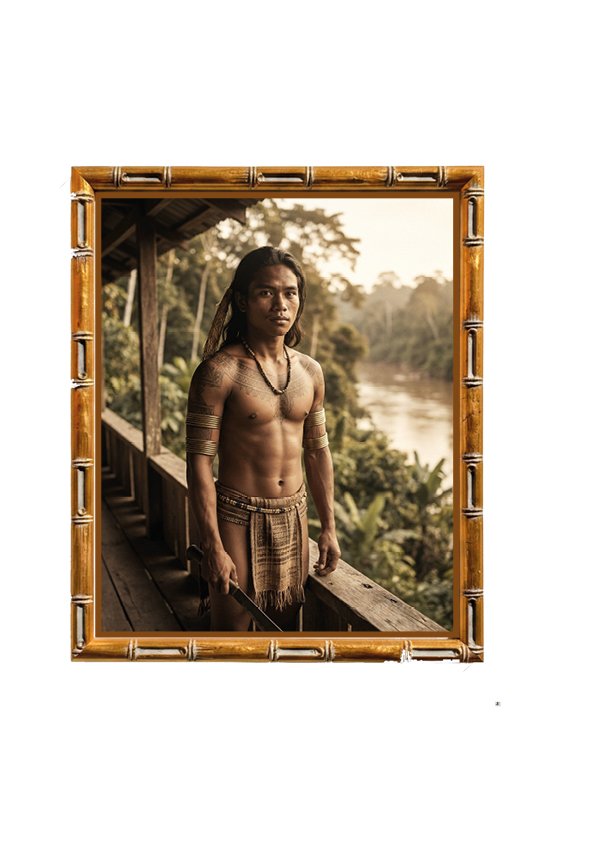
Born Approximately September 1894
Belayan is sixteen years old which makes him two years older than Ravi, and in those two years lies a world of difference. He has already undergone his rites of passage. He is already, in the eyes of his people, a man.
He is the son of Entapang, plantation foreman and tribal leader which means he was born to lead before he understood what leadership meant, and has spent his life growing into that inheritance with a quiet dignity that most men twice his age have not managed. One day he will be both plantation foreman and longhouse chief. Today he is simply Ravi's closest friend, and brother which in its own way is equally important.
Belyan carries himself with the calm authority of someone raised on the great rivers of Borneo. He is a young man who knows the name of every crocodile king, who can walk a rope bridge above a raging flood without looking down, and who understands instinctively that the old ways and the new are not enemies but partners. When the saltwater and freshwater crocodiles are confused by the flood and converging on the Lady Estella, it is Belayan who steps onto the submerged jetty first, calls out to the Raja Baya in the old language, and walks calmly toward the shore. He is not performing bravery. He simply does not see the alternative.
What makes Belayan remarkable in the world of these novels is the completeness of his identity. He sits at Julian and Samuel's dinner table in his traditional attire while colonial officials shift uncomfortably in their stiff collars. He receives a gift perang with the ceremony it deserves, carves the roast beef with the reverence of someone who understands that the knife is always significant, and meets Julian's eyes afterward with the smallest nod. He needs no validation from the colonial world and does not seek it. He is already exactly who he is.
His friendship with Ravi is the emotional heart of much of Book 2. They speak in Iban dialects at the dinner table when the conversation dies. They sleep side by side after the Tuak has done its work. They tie knots in each other's ropes and make promises across floodwater. Belayan is the older brother Ravi never had and the bridge, in every sense, between the world of Istana Kenyalang and the world of the longhouse at Turan.
Appears in Books 2 to 4