

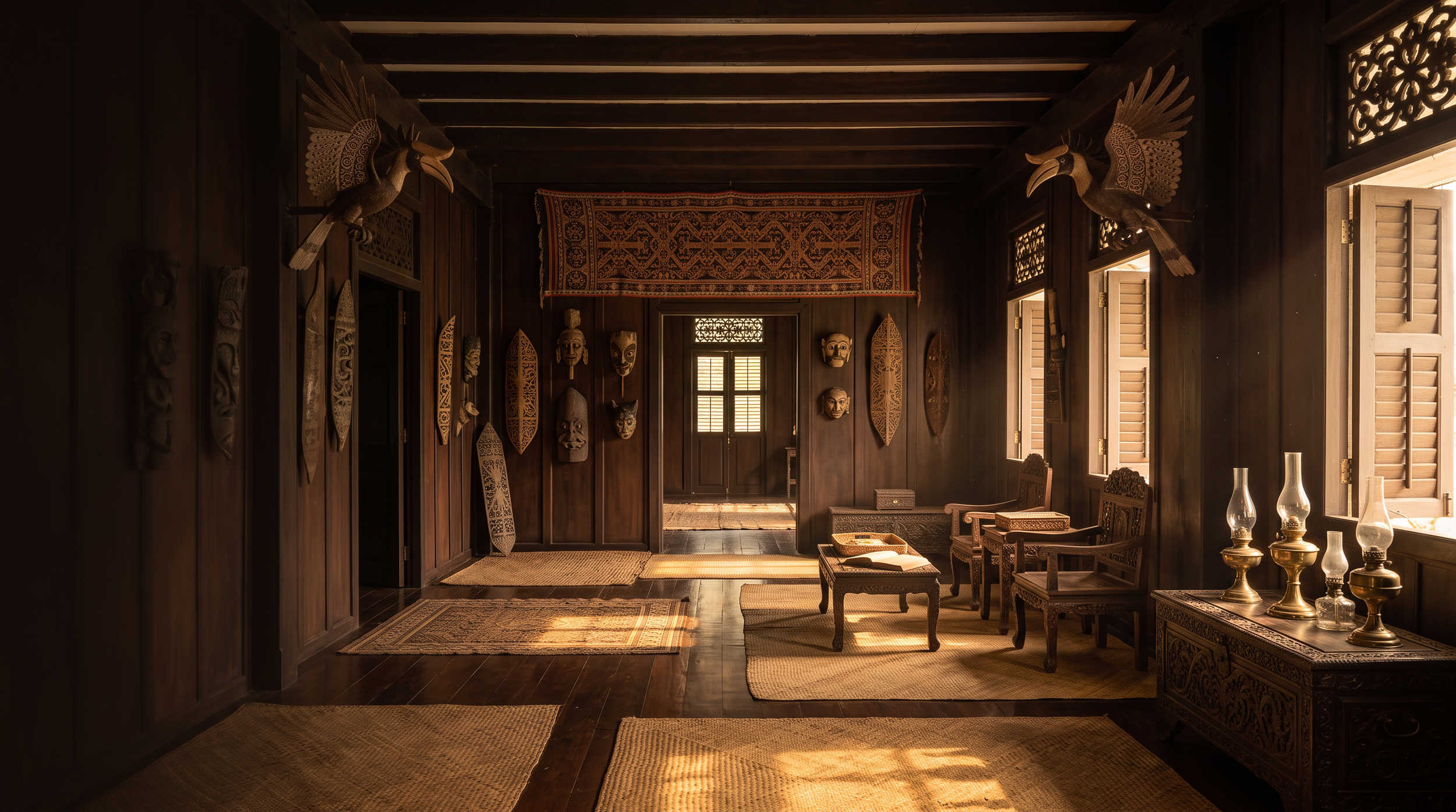
The Dayak Room
Notes, Objects, Gifts & Memories from Istana Kenyalang
Osborne House on the Isle of Wight has a room Queen Victoria built to hold an empire she never saw: the Durbar Room, its ceiling carved by an Indian craftsman, its walls lined with gifts and trophies from a country she ruled but never visited. It is a strange kind of honesty, that room — a confession that empire was, in the end, something collected. Istana Kenyalang in Jesselton has its own version of the room, though it was built for a rather different reason.
The Dayak Room is where Julian and Samuel receive their guests, where the pua kumbu that Indai Ujan wove and gave, rather than sold, hangs above the doorway, where the lantaka stands as more ornament than weapon now, and where Belayan once stood, newly a man, and was given a parang across that same threshold. It is not a trophy room. It is closer to a family's memory made visible: the things a household keeps not because they are valuable, but because they are loved, or because someone who is loved once carried them.
This page is my own attempt at that room, brought out of the fiction and onto the page. The objects gathered here are real. They sit in my own home (Brooke Hall), on shelves and in drawers, gathered over seventeen years in Borneo and the years since, and I have given them a home in the Dayak Room because that is where, in my imagination, a family like this one would keep them. Some are Iban, some Dayak, some Malay; the household was never only one thing, and neither is this room or my collection.
The notes beside each object are not so much essays as the labels a curator might pin next to them: what it is, where it came from, what it was used for, and what small, unrecorded life might once have handled it. My hope is that readers who meet these objects here will recognise them again when they turn up later — on a sideboard at the Istana, or in a hand that is not entirely sure why it is still keeping this thing after all these years.
Brunei Lengguai
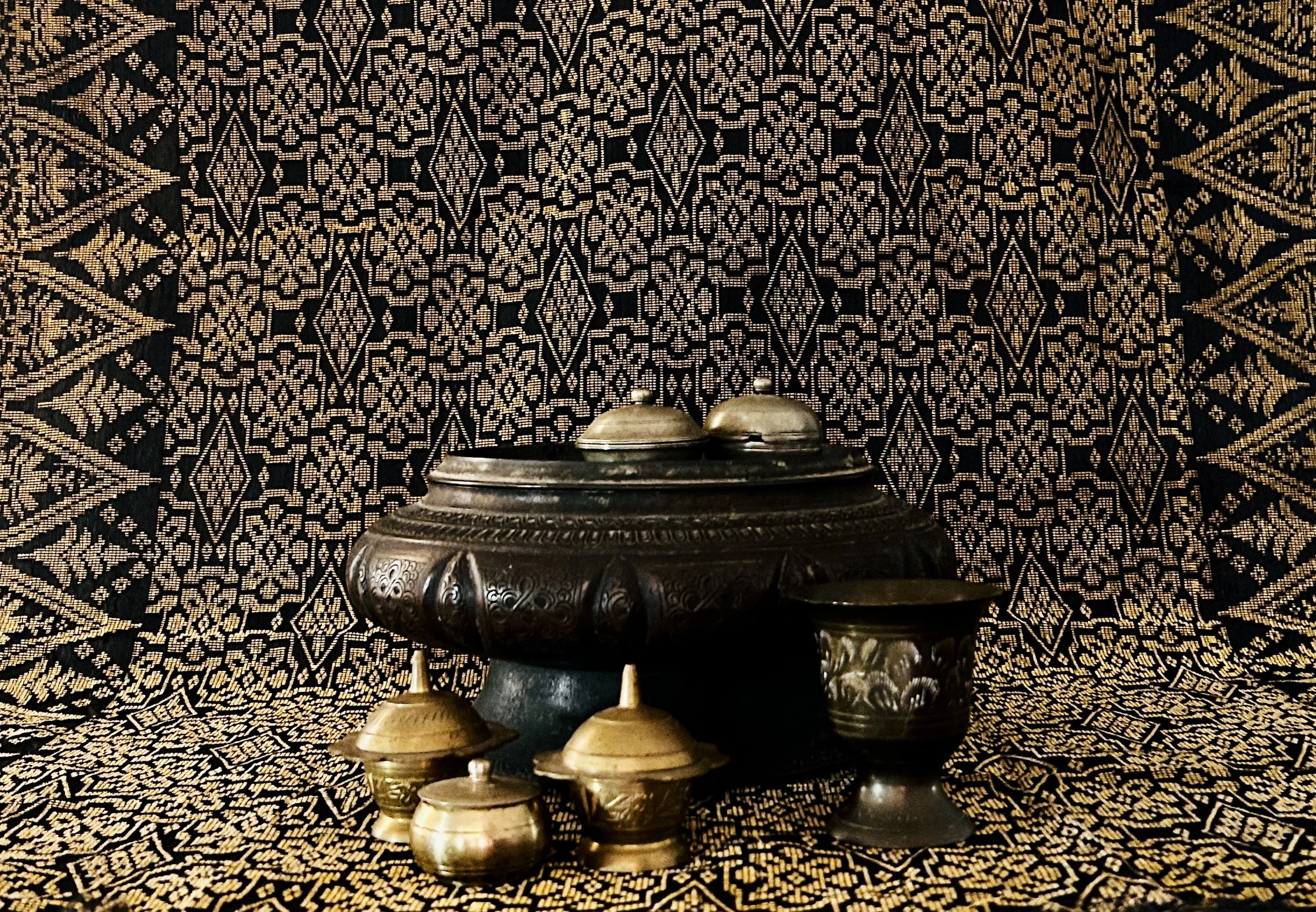
Betel Nut Container. Early 19th Century
Ceremonial Tepak Sireh - this style was used by more wealthy families. The betel leaves were kept more moist inside the container.
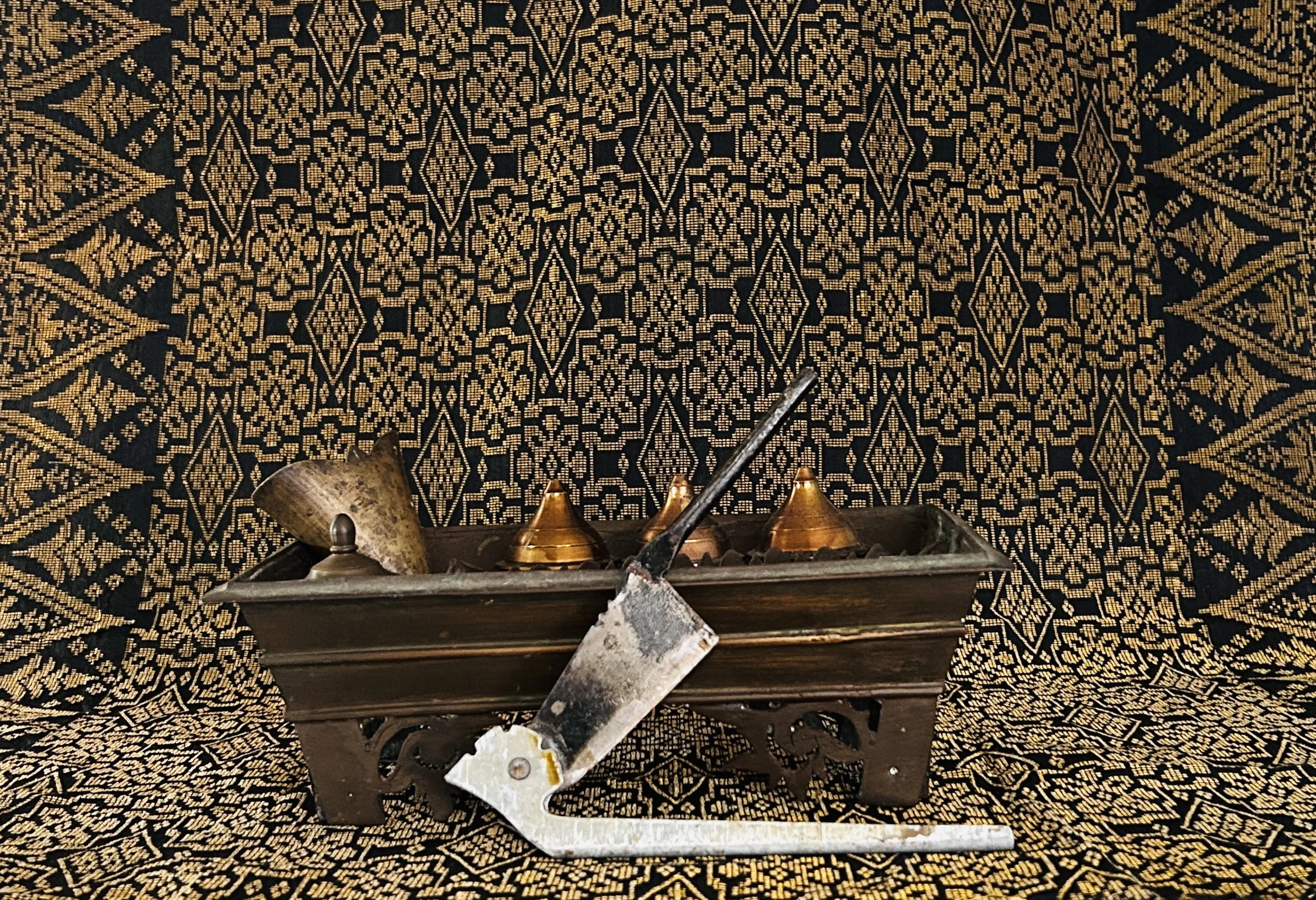
Tepak Sireh
Ceremonial Betel Nut Container. Late 19th Century
There are seven symbolisms of the tepak sireh.
1) Areca nut for good character. 2) Lime for kindness and sincerity. 3) Gambier for self determination. 4) Tobacco for a steadfast heart and readiness to sacrifice. 5) Cloves give the ability to maintain a good reputation and 6) Kacip is for mutual agreement to make good decision.
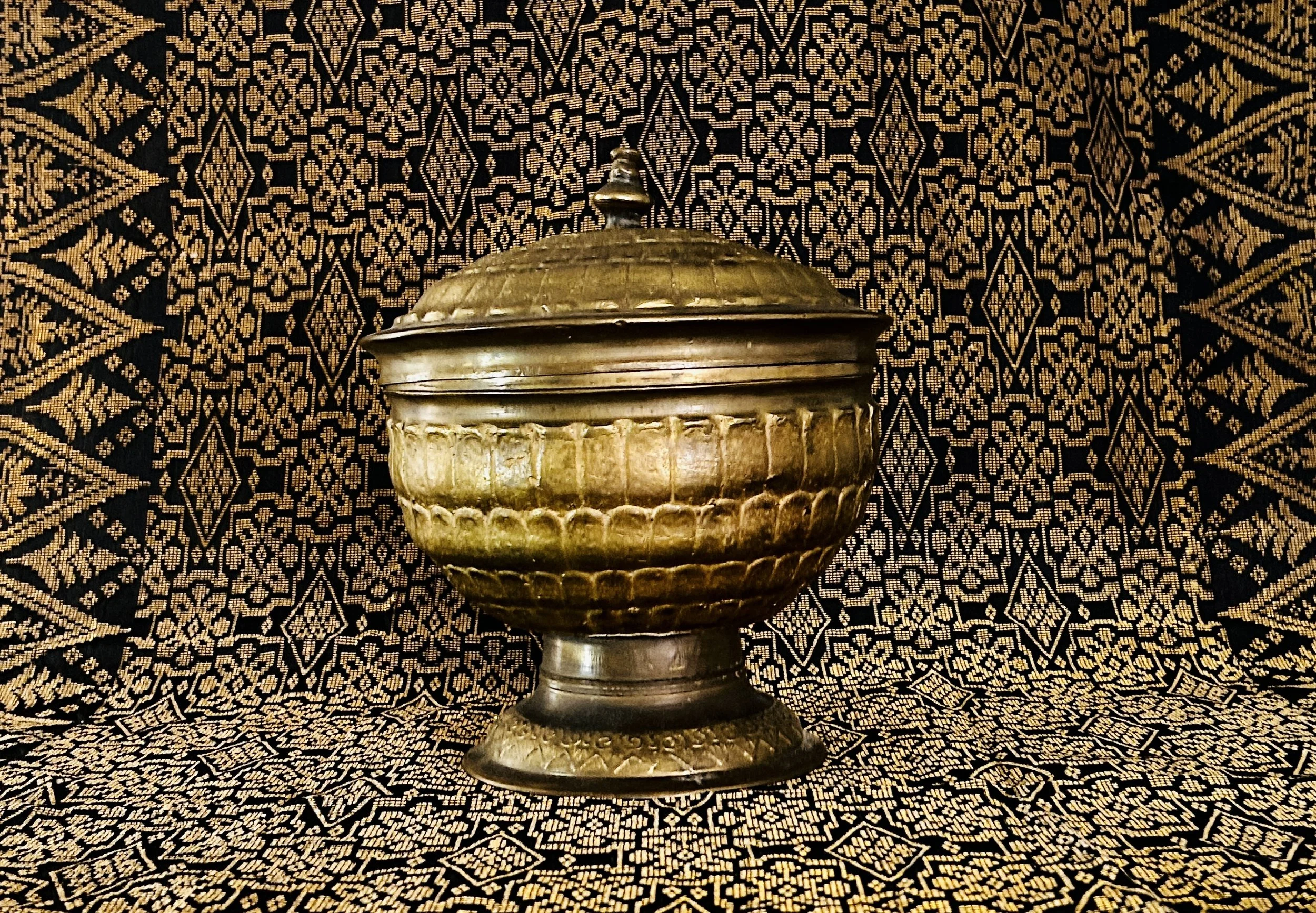
Tobacco or sireh jar
Late 19th Century
Shreds of tobacco were rolled into a little ball and slipped under the upper lip to provide change of flavour in the mouth and to clean the teeth. Though it does not form part of the betel quid, fine shredded tobacco leaves were added occasionally.
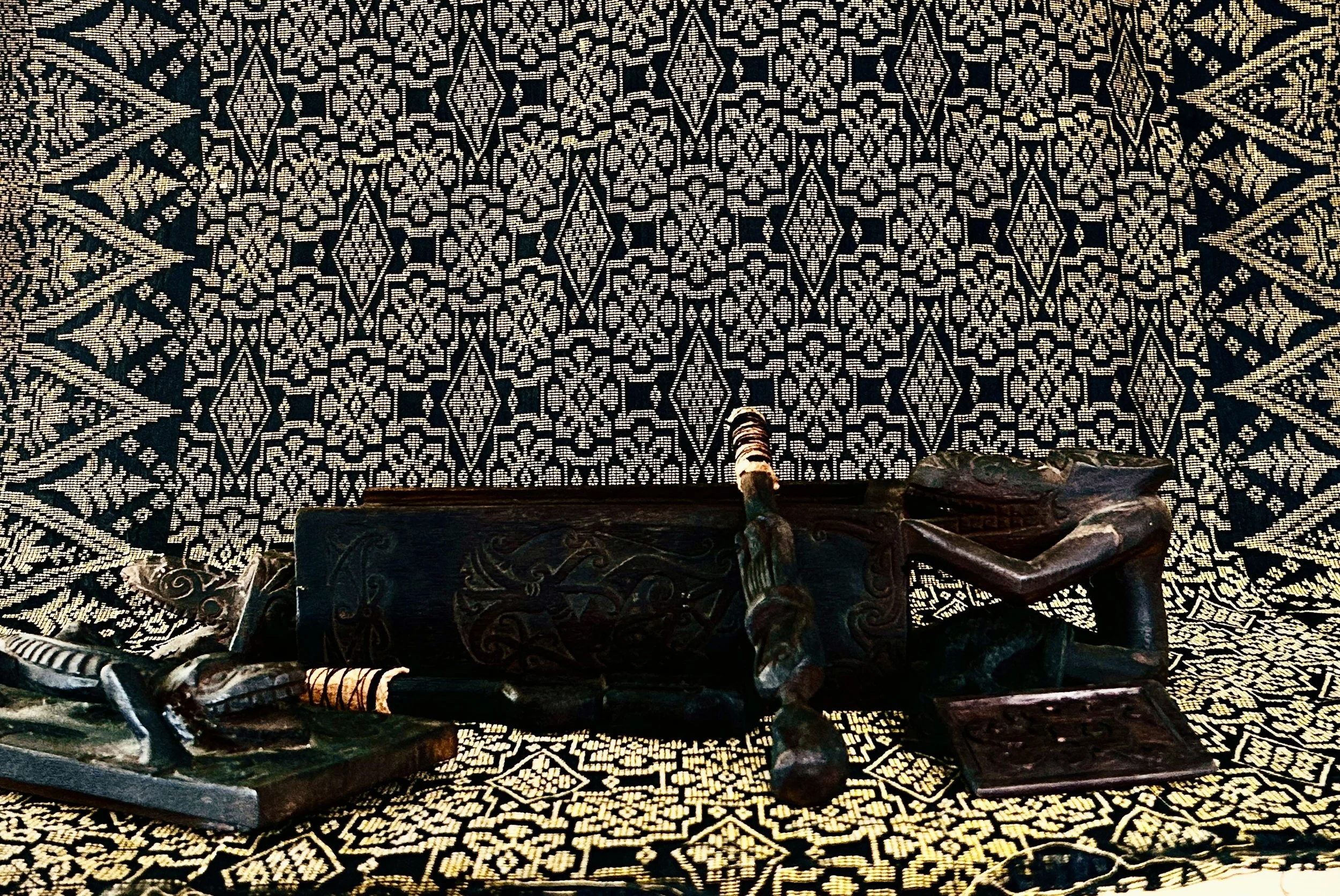
Dayak Tattoo Set
Early 19th Century
Box is made of hardwood with a sliding lid. The tools are made of light wood and the stamp also made of hard wood. The set is complete with tattoo needle, tapper and traditional design stamp.
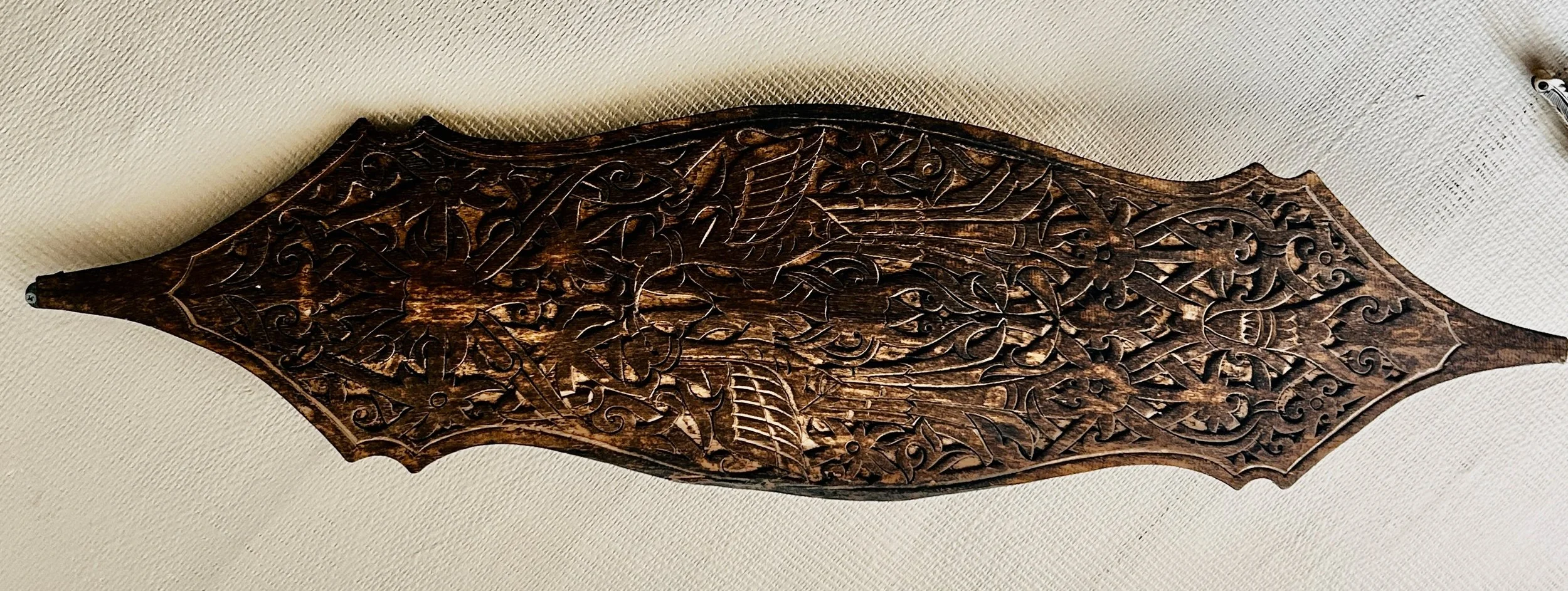
Dayak Wooden Paddle
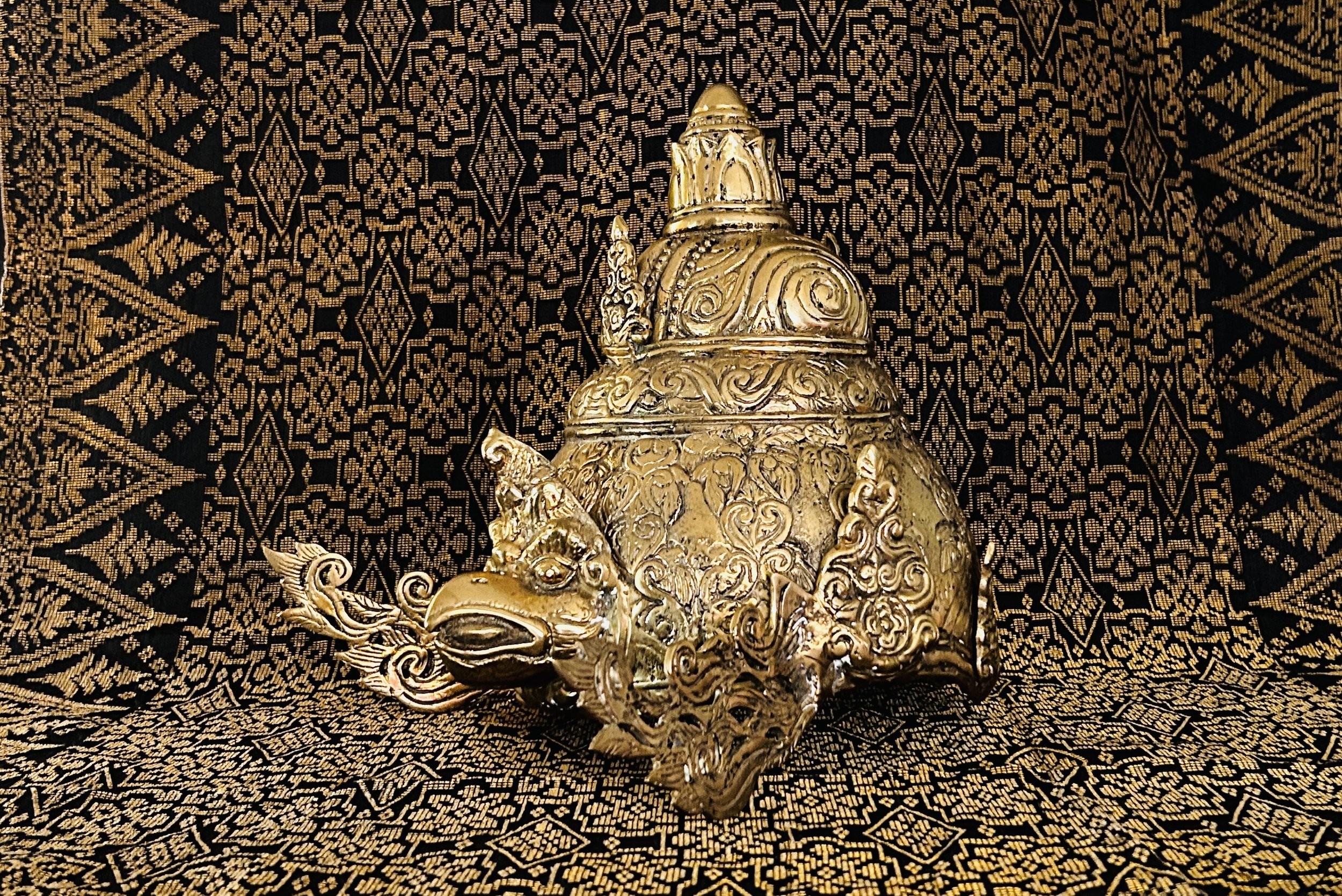
Ceremonial Headpiece
Unknown origin
Ceremonial brass headpiece of beaten brass, worked throughout in fine repoussé. The body rises in four tiers, each registered with bands of scrolling vegetal ornament, lozenge cartouches, and a chevron course at the lower edge. Above the upper tier rises a stepped finial. There is a Garuda type bird at the brow.
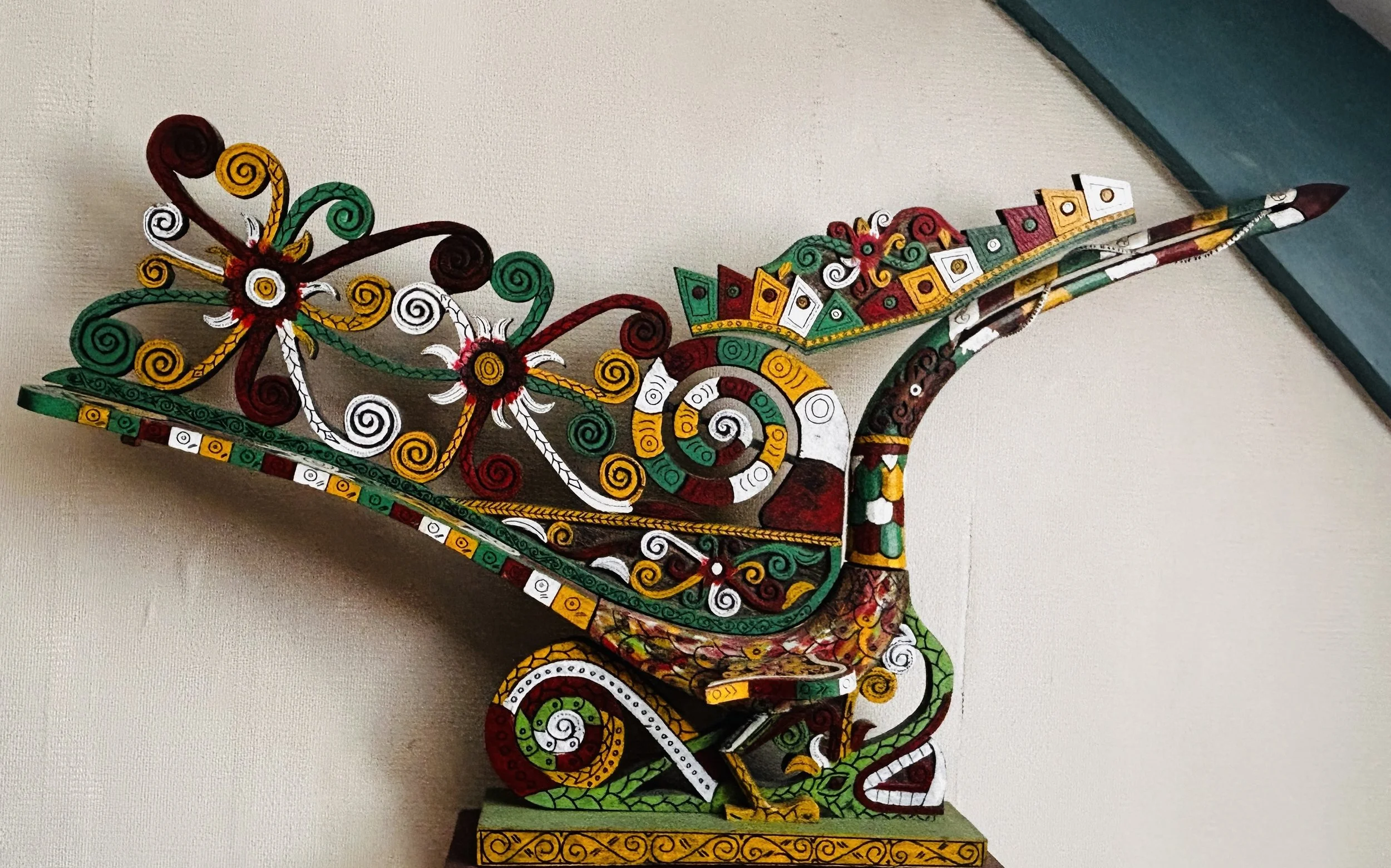
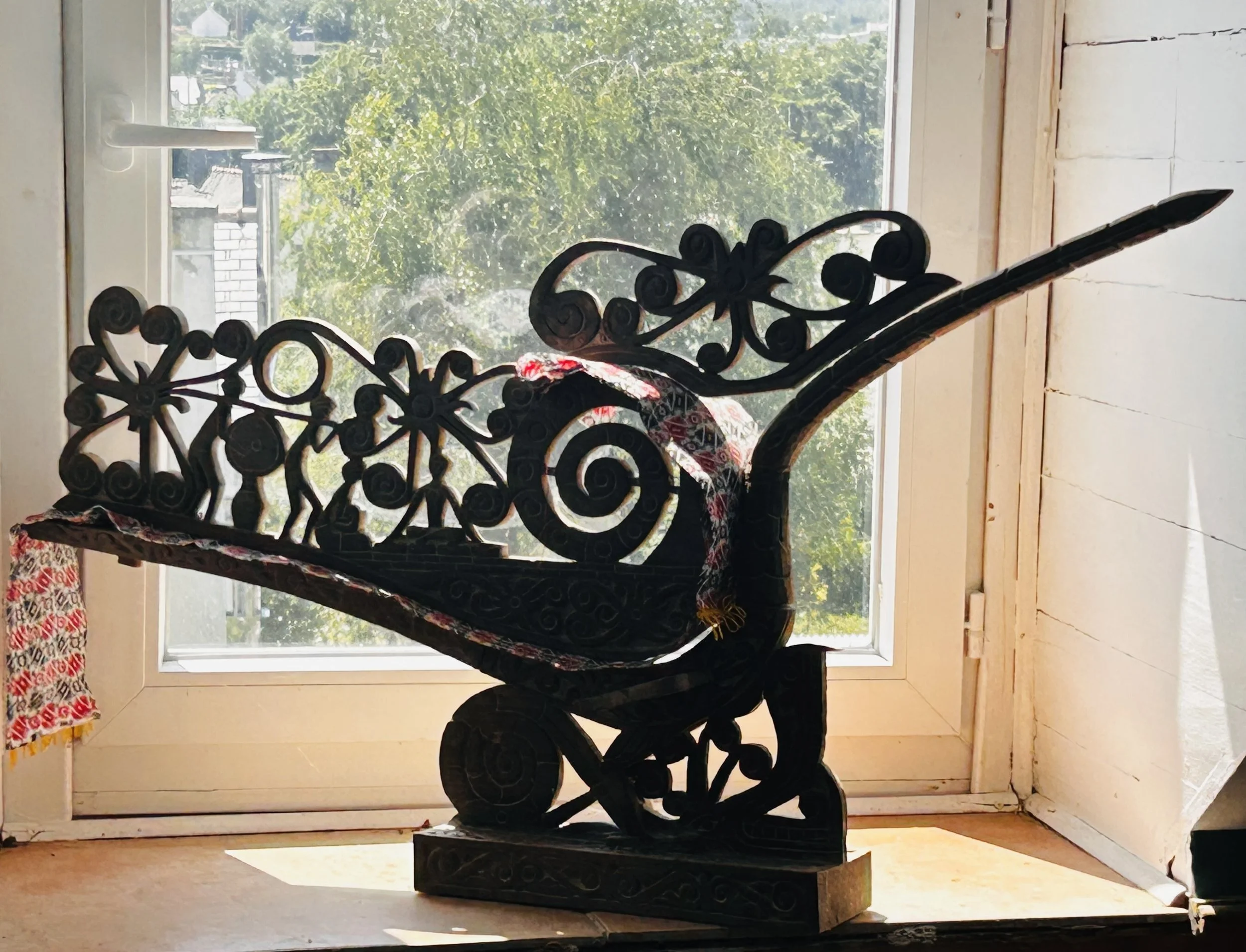
A Kenyalang (1)
Sacred gigantic Burung Kenyalang. 19th Century
Made in spectacular fashion from medium hardwood and hand painted, adorn with Mata Aso / Dragons Eye. Base of hornbill is decorated with an Aso.
Such Kenyalang were used for ritual purposes placed at the Sadau before placing it at the Ruai / chief varendah
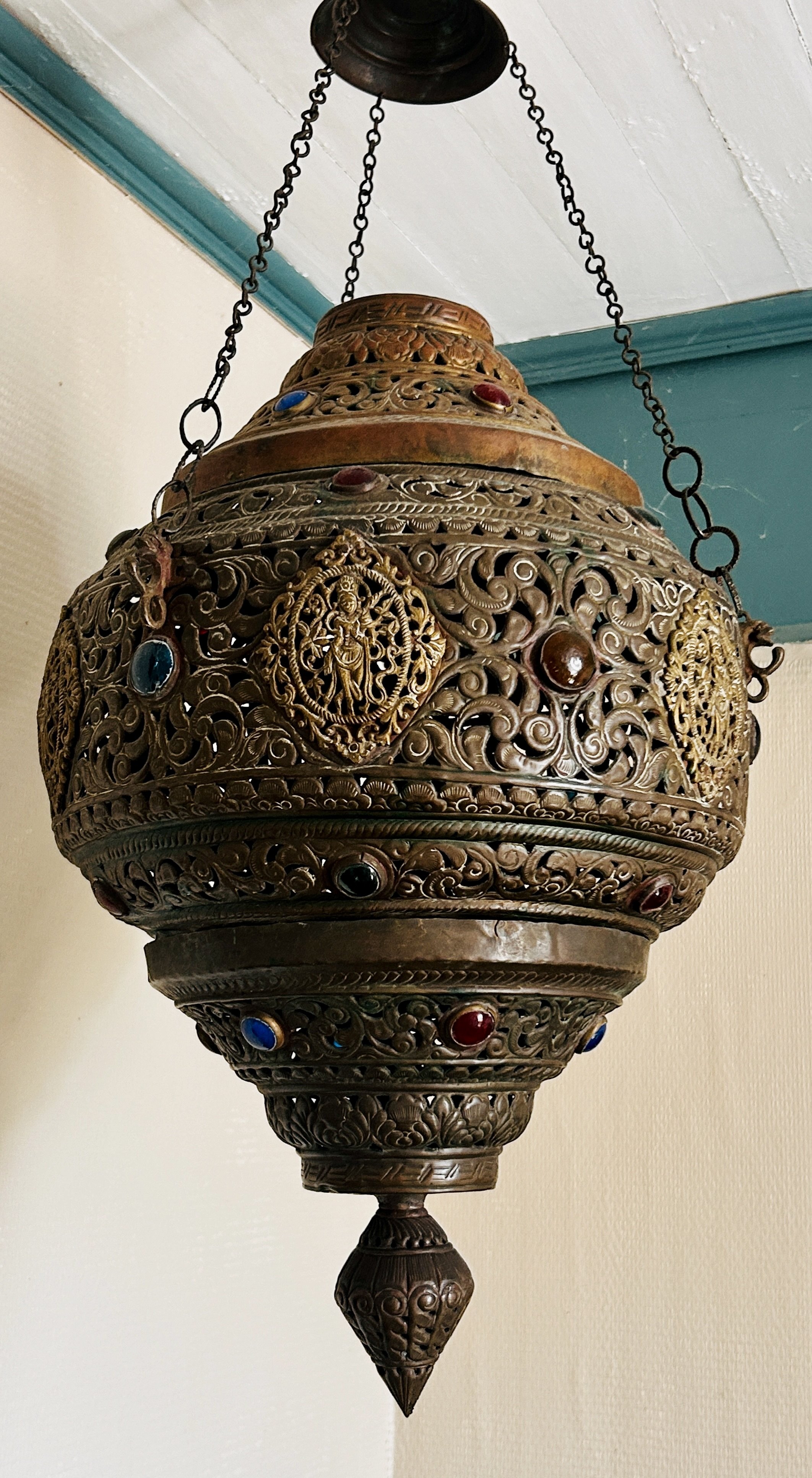
Moroccan Style Lamp
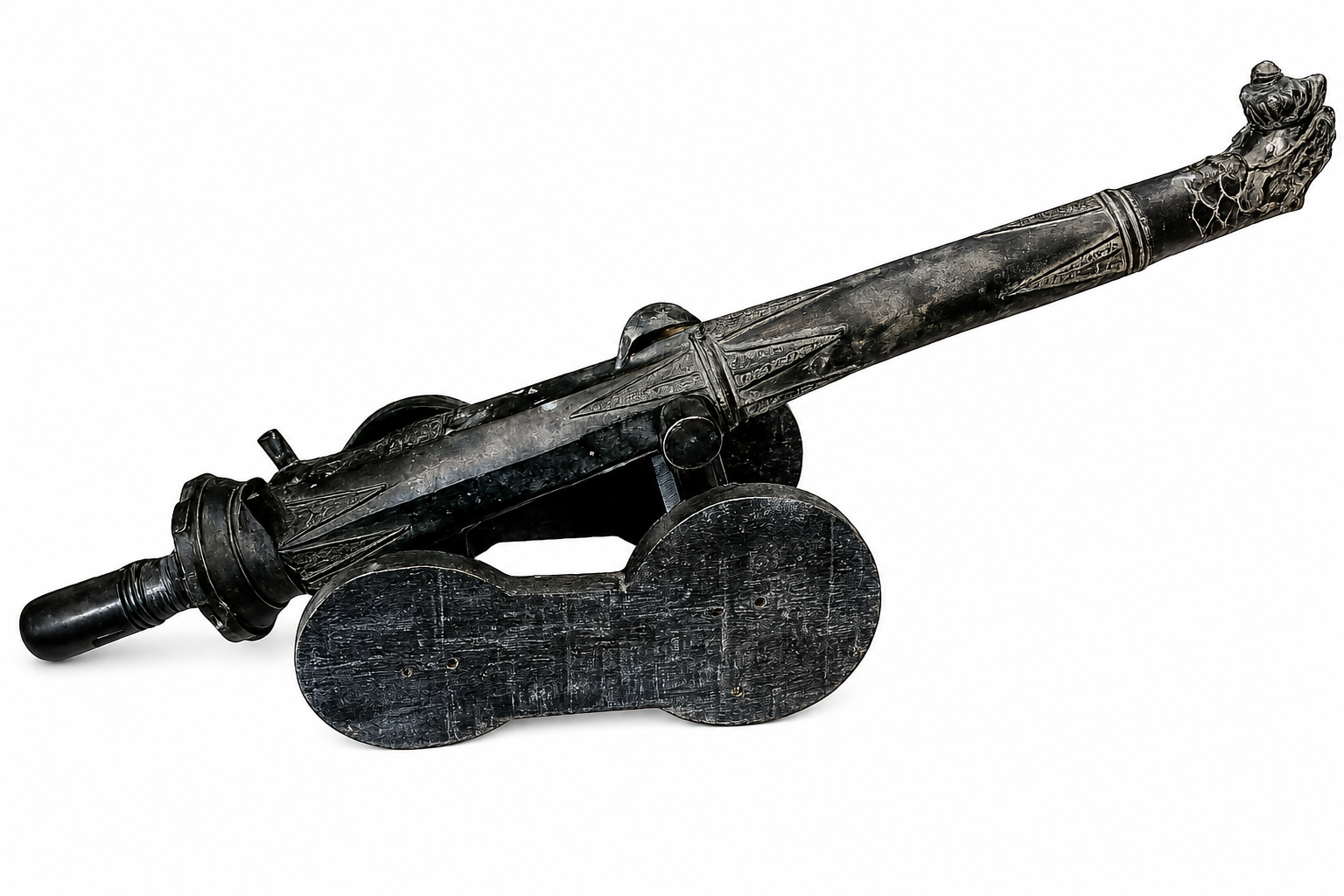
Brass Lantaka
Longhouse or boat mounted Cannon,
A Kenyalang (2)
Sacred gigantic Burung Kenyalang
Adorned with typical Dayak motifs of Tree Of Life, Buah Berinjan / Creeper Vine & Mata Aso / Dragons Eye. Base of hornbill is decorated with an Aso Naga / Dragon.
Dayak War Shield
Hand carved shield. Late 19th Century
Fighting and war was an essential part of Dayak culture, who often, drivenby belief in curses, marched for war against a neighbouring tribe. The Dayak believed that the paintings on the shields not only frightened their opponent but actually harmed them.
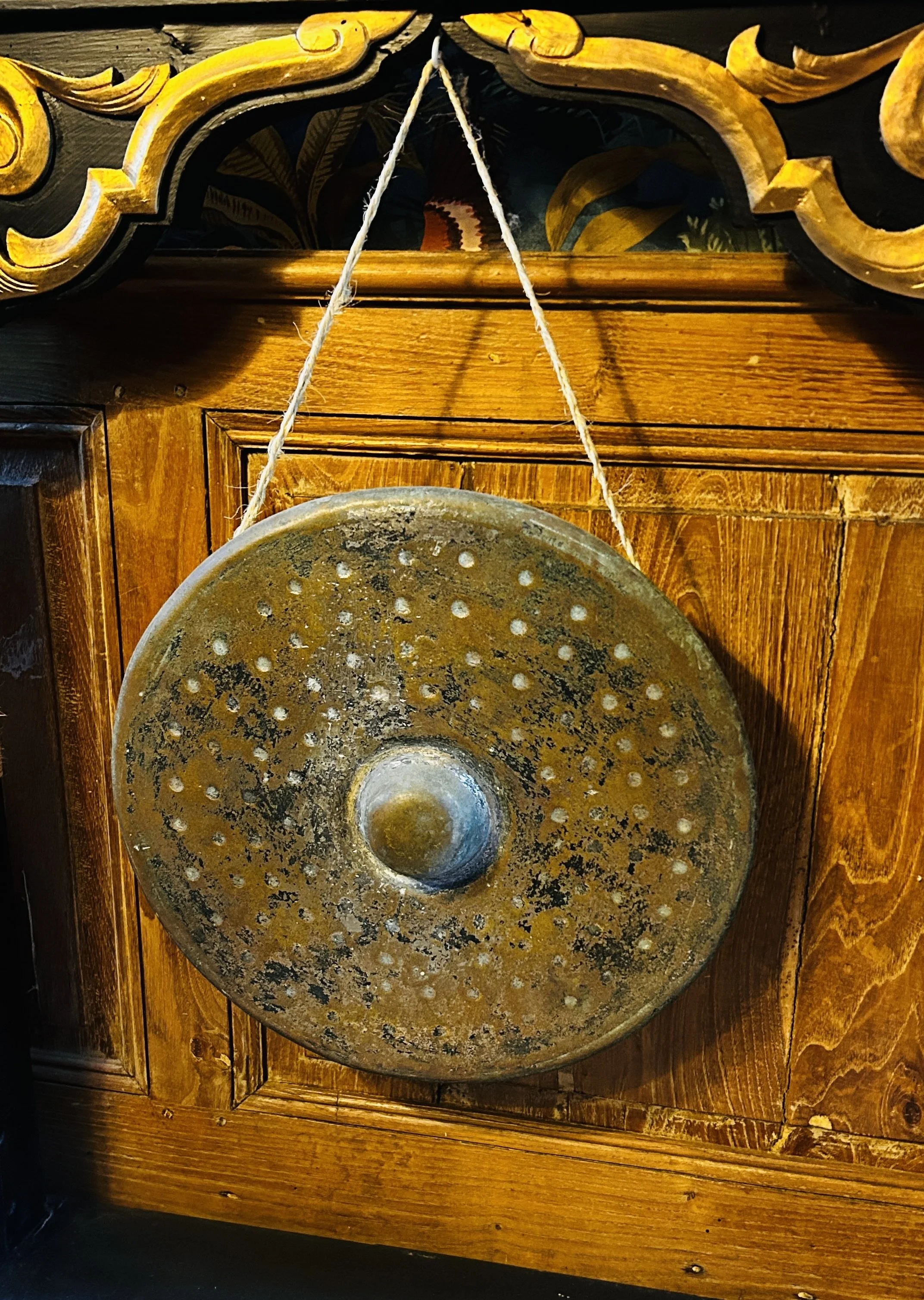
Gong (Tawak-Tawak)
Sirung
This traditional headgear, called as Sirung in local dialect, is handcrafted by Kota Belud's Dusun community. It is frequently worn by the Kadazan community when working in the paddy fields
The cast-brass cannon barrel has a narrow bore surrounded by an open mouthed crocodile. a tab-shaped sight above the bore, raised triangular and foliate motifs on the front and back, a pair of dophin sights on the midsection, and a bifurcated sight flanking the wick hole.
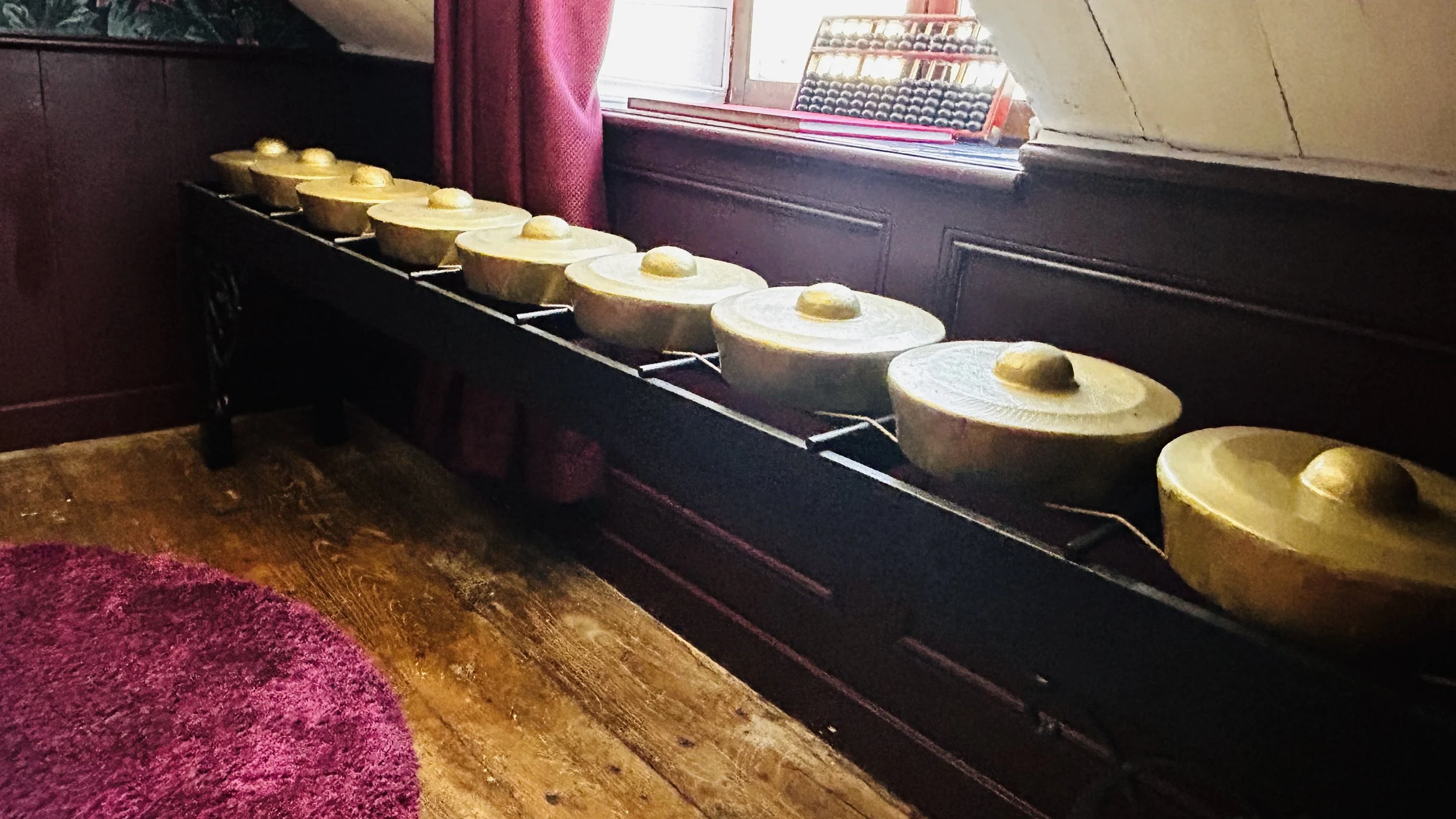
Kulintang
From Kampung Sumangkap Kudat.
Tawak-tawak gongs were usually used as signal to call people, but it was also attributed to them a magical power against demons; furthermore, they were considered symbols of authority and sometimes used as a kind of currency.
The kulintangan rests on a surface. The player sits on the floor, using two small mallets to strike the gongs, creating softer melodic tones.
Some kettle gongs feature elaborate dragon motifs, believed to be influenced by Chinese or Southeast Asian culture
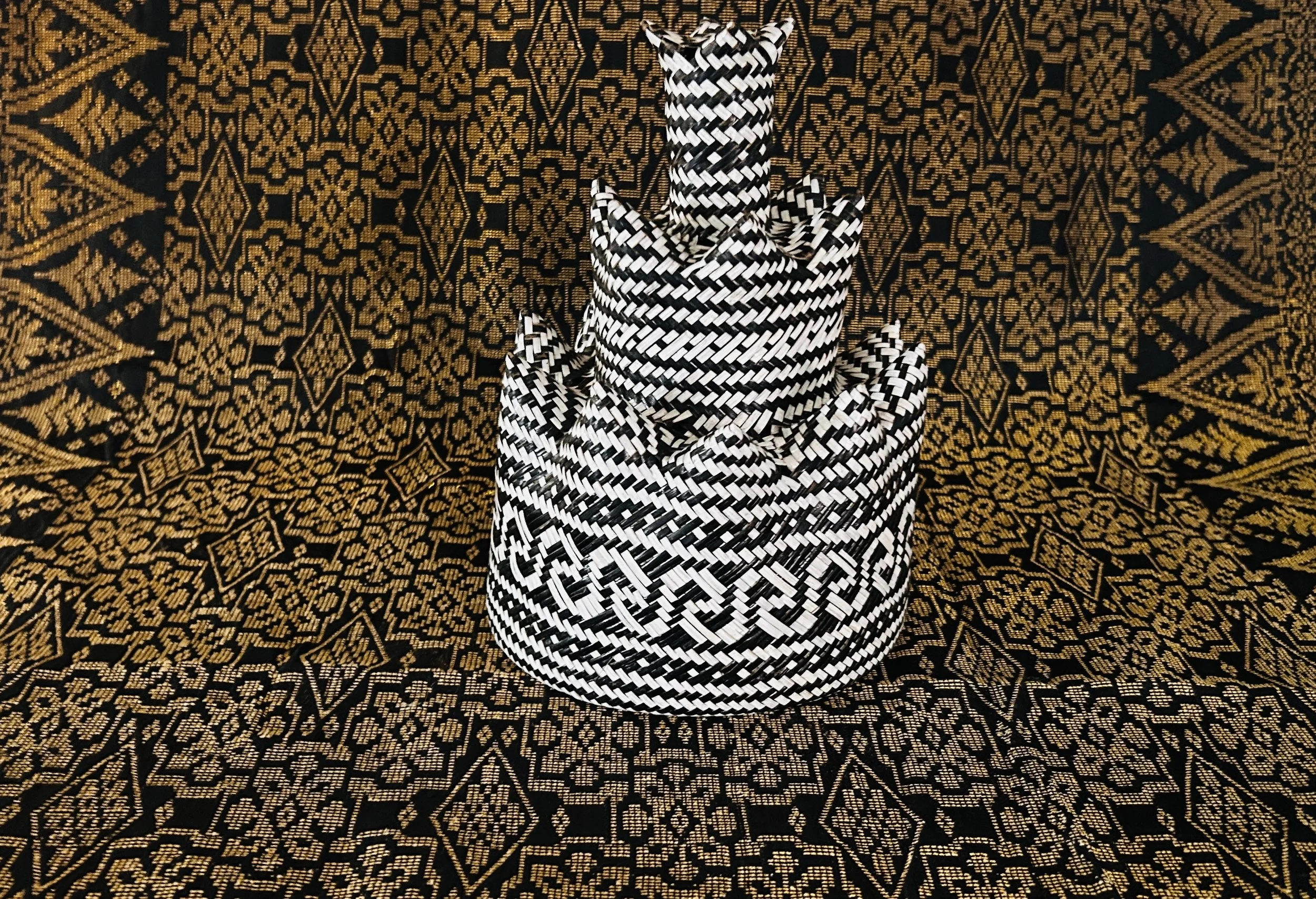
Reproduction
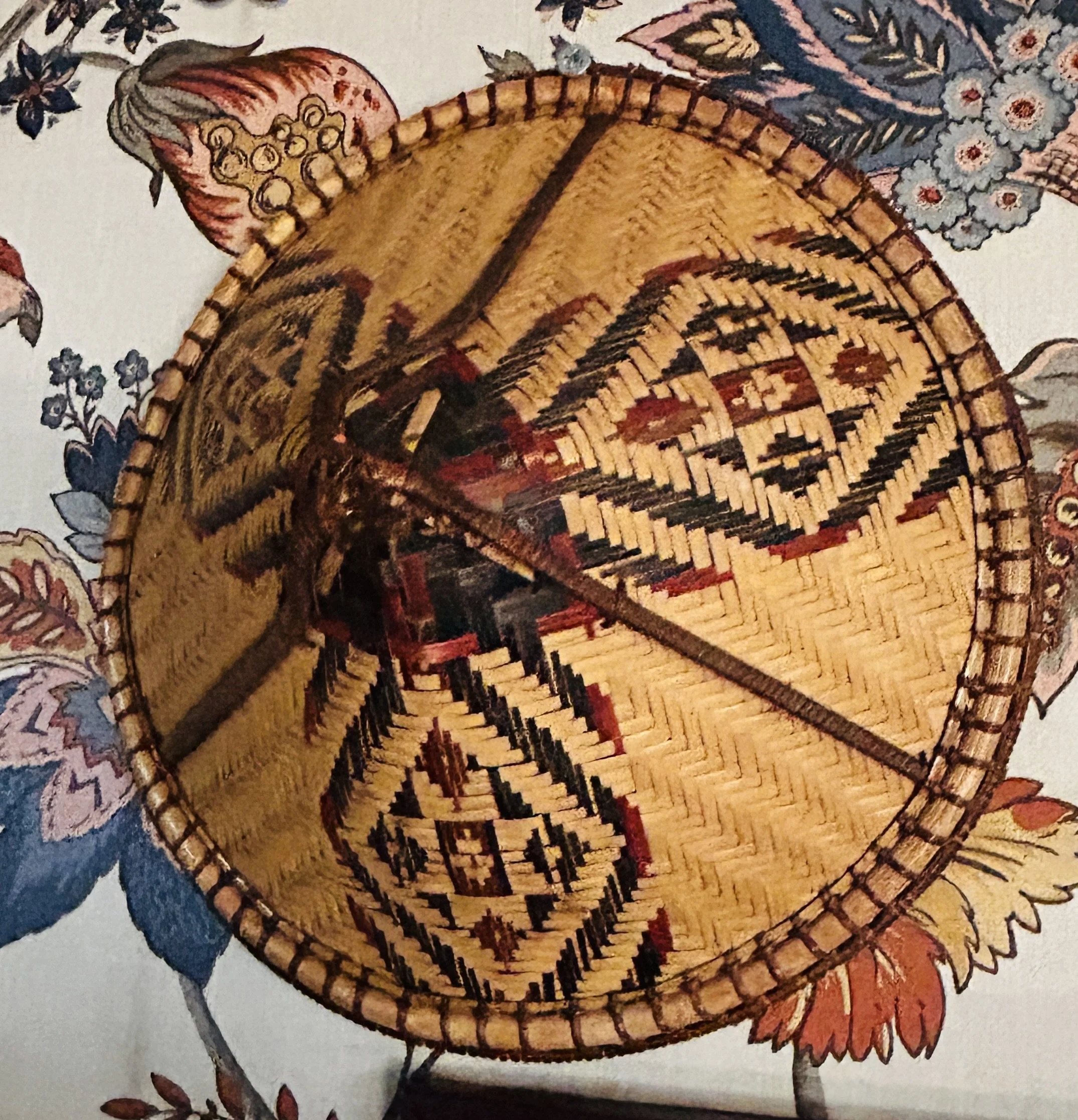
Hand woven traditional hat from Iban and Dayak peoples.
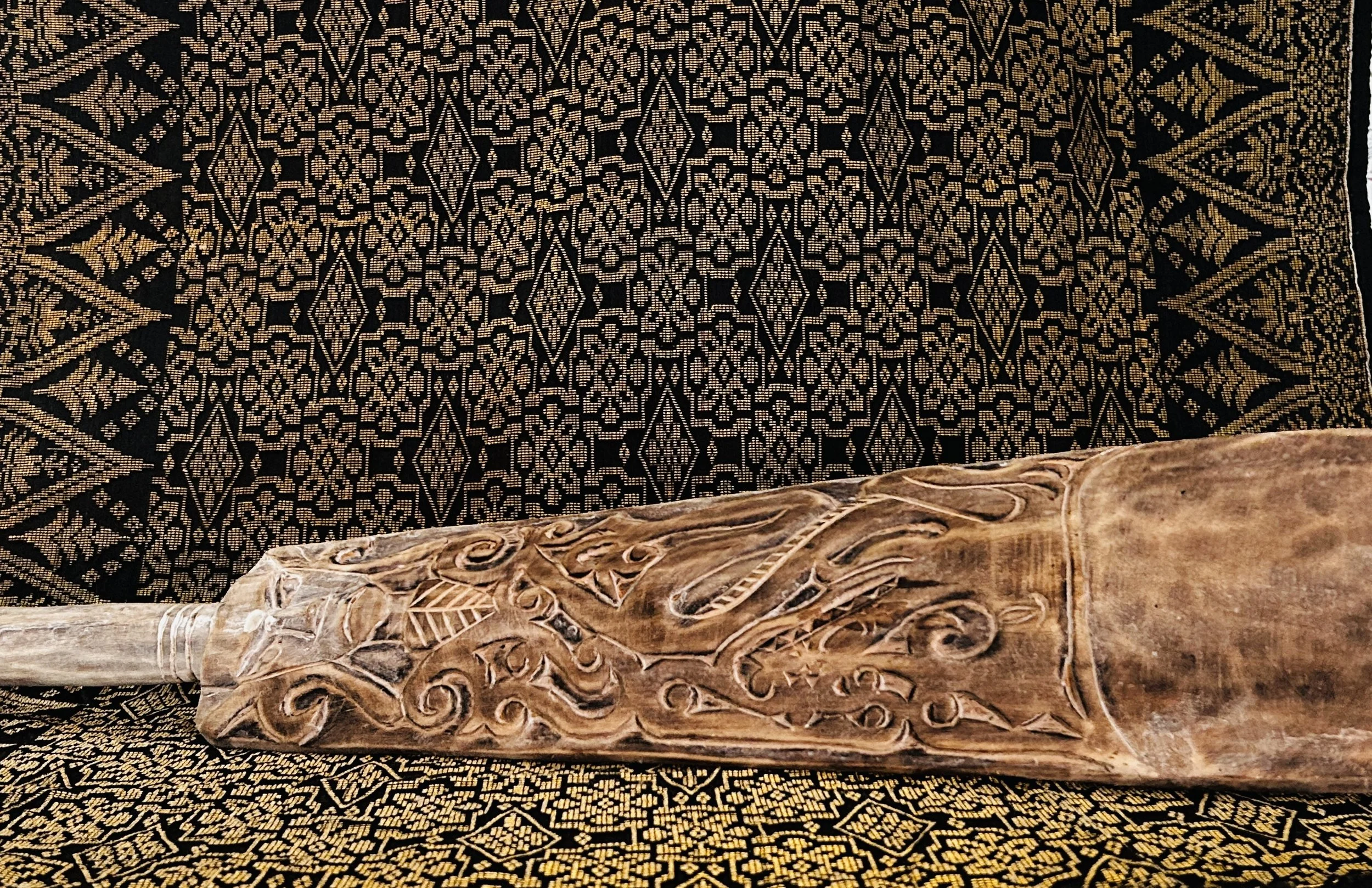
With protective carvings. Early 20th Century
Ceremonial but often called a wedding paddle. The groom arrives by canoe and uses his paddle to arrive at the ceremony. After the wedding the groom paddles away with his bride, throwing small gifts to the pursuing guests until they make their get away.
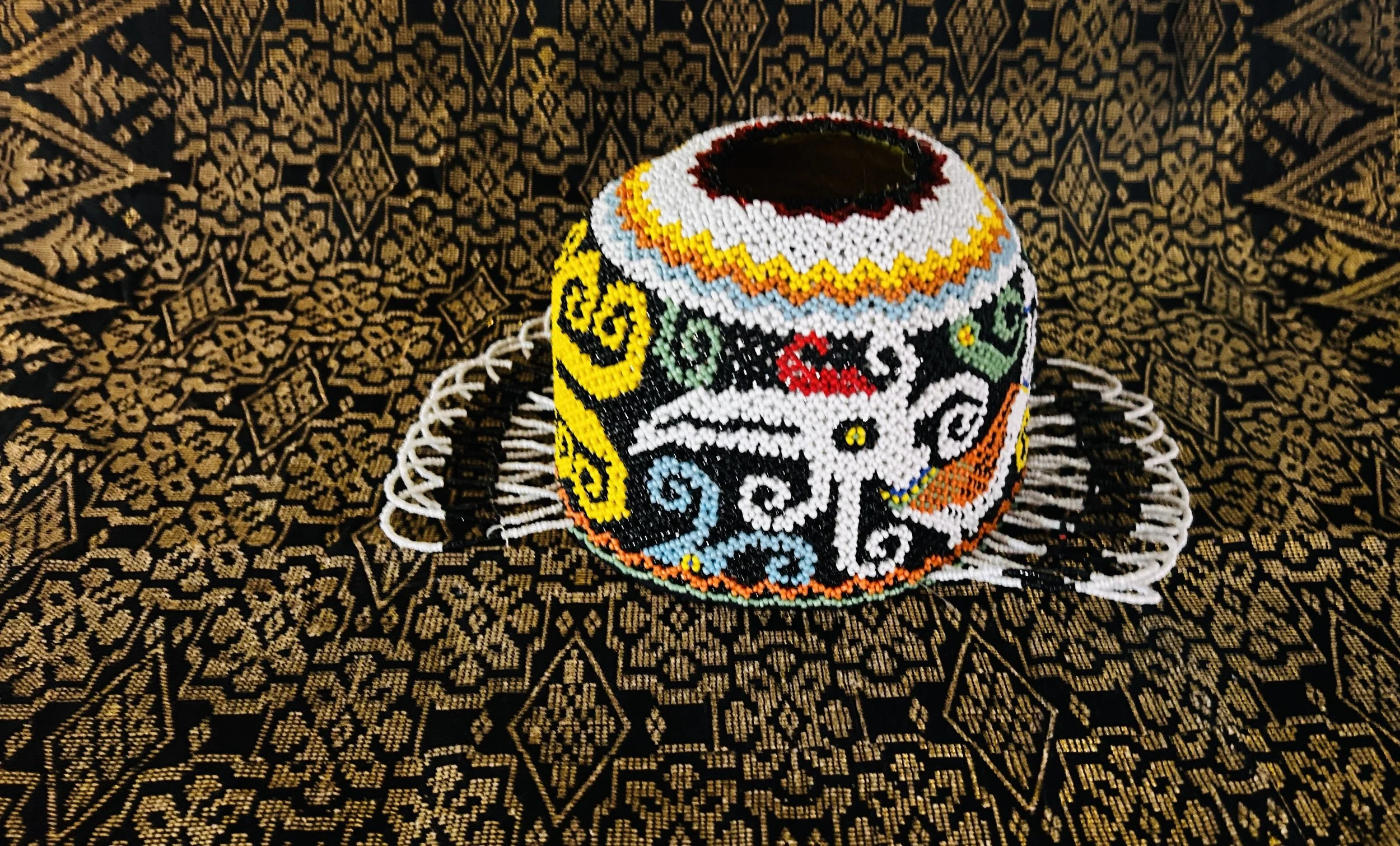
Tapung Laki
Reproduction from Sarawak
Hand woven traditional hat from Iban and Dayak peoples.
Mangkuk
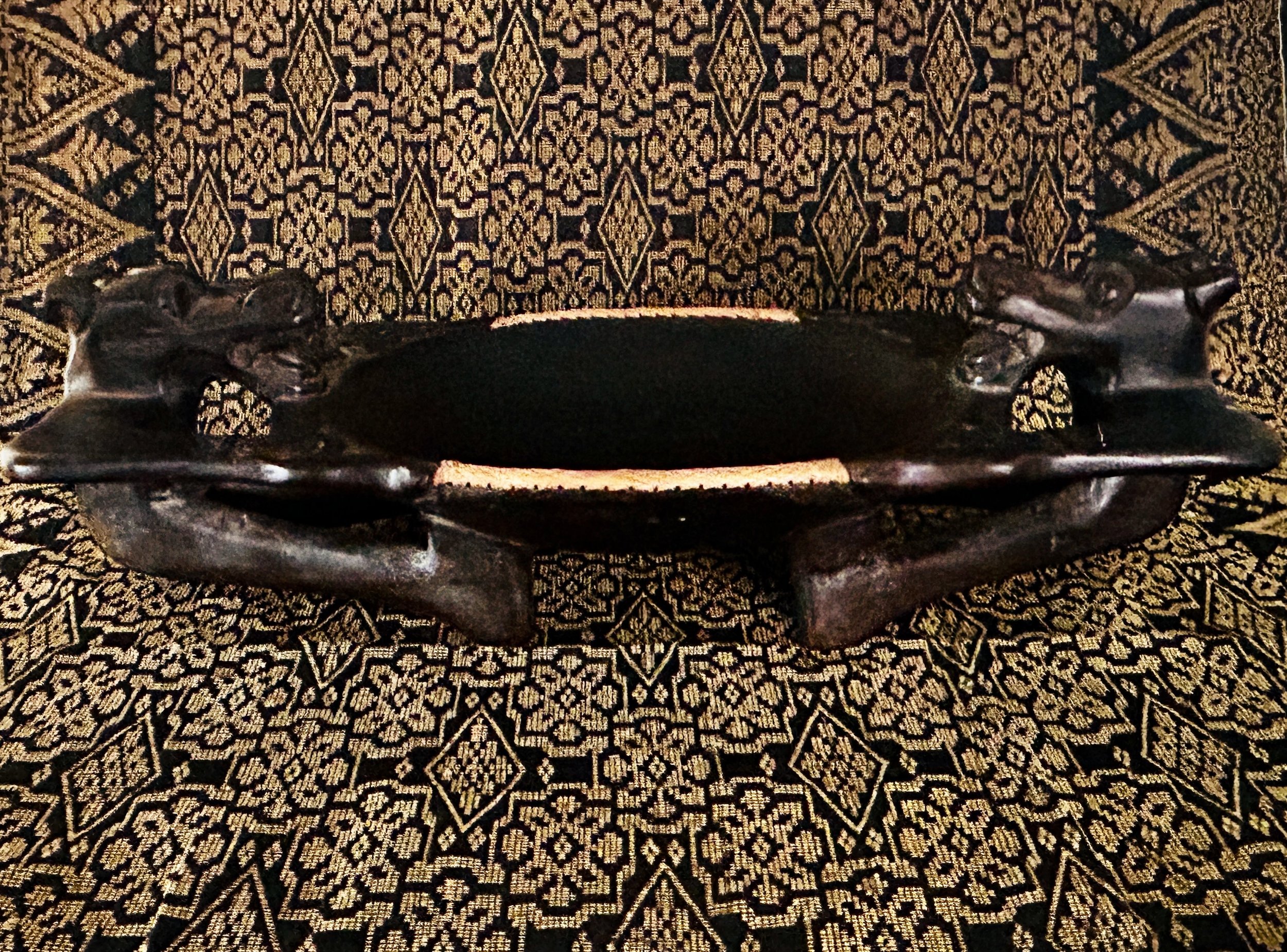
Dayak Chief’s' Bowl
The bowl is supported at either end by a pair of aso, dragon-dog-like creatures that have talismanic, protective properties, and which mark it out as the property of a local chieftain
Topi Lanjang
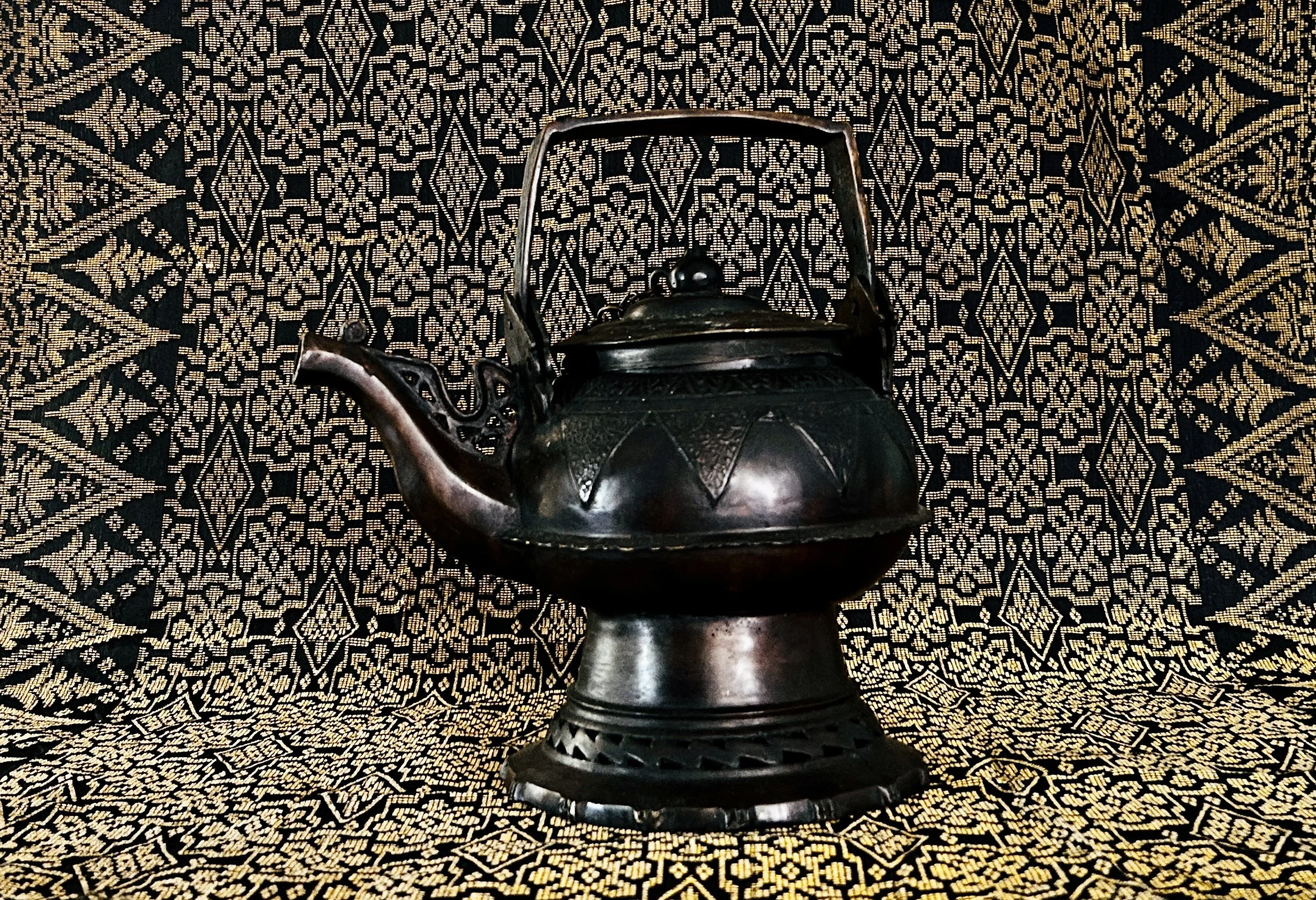
Hand Washing Kettle
A Brunei or Sarawak brass ewer. Late 19th Century
Ceremonial hand washing kettle at formal occasions; ritual ablution; offering of water to guests of rank
From a Longhouse in Sarawak