

The World of the Kenyalang Novels
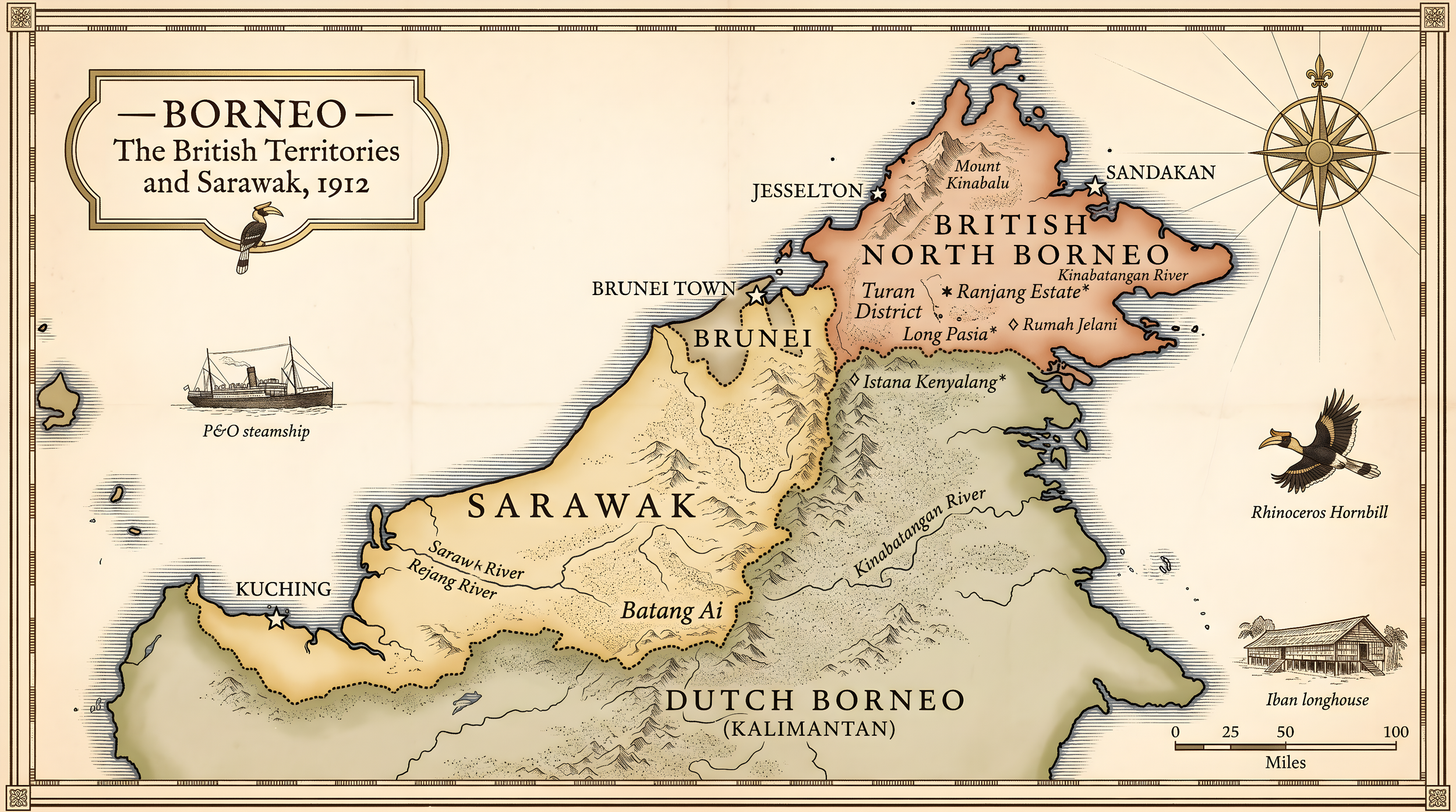
Most people, if asked to place Borneo on a map, would gesture vaguely toward Southeast Asia and hope for the best.
The third largest island in the world sits at the centre of the Malay Archipelago; a place where the ancient and the modern, the indigenous and the colonial, the sacred and the commercial existed in a proximity that the rest of the world had not yet had time to make complicated. In 1912 it was still, in the truest sense, a frontier. Not the romanticised frontier of adventure novels but a real one. A place where the maps had blank spaces. Where rivers had no names in any European language. Where a man could arrive with nothing and build something entirely his own, provided he was prepared to learn whose land he was building it on and what he owed them for the privilege.

British North Borneo & Sarawak
British North Borneo was administered by a Chartered Company titled the British North Borneo Chartered Company or BNBCC from an office in London that had never sent anyone senior enough to understand what they were administering.
Sarawak was governed by the White Rajahs; the Brooke dynasty, who had ruled by personal authority and considerable nerve since 1841. Brunei was a Sultanate caught between them. And beneath, behind, and throughout all of it were (are) the Iban, the Dayak, the Malay, the Chinese, the Tamil communities who had been there long before any flag was planted and would remain long after the flags came down.
This is the world Jasper Brooke writes about. Not from a distance. From inside it. The map above shows the territories as they were around the start of the 20th Century. Samuel, Julian and Ravi arrived in 1911. The locations marked with an asterisk are fictional. Everything else is real.
British North Borneo was administered by a Chartered Company titled the British North Borneo Chartered Company or BNBCC from an office in London that had never sent anyone senior enough to understand what they were administering.
Sarawak was governed by the White Rajahs; the Brooke dynasty, who had ruled by personal authority and considerable nerve since 1841. Brunei was a Sultanate caught between them. And beneath, behind, and throughout all of it were (are) the Iban, the Dayak, the Malay, the Chinese, the Tamil communities who had been there long before any flag was planted and would remain long after the flags came down.
Sandakan, Kuching, George Town, Jesselton, Brunei Town, and Tuaran. These are all real towns and cities. All still exist with the exception that Jesselton was renamed Kota Kinabalu when it became the capital of Sabah in 1967. Until the outbreak of the Second World War, most people in England had never heard of these names. They are the towns of the Kenyalang Series, and my characters move through them all in the course of their adventures between 1912 and 1930.
The Kenyalang world doesn't end on the page. Beyond the novels lies a world captured on film. Click the clipboard (left) to step behind the scenes and watch the newsreels that bring that world to life, just as it might have appeared to audiences of the era.
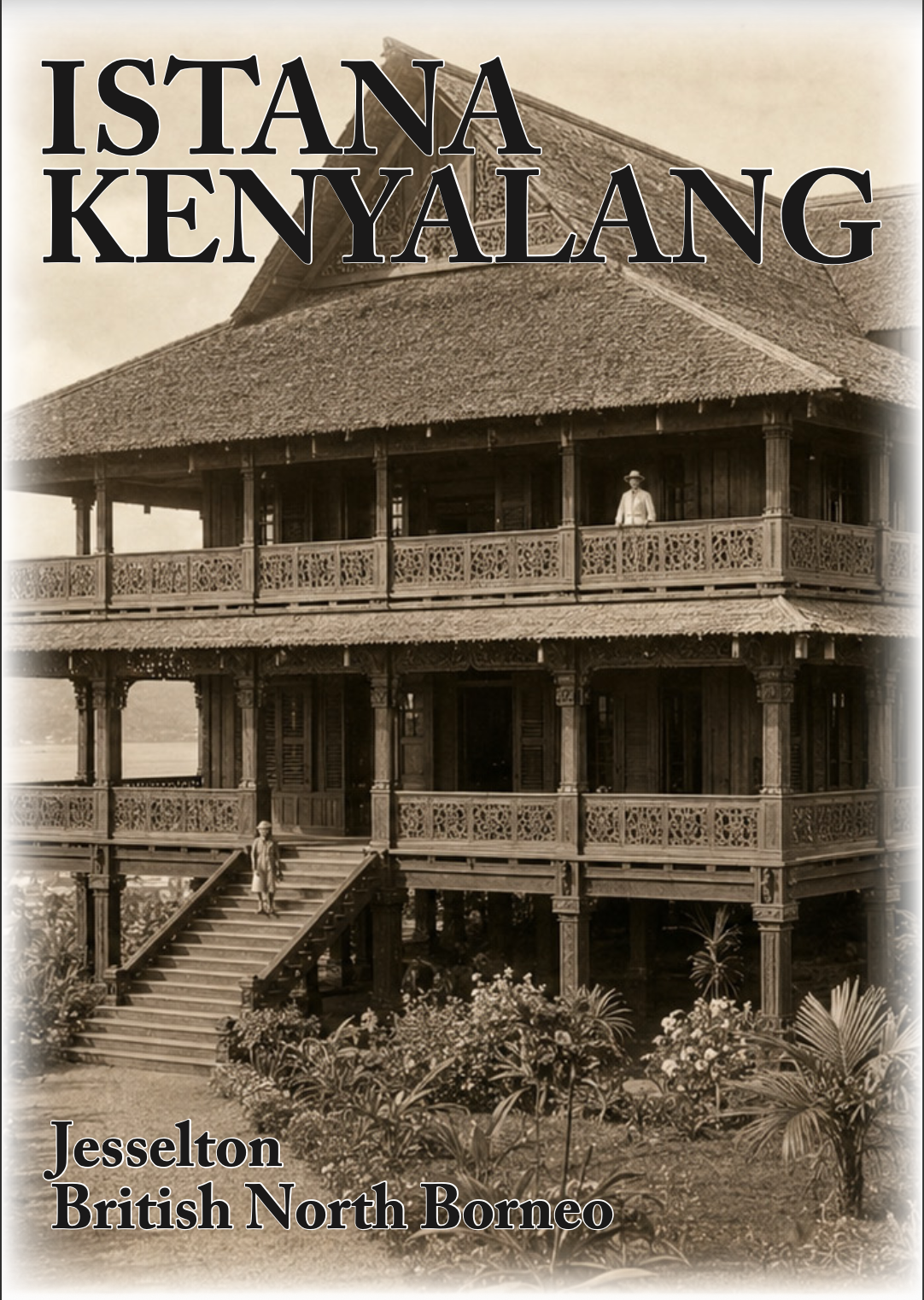
The Palace of the Hornbill: Istana Kenyalang
Every household in fiction needs a place to stand, and for Julian and Samuel that place is Istana Kenyalang (the Palace of the Hornbill), their home above Jesselton.
Before I could write them living there, I had to build it: not only its rooms and verandahs, but the logic beneath them. Why a Malay Istana and not an English bungalow. Why pua kumbu and not batik. Why two entrances, one for the colonial caller and one for the longhouse headman.
A home tells you who a family really is, more honestly than they would tell you themselves, and so I drew this house down to its keys and its kitchen garden before I let my characters move through it.
This booklet is the result. It is a tour of the house, its objects and the people who keep it. It is, in every detail I could make so, a real place. My characters simply happen to live there.
The Ground the Stories Stand On
When I set the Kenyalang novels among the rubber estates of British North Borneo, I quickly found that I could not write a single convincing scene until I understood the work itself; what a tapper actually did before dawn, how latex became a sheet a man could hold, why an estate lived or died by the price fixed each morning in London.
A plantation is not a backdrop. It is a process, a calendar, and a economy, and the people in my books are shaped by all three.
So following weeks of research, I taught myself the trade, step by step, from the seed in the nursery bed to the bale on the jetty. This booklet is a short the record of that learning. I share it as background knowledge of the detail that gives a novel its weight. It is rarely the detail a reader notices: it is simply the ground the story stands on, and I would rather that ground were real.
Click Images to read these short booklets
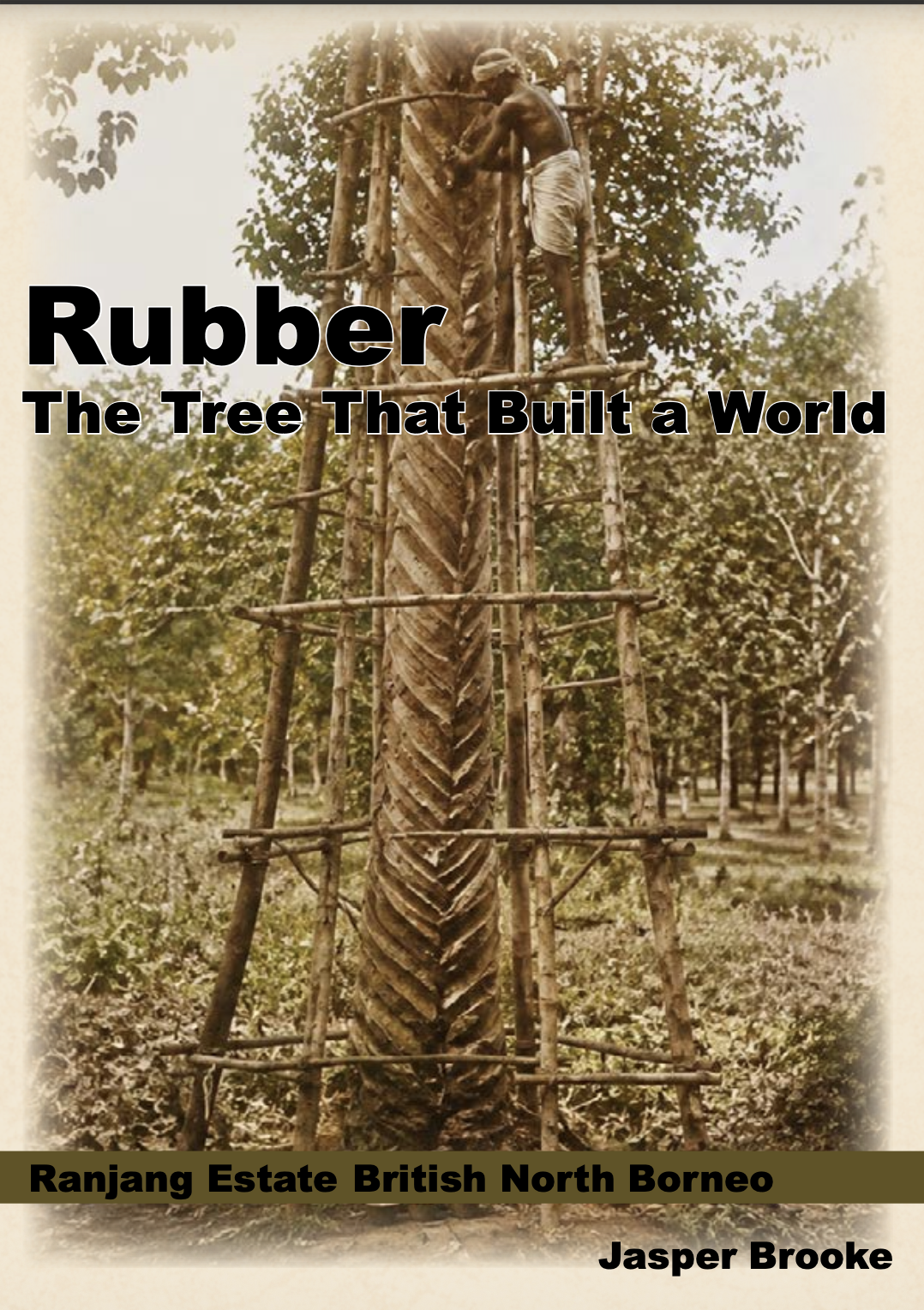
Click Images to read these short booklets
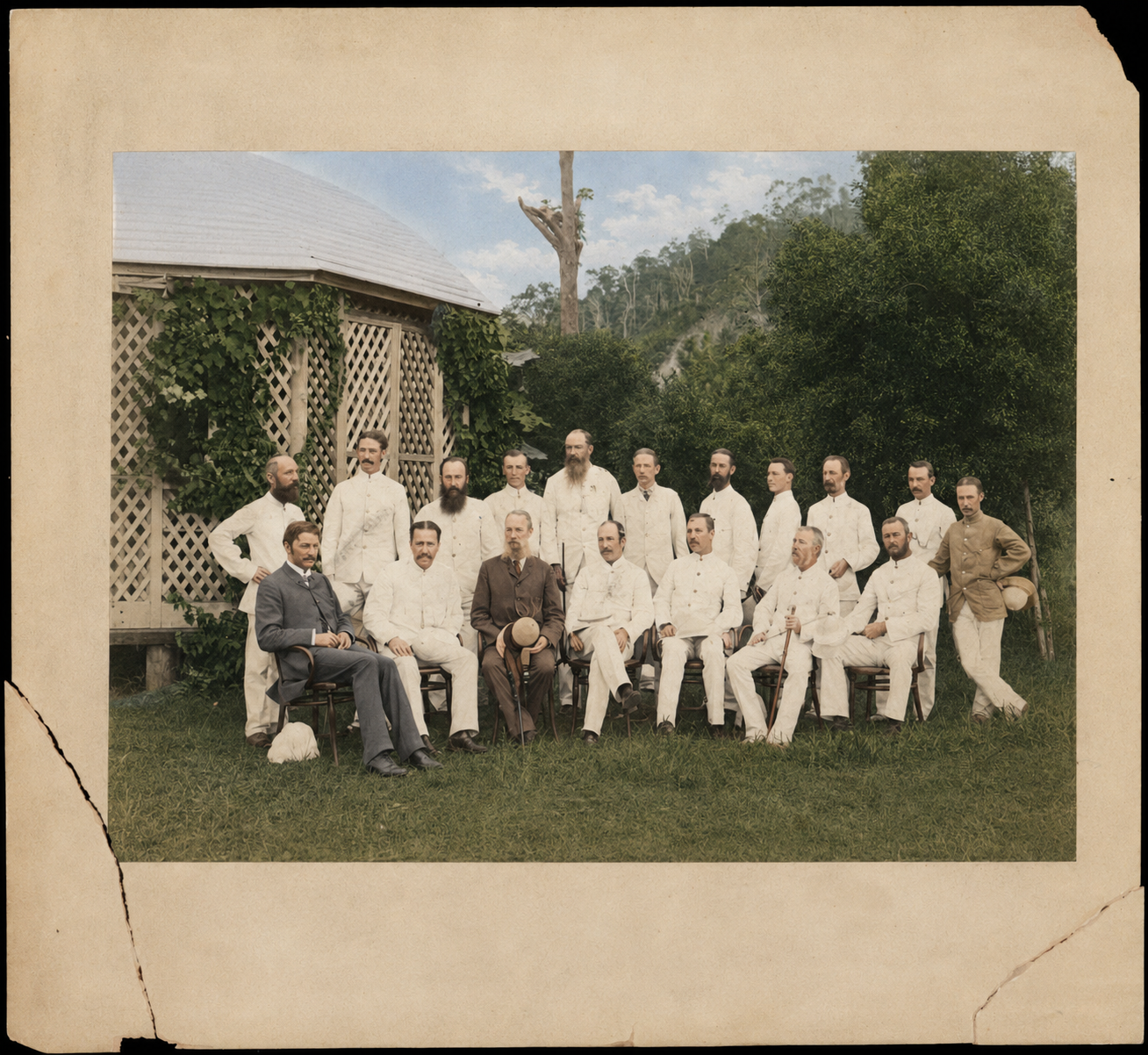
The District Officers of the BNBCC between 1900 and 1920
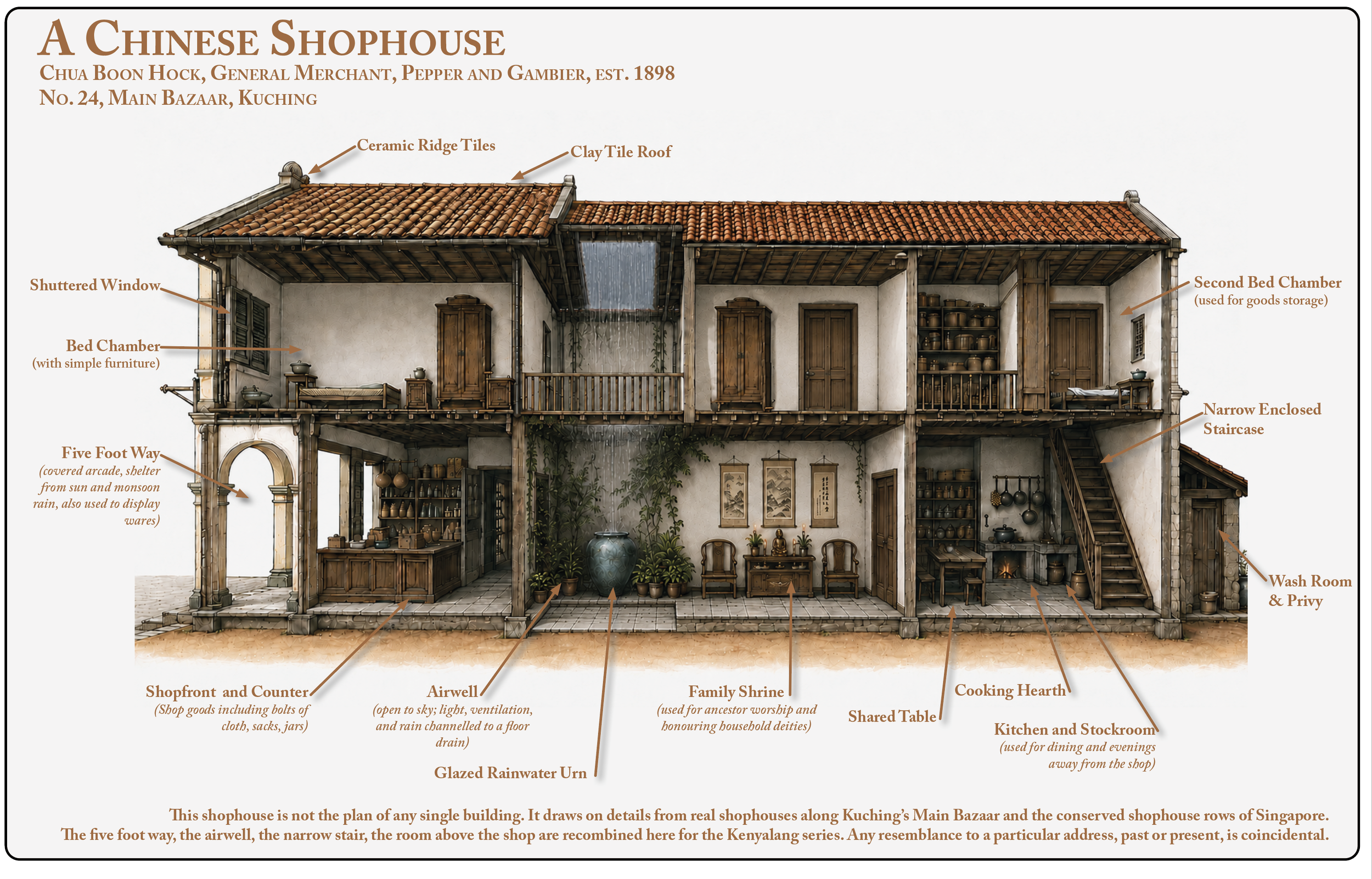
The Longhouse
Coming Soon


Colonial Intelligence Service
The Colonial Intelligence Service is a fictional service which operates in silence. Its officers are not named in dispatches, and its successes are rarely proclaimed. If you wish to know more about the Service (its structure, its methods, and the world in which Samuel moves) click the badge (left) to find out more.